

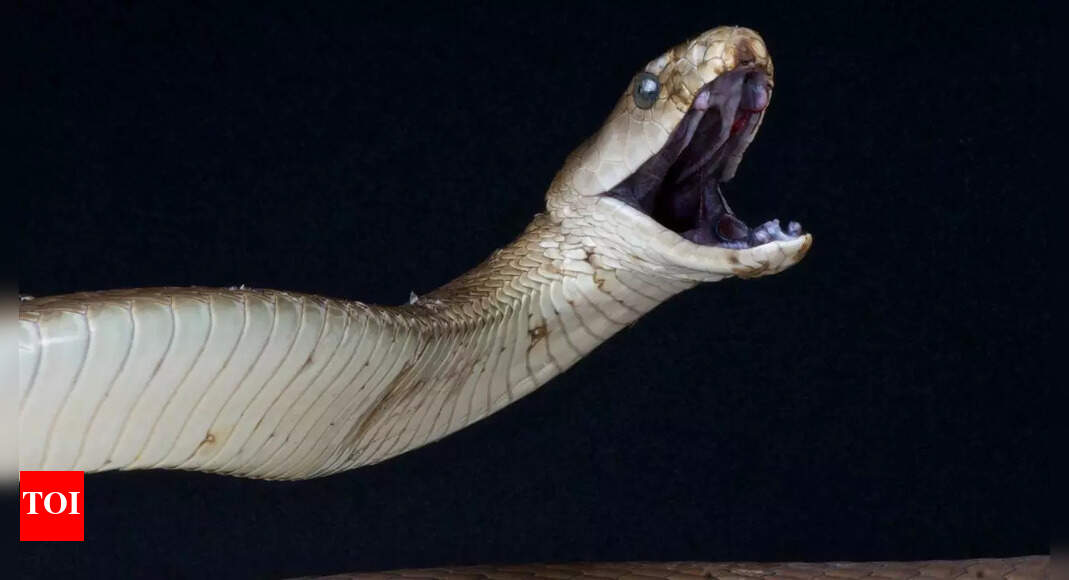
Snakebites remain a silent global health crisis, claiming an estimated 138,000 lives each year, according to the World Health Organization (WHO). Victims often live in rural or underserved regions where access to antivenom is limited, healthcare facilities are scarce, and delays in treatment can be fatal. Traditional antivenoms, created using animal immunisation techniques over a century old, are species-specific, costly, difficult to produce, and sometimes provoke dangerous allergic reactions.Recent scientific breakthroughs suggest a promising new approach could change this landscape: the development of a universal snake antivenom using rare human antibodies. This innovative strategy could provide broad protection against a wide array of venomous snakes worldwide, offering much-needed hope to millions at risk of serious injury or death.
Rare human antibodies offer hope for a universal snake antivenom
Could a single antivenom work against multiple deadly snake species? Jacob Glanville, CEO of Centivax, believes it is possible. The breakthrough comes from collaboration with Tim Friede, a self-taught herpetologist with hyperimmunity to snake venom. Over two decades, Friede survived more than 800 snakebites from some of the most lethal species—including cobras, mambas, taipans, and rattlesnakes.Friede’s unique immunity is the result of repeated, controlled exposure to snake venom. His blood contains rare antibodies capable of neutralizing toxins from multiple species. Scientists hypothesized that these antibodies could be harnessed to create a universal antivenom, a goal long thought nearly impossible due to the complex composition of snake venoms.
Why snake venoms are so difficult to treat
Snake venom is highly complex, containing up to seventy distinct toxins that can vary even within a single species. These toxins belong to ten main protein classes, and each can attack the body in different ways, from disrupting nerve function to destroying blood cells.Glanville and his team realized that Friede’s antibodies could target the most dangerous toxins shared across multiple species. By isolating these antibodies, researchers aimed to neutralize several venom components simultaneously, which could drastically simplify treatment. Using a 40-millilitre blood sample from Friede, researchers at Centivax, along with biochemist Peter Kwong and teams at the National Institutes of Health and Columbia University, isolated the critical antibodies. These antibodies were then combined into a cocktail that could neutralize various venom components.Key components of the cocktail include:
- LNX-D09: Effective against long-chain neurotoxins that attack the nervous system.
- SNX-B03: Targets short-chain neurotoxins.
- Varespladib: A small molecule that disables phospholipase A2 toxins, which cause tissue damage and blood clotting issues.
When tested in mice, this cocktail protected against venom from 19 elapid snake species. Thirteen species were fully neutralized, and six showed significant symptom reduction. As Kartik Sunagar of the Indian Institute of Science explained, “If you disable one [toxin], it neutralizes the whole venom effect,” illustrating the cocktail’s broad efficacy.
Challenges in creating a global antivenom
Despite these promising results, skepticism remains about whether a truly universal antivenom is feasible. Andreas Hougaard Laustsen-Kiel of the Technical University of Denmark pointed out that toxins common in African snakes may not exist in American species, limiting the universality of any single formulation.Additionally, producing human-derived antibodies at scale is expensive, posing challenges for widespread distribution, particularly in developing countries where snakebite fatalities are highest. Most antivenoms today still rely on injecting animals with venom—a method dating back 125 years—which carries the risk of allergic reactions and serum sickness.Experts agree that human monoclonal antibodies offer a safer, more effective alternative capable of neutralizing multiple toxins simultaneously.
Synthetic antibodies show promise for broad snake venom protection worldwide
Recent experiments have shown that synthetic antibodies can protect against venom from snakes across continents. For example, certain antibodies neutralized king cobras in the Western Ghats, monocled cobras in eastern India, many-banded kraits in Southeast Asia, and black mambas in sub-Saharan Africa.Sunagar emphasised, “Achieving broad neutralization is not a challenge anymore,” suggesting that scientific advances have overcome one of the key hurdles in creating widely effective antivenoms. The research team is also developing similar antibody cocktails for viper bites, which account for a large percentage of snakebite deaths in Asia and Africa. Additionally, trials on pet dogs in Australia are underway, indicating the potential for broader applications beyond human medicine.Also Read | Could your skin hold the key to creating life? Scientists turn human skin cells into eggs in groundbreaking study
