

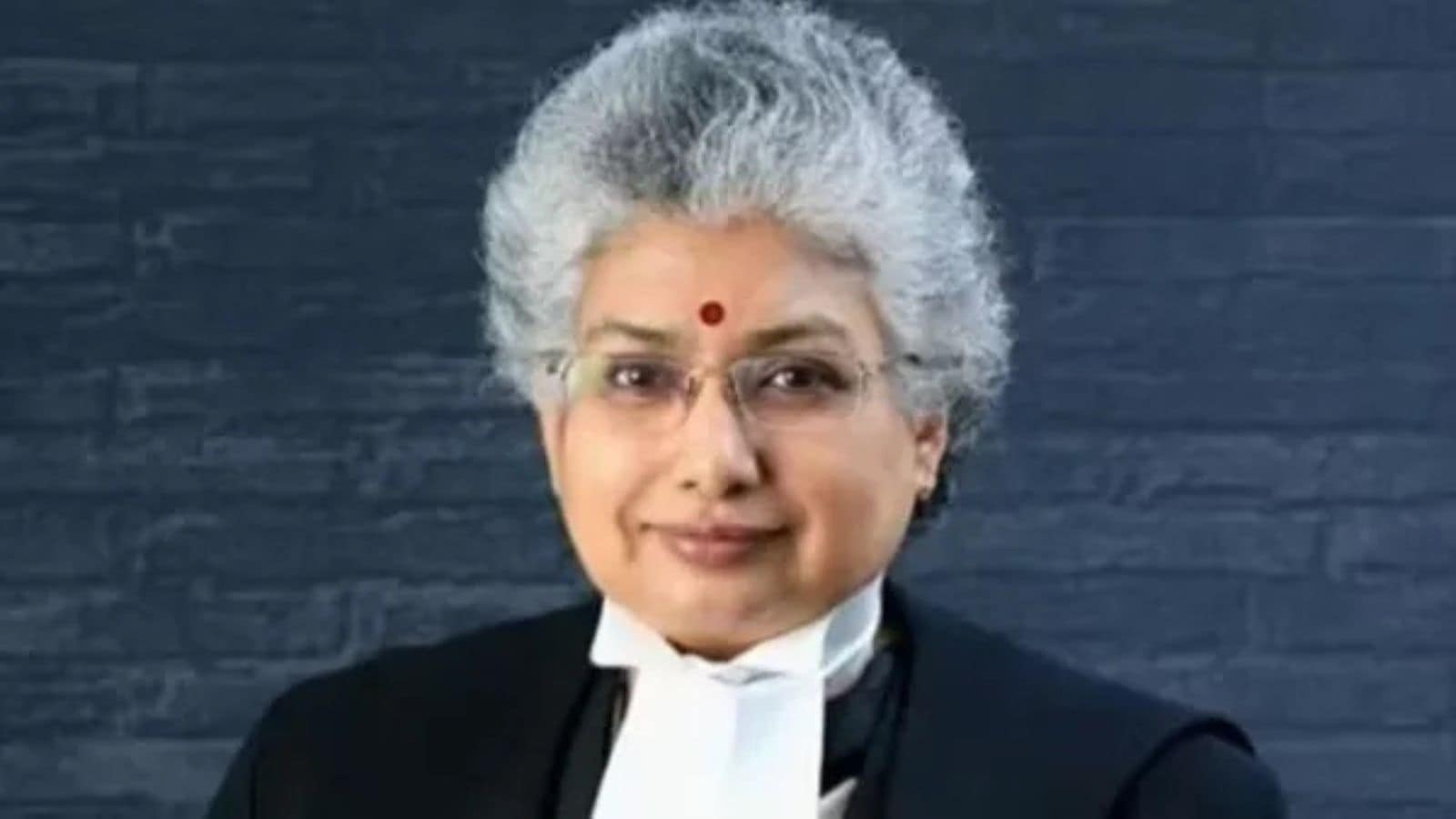
Flagging a gap in India’s dispute-resolution framework, Supreme Court judge Justice B V Nagarathna said that courts are often hesitant to remove arbitrators accused of misconduct because many of them are retired judges and chief justices.
Speaking at an international conference organised by the Indian Council of Arbitration at the Delhi High Court Saturday, Justice Nagarathna underscored the need for institutional safeguards to address allegations of bias. She cautioned that alternative dispute resolution (ADR) mechanisms – methods like arbitration and mediation used to settle disputes outside the traditional courtroom – must maintain strict discipline and not be viewed as a slackening of legal standards.

Speaking of the practical hurdles plaguing the system, she pointed to “questions of enforceability of awards, delays, and rising costs in arbitration”, alongside a growing “mistrust in the arbitrators and mediators”. These challenges, coupled with the “continuing adversarial mindset of parties and sometimes their counsel”, remind the legal community that ADR must constantly evolve to remain credible, she said.
‘Arbitration and mediation not merely alternatives to litigation’
Justice Nagarathna emphasised that ADR should no longer be viewed as a secondary option. “Disputes are not only legal questions, but also social, commercial, and relational questions that may require more voluntary solutions than a court adjudication,” she said.
“Arbitration and mediation, therefore, are not merely alternatives to litigation, but integral components of a modern and responsive justice system.”
While underlining the enactment of the Mediation Act, 2023, as an important legislative step toward institutionalising consensus-based solutions, she offered a candid assessment of its current status.
“I must confess that it really needs to take off as such,” she said. “While we have the structure in the form of a legislation, there is no real active implementation of the said Act as many provisions are not yet notified.
The Mediation Council of India is not yet constituted, and therefore, we have to rely upon diversified centres of mediation in the various states.”
Story continues below this ad
She also expressed concern about how legal practitioners approach Section 12A of the Commercial Courts Act, which requires parties to attempt pre-litigation mediation before filing a commercial lawsuit. Justice Nagarathna said that this legal requirement should not be treated “just as a formality just when the plaint is also ready to be filed”, criticising the attitude where lawyers attend mediation “and the very next hour after the mediation fails, you’re waiting to go and file the plaint.”
To curtail drawn-out proceedings, the judge advocated hybrid models such as “Med-Arb” (Mediation-Arbitration) and “Arb-Med-Arb”. In these sequential processes, parties first attempt to resolve issues through mediation. If they fail, an arbitrator steps in to make a binding decision. The model, she explained, is highly valued for its “ability to balance flexibility with certainty, enabling parties to explore amicable settlement without foregoing the assurance of adjudication.”
To cement India’s position as a credible global arbitration hub, Justice Nagarathna stressed the need for sector-specific expertise. Disputes in complex fields such as infrastructure, maritime, and technology require arbitrators who understand technical and commercial practices, not just legal analysis.
—-
