

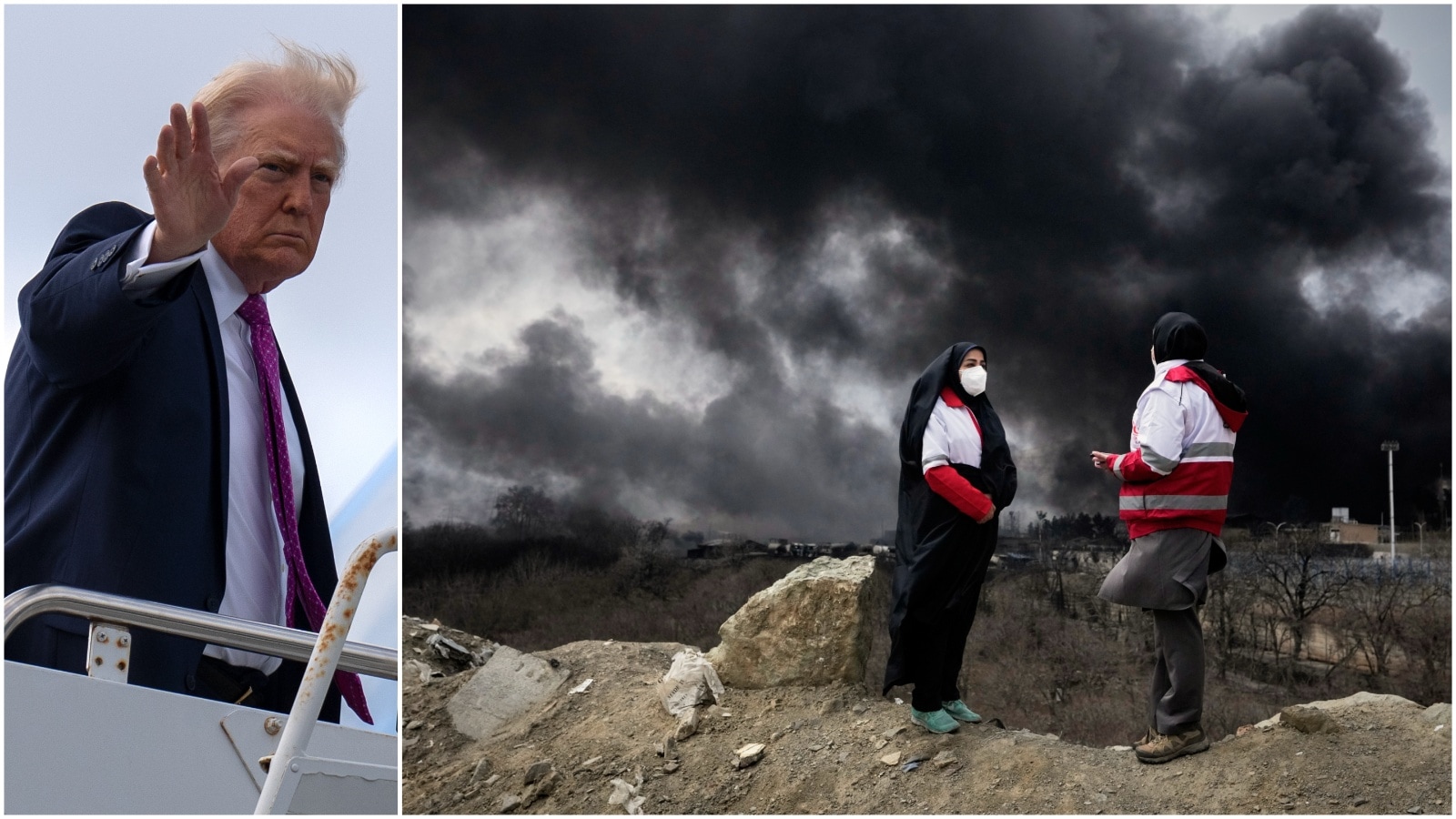
The war in the Middle East has now entered Day 32. Fresh strikes in Iran’s Isfahan rocked the country. The damage was not known immediately. Iran, on the other hand, allegedly attacked a Kuwaiti oil tanker near the Dubai port. Read below all that’s happened overnight as the war enters Day 32.
US President Donald Trump on Monday warned that Iran’s energy facilities and key infrastructure, including desalination plants, could face extensive destruction if a deal to end the conflict is not reached soon. In an interview with the New York Post, Trump said Washington is in contact with Iran’s parliamentary speaker, Mohammad Bagher Qalibaf. However, Qalibaf has denied any direct talks with the US, describing reports of Pakistan-mediated discussions as a cover for American troop movements.

At the same time, Israel has pushed into southern Lebanon in a bid to drive out Iran-backed Hezbollah fighters, who have been launching rockets and drones across the border. Israeli officials have indicated the operation could turn into a long-term presence. In the past 24 hours, at least three United Nations peacekeepers were killed in the region, though responsibility remains unclear.
Indonesian peacekeepers killed in Lebanon
Two Indonesian peacekeepers died while carrying out escort duties for UNIFIL operations in southern Lebanon, according to Indonesia’s defence ministry. Two others were seriously injured. Authorities said the exact circumstances are under investigation. A separate incident a day earlier had already left another Indonesian soldier dead and several others wounded. The ministry stressed that the safety of peacekeeping personnel must remain a priority and called on all sides to respect international humanitarian law.
Drone strike hits tanker near Dubai
A drone strike caused a fire on a Kuwaiti oil tanker off the coast of Dubai, authorities said. The blaze was contained, and all 24 crew members were reported safe. An Iranian strike hit the vessel, Al-Salmi oil tanker, 57 kilometres northwest of Dubai, reported Al Jazeera. The ship was registered to Kuwait Petroleum Corporation. Though no environmental damage has been recorded so far, the risk of oil spill remains.
Israel reviewing UN peacekeeper deaths
The Israeli military said it is examining reports related to the deaths of UN peacekeepers to determine whether they were caused by Hezbollah activity or Israeli fire. The incidents occurred in an active combat zone. According to UNIFIL, one attack involved an explosion that destroyed a vehicle, killing two peacekeepers and injuring others, while another strike hit a base.
Regional tensions escalate
Saudi Arabia said it intercepted three ballistic missiles targeting Riyadh. In Dubai, falling debris from an air defense interception sparked a fire in a residential area, injuring four people. Bahrain also activated warning sirens.
Story continues below this ad
Behind the scenes, Gulf allies of the US are reportedly urging Washington to continue military pressure on Iran until there is a decisive shift in leadership or policy. Saudi Arabia and the United Arab Emirates are said to be leading calls for a tougher stance.
Diplomatic push and regional talks
Leaders from Saudi Arabia, Qatar, and Jordan met in Jeddah to discuss the conflict and ways to prevent further escalation. They warned that attacks on civilian and critical infrastructure mark a dangerous phase and emphasized the need for coordinated regional action and diplomatic efforts.
US Secretary of State Marco Rubio criticized some NATO allies, particularly Spain, for limiting support during the conflict. He questioned the balance of commitments within the alliance, arguing that mutual cooperation should extend both ways during crises.
Iran rejects claims of negotiations
Iranian officials again denied any direct negotiations with the US Qalibaf and the Foreign Ministry said Washington was presenting its own assumptions as facts while continuing to issue threats. Tehran acknowledged receiving proposals through intermediaries but insisted no formal talks have taken place.
Story continues below this ad
UN calls for accountability
The United Nations condemned the killing of peacekeepers and confirmed an emergency Security Council meeting. Officials said investigations are ongoing, noting that such incidents are unacceptable and that peacekeepers must never be targeted.
Rising economic pressures
The conflict has pushed up global energy prices, increasing fuel costs. In the US, higher gasoline prices are affecting workers who rely on personal vehicles, including delivery drivers and ride-share operators, many of whom are struggling to offset rising expenses.
Ongoing humanitarian concerns
A UN envoy warned that Lebanon has been severely impacted by the fighting, with more than 1,240 people reported killed and over a million displaced. The longer the conflict continues, the harder recovery will become, the envoy said, urging renewed efforts toward a negotiated solution.
Market volatility continues
Financial markets remain unsettled. US stocks fluctuated throughout Monday’s session, reported Reuters, while oil prices climbed further. On Tuesday morning, May futures for benchmark Brent was above $111 per barrel while that of West Texas Intermediate (WTI) was nearly $102 per barrel.
Story continues below this ad
However, oil prices stemmed their spurt in Asian trading on Tuesday, reported Reuters. This was after a report mentioned that Trump told aides he is willing to end the Iran war “without reopening the Strait of Hormuz”.
OPEC oil prices also continued their upward trends. While Arab light traded at over $113 dollar per barrel, Kuwait Export Blend was approaching $119.
