

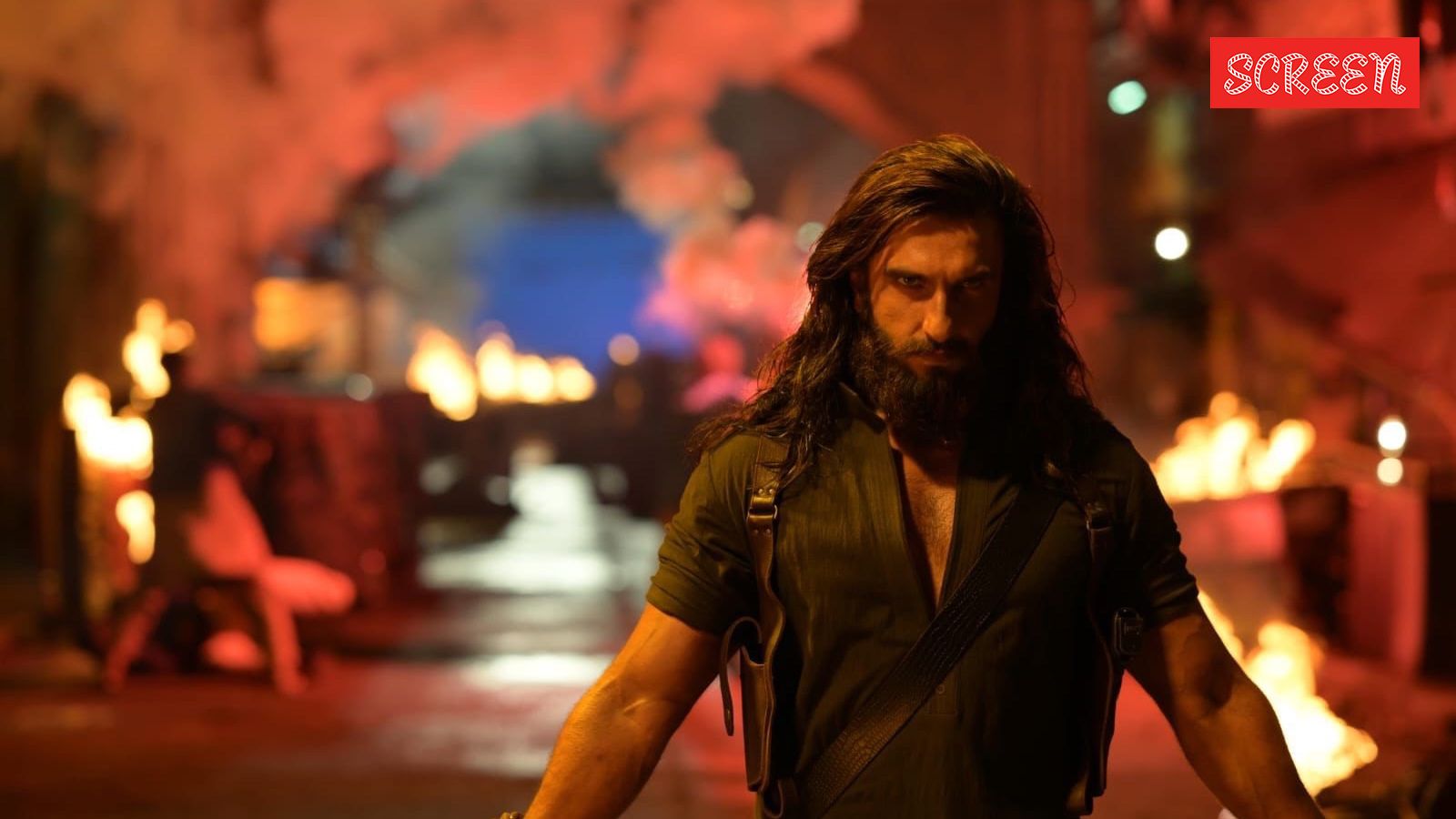
There are two scenes in Aditya Dhar’s Dhurandhar The Revenge that reveal, almost against its own instincts, what it might have been. The first comes just after the interval. Ranveer Singh, as Jaskirat Singh Rangi, stands before the remnants of his past. But in the same breath, he is already being compelled into becoming Hamza, forced to decide the fate of his handler. The second precedes it and belongs to the film’s antagonist, Major Iqbal (Arjun Rampal).
If the earlier scene examines becoming, this one concerns unravelling. And, much like Singh, Rampal is divided between two failures: as a son before a father who withholds approval, and as a commander before a nation that demands certainty he is unable to provide.

Both scenes settle into that uneasy space between the personal and the professional. Both scenes hint that what should be duty is contaminated by memory, what should be private has already been weaponised. Both scenes ask the film, if only briefly, to abandon its posturing, to relinquish its appetite for bloodshed, and to simply observe: the burdens these men carry, the private costs of their choices, the ways these costs harden into identity.

But, oh, well, these are only sporadic sparks in an almost four-hour-long exhausting saga of vengeance, replete with a storm of fury so thick that the story itself seems lost within it. Because beyond a point, the film loses its bearings; it behaves like a directionless youth, unsure of what its own rage seeks.
Its characters speak only in the language of hatred, think only with the mind of a bigot, and act only with the heart of a warmonger. Violence is a necessary ritual here: eyes are smashed, legs severed, heads tossed across streets like footballs. Homes, factories, warehouses, all ignite in flames. One act of brutality begets another; an eye for an eye is the only logic the film can follow, as if only through multiplying wounds can one reach closure, even if it leads to collective blindness.
Wrath binds every frame; it is the film’s DNA, tangible in each scream, each swing of a weapon. You can almost feel the weight of it, the years of fury Dhar has carried, now finally released onto the big screen. And yet, there is a difference between unleashing rage to cleanse, to find catharsis, to critique, and employing it with the intent to infect, with the aim to thrust it into the veins of the masses.
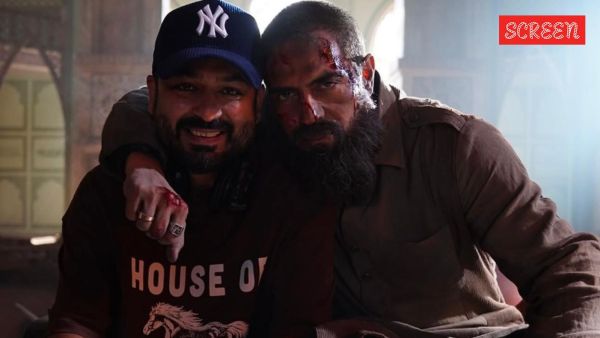 Dhar’s politics continue to puncture his craft. (Photo: Arjun Rampal, Instagram)
The film is an act of utmost shame for those who openly disregarded the prequel’s propagandist undertones, because here, Dhar no longer disguises his genuflection to power. And that was largely expected: in the original, his hero, Ajay Sanyal (R Madhavan), was waiting for an “ache din,” and here, as Hamza makes inroads into terror outfits in Pakistan, we also witness the collective rise of the BJP following their 2014 general election victory. The Prime Minister makes a few cameos; demonetisation is validated to such an extent that those across the border seem fearful of this “chai-wallah.” Somewhere in between, the surgical strikes in Uri are mentioned, and so too is the 2019 Ram Mandir verdict.
Story continues below this ad
There is one thing in aligning with any establishment or ideology, but there is another entirely in using every resource at your disposal to sacrifice every bit of nuance, structural complexity, and character motivation so as to transform the plot into a vehicle for state glorification. The second half, in particular, functions less as an organic story and more as a manifesto, cataloguing political achievements at the expense of diegetic logic.
Also Read | In Sudip Sharma’s superb Kohrra 2, the inheritance of mist shadows over tomorrow
It is, then, rather amusing, in a perverse sense, that Dhar appears to abandon any genuine engagement with the substantive concerns of the plot. Instead, he leans heavily on a melange of whataboutery, arguments that often resemble the intellectual calibre of forwarded messages, eventually resulting in a display of profound subservience.
So, then, what remains but craft? But what becomes of craft that others entire communities? What becomes of a narrative that collapses a nation as plural as ours into the image of a single religion? What becomes of a Sikh protagonist when the very land he belongs to is villainised? What becomes of a Muslim antagonist whose identity survives only as a conduit for venom? What becomes of intent that enforces allegiance at gunpoint, while minorities are lynched in the name of proving the same loyalty? What becomes of form when a funeral is scored to the beat of ‘Tamma Tamma Loge’? What becomes of a film that claims fiction yet bends real tragedy to its convenience? What becomes of a filmmaker whose art exists only as a matter of opportunism?
