

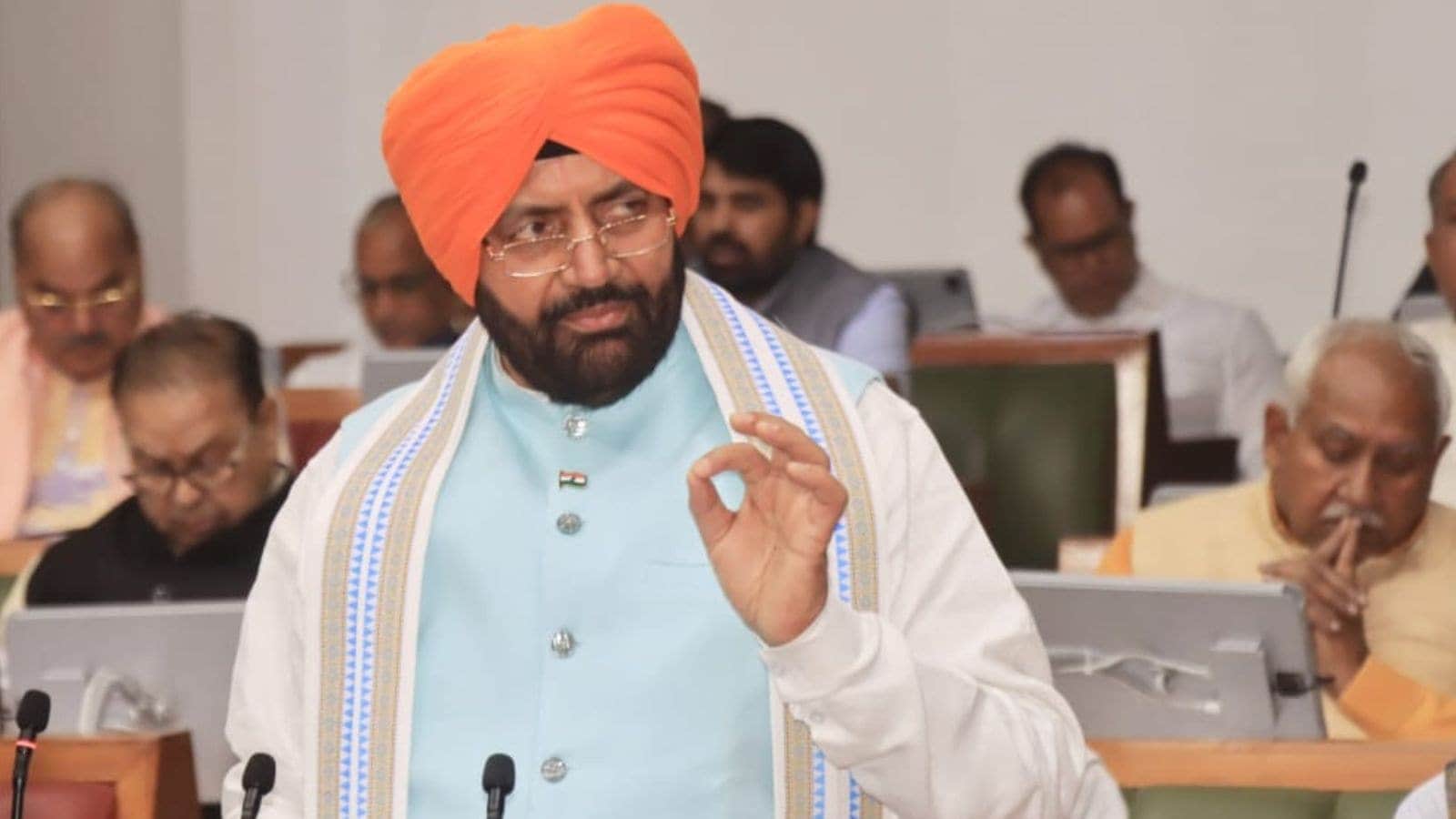
Reinforcing Haryana’s commitment to fiscal prudence and development-led growth, Chief Minister Nayab Singh Saini presented the Budget for 2026–27, placing special emphasis on seven key pillars that underscore disciplined financial management and a sharp rise in capital investment.
“The best indicator of a government’s financial management is the fiscal deficit. Between 2005 and 2014, Haryana’s fiscal deficit increased from Rs 286 crore to Rs 12,586 crore — nearly a 44-fold increase. However, in the 10 year period from 2014 to 2024, the fiscal deficit went up by only 2.75 times. As per the Fiscal Responsibility and Budget Management Act, 2003, a state’s fiscal deficit should remain below 3 per cent of its GDP of that year. In 2014–15, our fiscal deficit stood at 2.88 per cent of GDP, and in 2024–25, it declined to 2.83 per cent. In the previous budget, the government had set a target of further reducing it to 2.67 per cent,” said Saini.

He further said, “The fiscal deficit stood at 2.88 per cent of GSDP in 2014–15. Through sustained fiscal reforms and prudent management, it has been brought down to 2.66 per cent in 2025–26 and is proposed to be further contained at 2.65 per cent in 2026–27, comfortably within the statutory limit”.
Emphasising the government’s focus on asset creation, Saini highlighted the steady and significant rise in capital expenditure. “In 2004–05, capital expenditure stood at Rs 1,105 crore, constituting 7.1 per cent of the total budget. By 2014–15, it increased to Rs 4,558 crore, accounting for 7.4 per cent. In 2024–25, capital outlay rose sharply to Rs 15,642 crore, representing 8.9 per cent of the budget. Revised estimates for 2025–26 place it at Rs 21,207 crore, amounting to 10.5 per cent. For 2026–27, capital expenditure has been proposed at Rs 28,205 crore, which will constitute 12.6 per cent of the total budget, marking a historic expansion aimed at accelerating infrastructure and development projects”.
“Effective capital expenditure has recorded even sharper growth. From Rs 4,636 crore in 2014–15, representing 7.5 per cent of the total budget, it has risen to Rs 27,650 crore in 2025–26, accounting for 13.6 per cent, an increase of 6.1 per centage points over eleven years. For 2026–27, effective capital expenditure is estimated at Rs 35,216 crore, which will constitute 15.7 per cent of the total outlay”, Saini said.
Calling it a landmark achievement, Saini said that “for the first time in the state’s history, nearly 98 per cent of the total budget is expected to be utilised. In 2014–15, against a total budget of Rs 73,301 crore, actual expenditure was Rs 61,903 crore, reflecting utilisation of 84.45 per cent. For 2025–26, the total budget was Rs 2,05,017 crore, and by March 31, 2026, expenditure is estimated at nearly Rs 2,02,000 crore, translating into approximately 98 per cent utilisation — a testament to improved financial planning and execution”.
On revenue deficit, Saini said “it stood at 1.66 per cent of total budget expenditure in 2004–05, which increased eightfold to 13.4 per cent in 2014–15. By 2024–25, it declined to 11 per cent. In 2025–26, it is estimated at 8.98 per cent, significantly lower than in 2014–15, and for 2026–27, the government has set a target to reduce it further to 5.90 per cent of total budget expenditure. The effective revenue deficit, which was 1.9 per cent of GSDP in 2014–15, declined to 1.16 per cent in 2024–25. Revised estimates for 2025–26 place it at 0.86 per cent, and for 2026–27, the target has been set at just 0.41 per cent — reflecting sustained fiscal consolidation”.
Story continues below this ad
Highlighting improvements in public sector undertakings, Saini said, “In 2014–15, 22 undertakings were incurring losses; this number has reduced to 18 in 2024–25. The total losses of these undertakings, which stood at Rs 2,889 crore in 2014–15, have declined to Rs 1,012 crore showing nearly a threefold reduction. At the same time, profit-making undertakings have increased from 20 in 2014–15, with total profits of Rs 450.16 crore, to 24 in 2024–25, with total profits rising to Rs 1,205.14 crore, almost three times higher”.
He further shared that in 2004–05, revised estimates showed a 10.37 per cent shortfall compared to budget estimates. This gap reduced to 5.04 per cent in 2024–25 and has narrowed further to just 1.07 per cent in 2025–26, demonstrating improved accuracy in financial forecasting and strengthened fiscal discipline.
“The 2026–27 Budget reflects the Haryana government’s firm resolve to maintain financial stability while accelerating development across the State”, Saini said.
