

As the Brihanmumbai Municipal Corporation (BMC) tabled its annual budget before the civic standing committee on Wednesday, allocations for five major infrastructure projects together accounted for 42 per cent of the total capital expenditure of Rs 48,162 crore for the financial year 2026–27.
The BMC’s overall budget size for FY 2026–27 stands at Rs 80,952 crore, with nearly 60 per cent earmarked for capital expenditure. The five projects that received the highest funding include the civic body’s wastewater treatment facility (WWTF), under which seven sewage treatment plants (STPs) are to be constructed. For 2026–27, the BMC has allocated Rs 5,690 crore for the WWTF project.

This is followed by Rs 5,520 crore for the ongoing road concretisation project, Rs 4,000 crore for the Mumbai Coastal Road (North: Versova–Dahisar), Rs 2,650 crore for the Goregaon–Mulund Link Road (GMLR) project, and Rs 2,324 crore for the BMC’s water conveyance tunnel project.
Together, these five projects account for 42 per cent of the total capital expenditure and nearly 25 per cent of the BMC’s overall budget.
The allocations also underline the Devendra Fadnavis-led Mahayuti government’s thrust on accelerating infrastructure development in Mumbai.
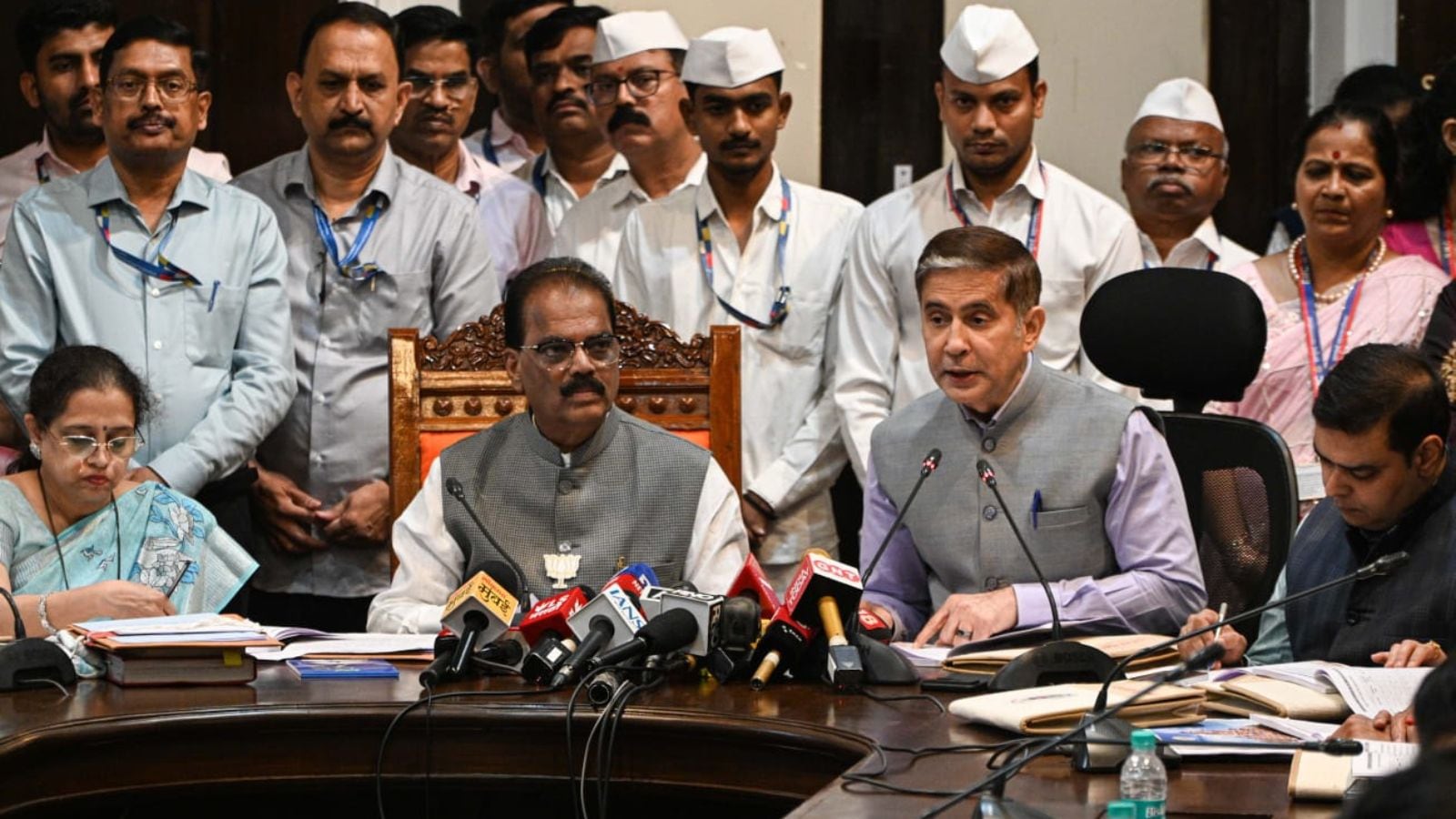
During his budget speech, Municipal Commissioner Bhushan Gagrani said the focus on upgrading existing infrastructure was aimed at improving civic services.
“The BMC has committed a liability of Rs 2.13 lakh crore towards prestigious and priority infrastructure projects along with Rs 31,406 crore for essential works across other civic departments. This total commitment reflects BMC’s strong focus on strengthening infrastructure and significantly improving civic services,” Gagrani said.
Story continues below this ad
Notably, the budget did not announce any new big-ticket projects.
“The primary focus of the administration is to make Mumbai future-ready. The city’s population has been on the rise and no new water source has been created since 2014. Therefore, there is a need to augment the city’s existing water supply network. At the same time, Mumbai is growing rapidly, and connectivity also needs to be strengthened.
Hence, focus was given to key infrastructure projects like GMLR and the Mumbai Coastal Road,” an official said.
The WWTF project comprises seven STPs, of which three are expected to become operational by the end of 2026, while the remaining four are slated to be commissioned next year. The plants will have a combined capacity to treat up to 2,464 million litres per day (MLD) of sewage, helping bridge the city’s water supply deficit.
On road infrastructure, the BMC has taken up concreting 700 km of roads in two phases of 350 km each. Budget data show that as of Wednesday, 75 per cent of the work under the first phase has been completed, while 50 per cent of the second phase has been executed. The civic body aims to complete the entire project by December 2026.
Story continues below this ad
Meanwhile, the 25-km-long coastal road is set to connect Versova in Mumbai’s western suburbs with Bhayander in the Mumbai Metropolitan Region (MMR).
In addition, excavation work for the twin tunnels of the GMLR project is scheduled to begin this year, prompting a substantial allocation for the project. While the first phase is expected to be completed this year, officials have set a 2029 deadline for the overall project. The GMLR and the second phase of the coastal road are also planned to be linked to ensure smoother traffic movement between the eastern and western suburbs.
The civic body has also earmarked Rs 437.51 crore for the Gargai–Pinjal project, a pet initiative of Chief Minister Devendra Fadnavis. Under the project, the BMC plans to construct a dam in Palghar district to supply 440 MLD of water to Mumbai daily.


