

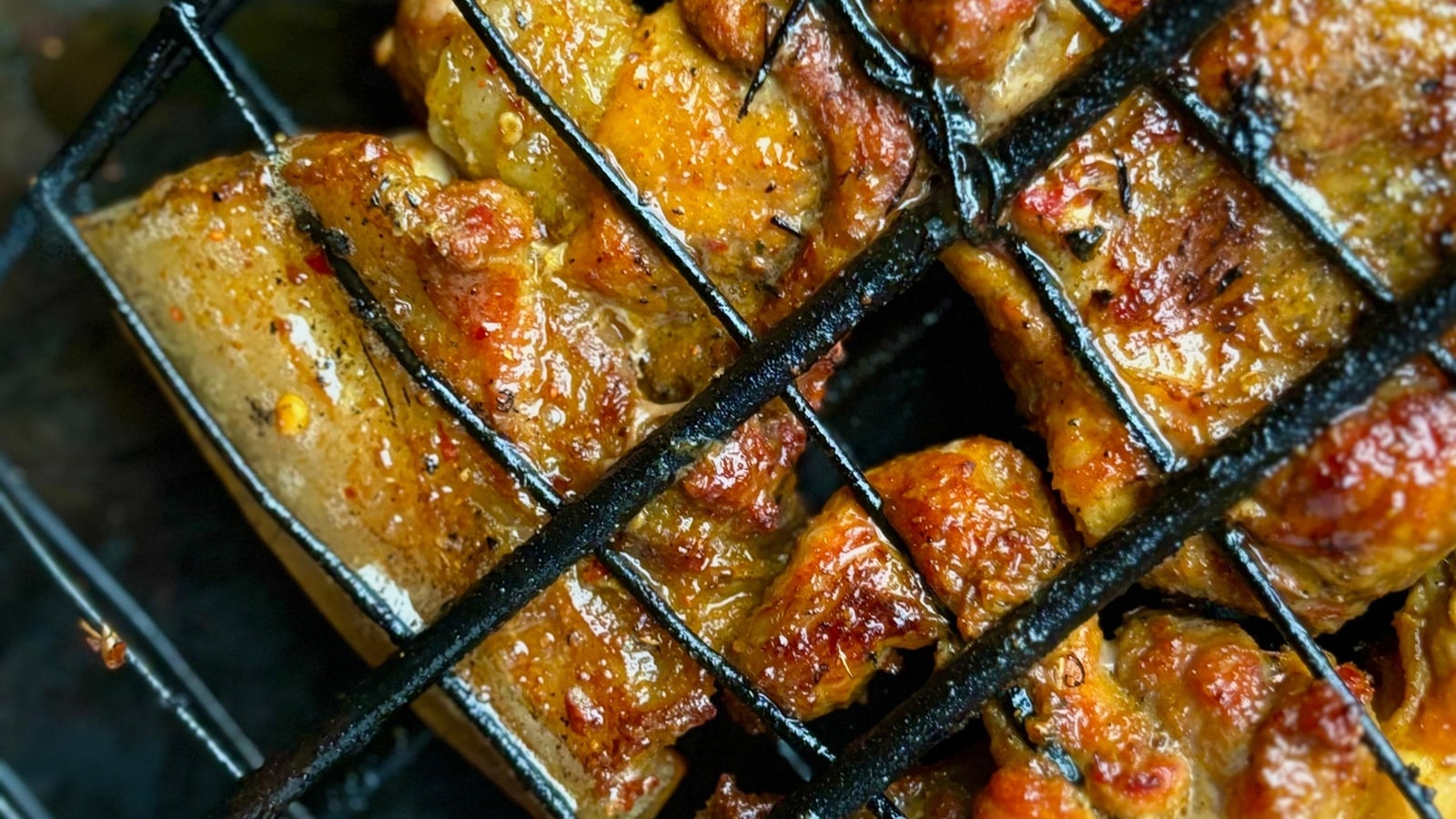
Thin blue smoke from a smouldering fire — kept alive for days — seeps into walls, woven bamboo mats, and the air itself. Above slow-burning hearths, strips of meat hang patiently, ageing until they grow darker and denser. Wild herbs, fresh greens, and hyper-local seasonal produce are foraged to complete the meal. Together, these rituals take on a deeper meaning during winter in northeast India, where smoked meat is the undisputed king.
A practice passed down through generations, smoked meat occupies a special place in homes across the region. A simple meal of dal (lentils), chawal (rice), and sabzi (vegetables) is transformed into something extraordinary. Here, smoking meat is not just a culinary technique — it is a way of life

“Smoking is not just a technique; it is a strong connection to the roots,” says Atul Lahkar, Chef Ambassador for Assam for India Food Tourism Organisation, and Vice President of the North East India Chef Association.
“Through smoking, we carry the wisdom of generations and hundreds of community recipes. Many of our social customs, rituals, and festive traditions revolve around smoked and fermented food. I have countless memories, from tasting freshly smoked pork in remote villages to learning the subtle differences in wood, fire, and time. Every smoked dish reminds me of where we come from.”
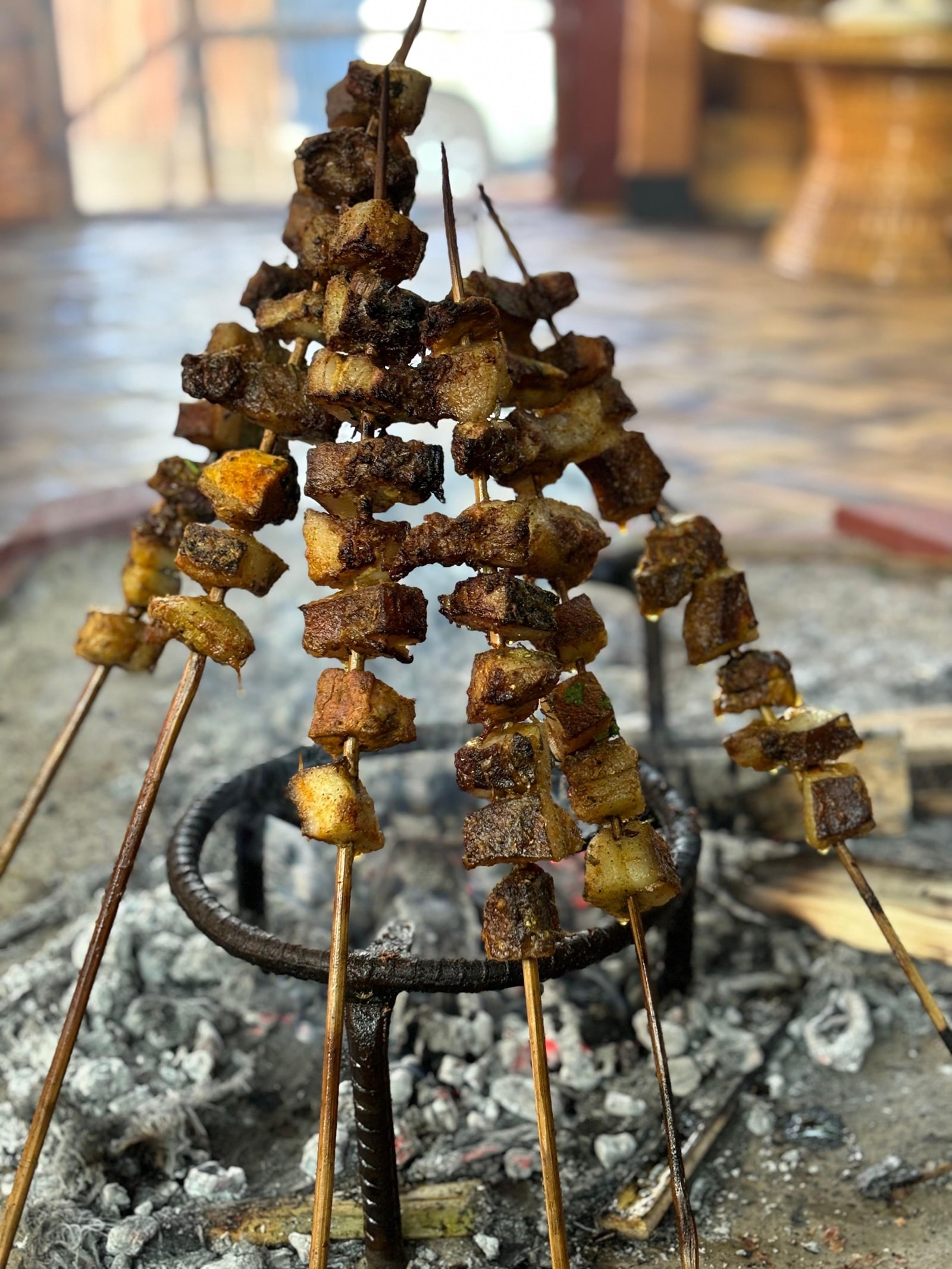 Wood selection and time play a major role in how the flavour develops. (Credit: Chef Atul Lahkar)
One region, many techniques
With more than 200 ethnic groups, northeast India is among the most culturally diverse regions in the country. Smoked meat is the common culinary thread that binds these cuisines together. Yet each community has its own way of preparing it, shaped by climate, landscape, local ingredients, and cultural practices.
Wood selection and time play a major role in how the flavour develops. Diganta Saikia, who co-founded Manxho — a brand known for smoked meat and heritage food products — with Vardhan Saikia and Jitu Bora in 2017, says they use four types of wood to get the colour, texture, quality, and flavour right.
“Meat can be smoked in various ways, and each method brings its own unique flavours. But broadly, there are two main techniques in northeast India. Either fresh meat is salted, cured, and smoked, or it is boiled first and then smoked, which gives it a different colour and texture,” says Saikia.
Story continues below this ad
The best results, he adds, come from curing the meat and then smoking it slowly over a steady fire using the right wood and heat.
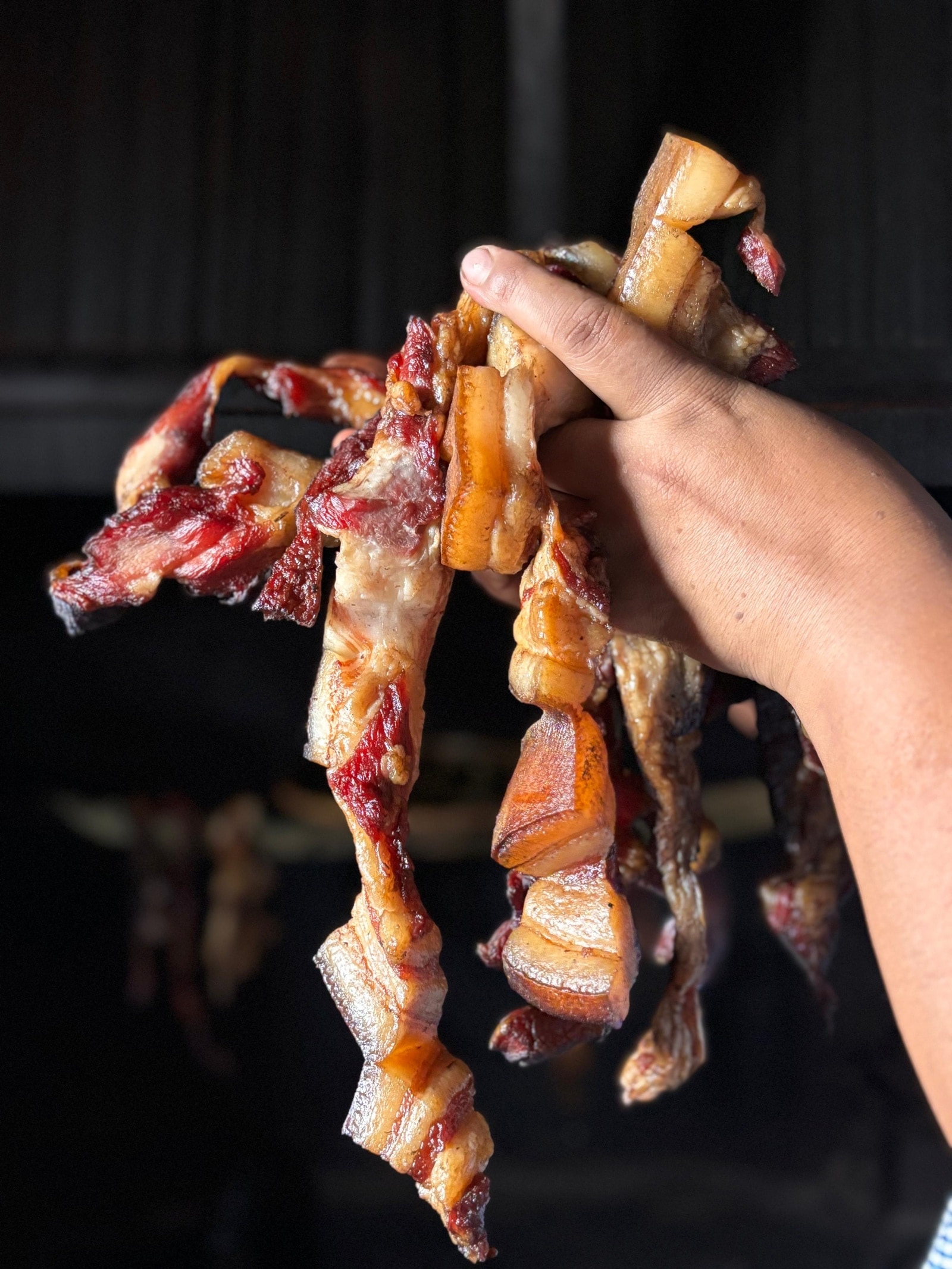 While much of India relied on sun-drying, pickling, salting, or heavy spicing, the northeast leaned towards smoking and fermentation. (Credit: Chef Atul Lahkar)
How climate shaped the kitchens
Much of northeast India receives heavy rainfall, and humidity lingers even in the plains. Before refrigeration, preserving food in such conditions posed a challenge. Smoking emerged as the most reliable solution — practical, sustainable, and well-suited to the region’s forested landscape.
While much of India relied on sun-drying, pickling, salting, or heavy spicing, the northeast leaned towards smoking and fermentation. “Humidity and forest ecology naturally pushed us toward smoking,” Lahkar explains. “Pickling and smoking are both preservation arts, but smoking became our ancestral technique because it suited our homes and our rhythm of life.”
Traditional stilt houses, with hearths burning through the day, doubled as natural smoke chambers. Communities depended on seasonal abundance and shared cooking spaces.
Story continues below this ad
“Every village I travelled to in the hills has its own method, but the philosophy is the same: smoke gives life to the ingredient long after the season ends,” says Lahkar.
What began as an environmental adaptation gradually turned into a food and cultural identity. The idea was never to create a culinary impact; it was food security.
Echoes of Southeast Asia
The smoking traditions of northeast India share deep similarities with Southeast Asian cuisines rather than with mainland India.
Many communities in the northeast trace their ancestry to Tibeto-Burman and Austroasiatic groups who migrated from southern China, Myanmar, Thailand, Vietnam, Laos, Cambodia, and Malaysia thousands of years ago.
Story continues below this ad
They carried with them preservation techniques such as smoking meat over hearths, fermenting bamboo shoots, pickling with salt or ash, and making dried meat stocks — techniques still common across China’s Yunnan, Myanmar’s Chin and Kachin regions, northern Thailand, Laos, and Vietnam.
For example, in China’s Yunnan province and Myanmar’s Chin Hills, pork is smoked above hearths and later cooked in simple broths and stir-fries. In Laos and northern Thailand, dried or lightly smoked meats and fermented bamboo shoots are a part of everyday cooking. These techniques closely mirror those found in Naga, Mizo, Khasi, and Assamese kitchens.
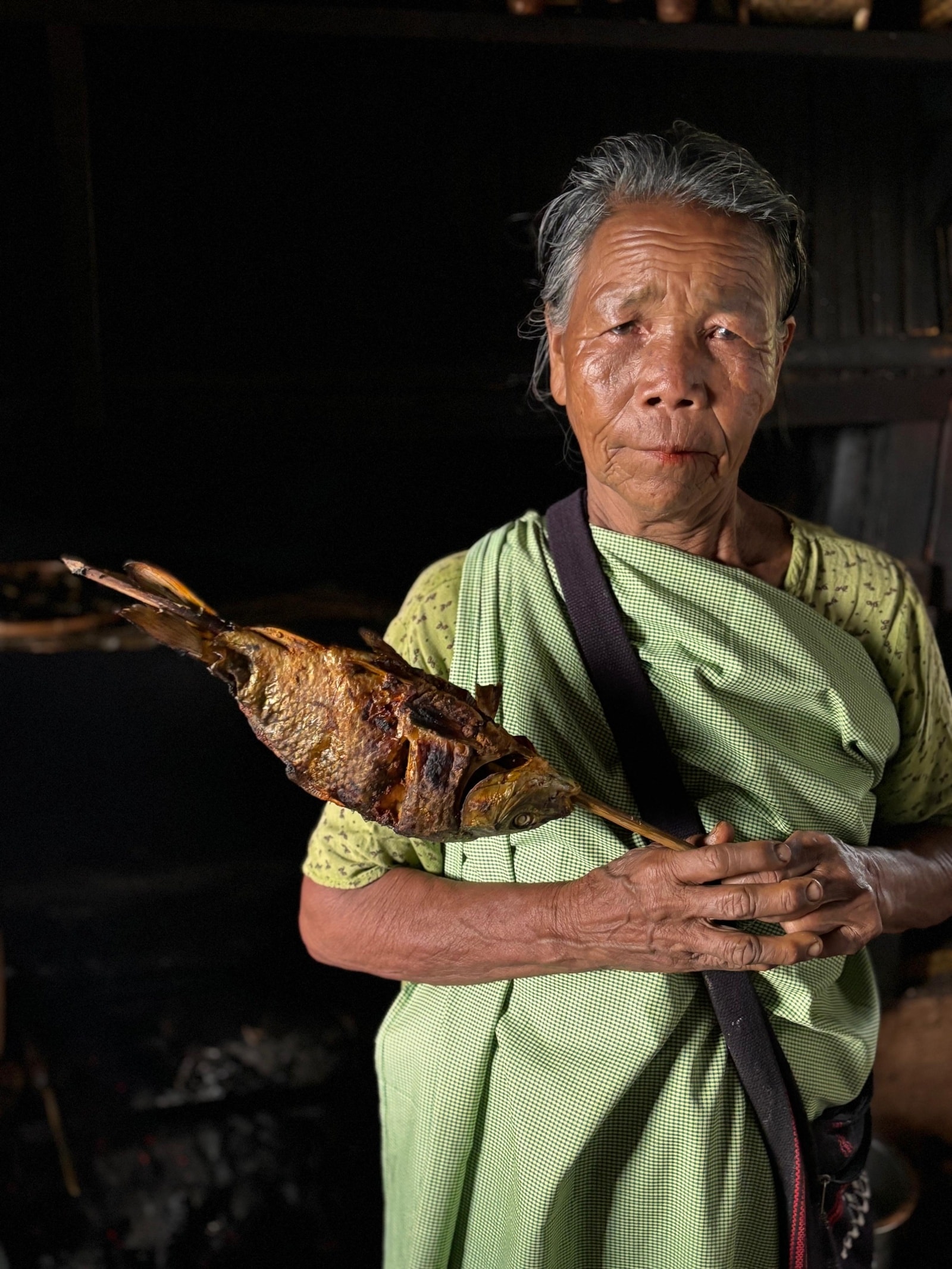 The reliance on local ingredients, often difficult to find elsewhere, made wider recognition difficult. (Credit: Chef Atul Lahkar)
Missing from India’s culinary narrative
Despite its depth, the northeastern cuisine has remained largely absent from mainstream conversations. The northeastern states — Assam, Meghalaya, Nagaland, Mizoram, Arunachal Pradesh, Tripura, Manipur, and Sikkim — rarely feature in popular menus.
Geography played a major role. Long before modern connectivity, the region remained on the margins of cultural exchange. Political isolation further reinforced this distance, limiting culinary and commercial interaction with the rest of the country.
Story continues below this ad
“While dishes like biryani, dosa, butter chicken, among others, gained popularity, northeastern cuisine remained rooted in local culture, with a huge lineage of indigenous food practices,” says Saikia.
The reliance on local ingredients, often difficult to find elsewhere, made wider recognition difficult.
Social factors also shaped perceptions. Much of India’s food history is intertwined with religion and caste, where ideas of purity shaped diets. Food choices in the northeast, however, were guided more by ecology than theology. Over time, this created a quiet culinary divide. While much of India experimented with spices, the northeast refined the art of preservation.
Media representation compounded the gap. Indian food narratives in films, television, and popular writing have long prioritised Mughlai, Punjabi, and South Indian cuisines, leaving northeastern traditions largely invisible. The issue was never taste; it was visibility and access.
Story continues below this ad
A slow but steady rise
That invisibility is now beginning to shift. Northeastern cuisine is finding a niche in Indian metros, with chefs, home cooks, and pop-up kitchens introducing diners to dishes like smoked pork with bamboo shoots. These flavours challenge the idea that Indian food must be spice-heavy.
In New Delhi, Hornbill has been a pioneer. Founded in 2015 by Khevito Elvis Lee, the restaurant opened at a time when food from the northeast was barely part of the city’s culinary conversation.
A few Naga restaurants existed, but they were not budget-friendly, says Lee, who previously worked with Taj, Marriott, and Holiday Inn. His aim was simple: to make good Naga food accessible to students and professionals working in BPOs. Today, Hornbill has evolved into a family dining space, while continuing its tradition of a 10 per cent discount for students.
“Northeastern food has become quite popular over the last few years. Thanks to major festivals back home, people from many states get to experience the tradition and cuisine,” says Lee, adding that many customers started visiting them after attending the Hornbill festival in Nagaland. “They wanted the same flavours they had enjoyed there.”
Story continues below this ad
Smoked pork with Axone (fermented soybean), smoked pork with Anishi (dried yam leaves), and pork ribs are among the most popular dishes.
Migration has also shaped this exchange. Students and professionals moving to mainland cities have introduced friends and colleagues to these flavours, spreading the cuisine among different groups — one circle at a time.
A broader shift in the Indian palate has also helped. BBQ and grilled dishes are now mainstream, and these flavours naturally blend with smoked cuisine.
“Earlier, the biggest barriers were awareness, communication, and availability of ingredients,” says Lahkar. “But today, more restaurants explore northeast flavours, and supply chains are improving. With the right storytelling, we can showcase smoked dishes across India without hesitation.”
Story continues below this ad
In Mumbai, northeast food curator Gitika Saikia launched Gitika’s PakGhor in 2014, seeing the absence of the cuisine as an “opportunity to create an identity” for it.
As one of the early voices introducing northeastern food to Mumbai diners, she faced skepticism — sometimes even from people back home. “People often told me they felt embarrassed about me introducing ethnic food to Mumbaikars, but I never felt that way.”
The pandemic proved to be a turning point. Her delivery orders surged, introducing the cuisine to many first-time diners. Visibility increased further when actor Anushka Sharma became a regular customer, ordering customised menus. “It helped start conversations among mainland diners about smoked pork, axone (fermented soybeans), and bamboo shoots,” she says.
Still, the learning curve has been steep. “People would ask for garam masala or jeera powder… It took time, but people eventually warmed up.” Smoked pork remains a favourite among her customers, though it is never prepared the same way year-round. “In winter, I cook it with lai xaak (mustard greens),” she says.
In Hyderabad, chef consultant and Mamazaki owner Farha Naaz has reinterpreted the cuisine for modern kitchens while staying rooted to the origins. “There’s nothing conventional about my menu, but the essence is always there.”
According to Naaz, diners are now far more open to trying northeastern cuisine. “The food and beverage industry, too, has realised how much the northeast has to offer. There was stigma earlier, but things are changing.”
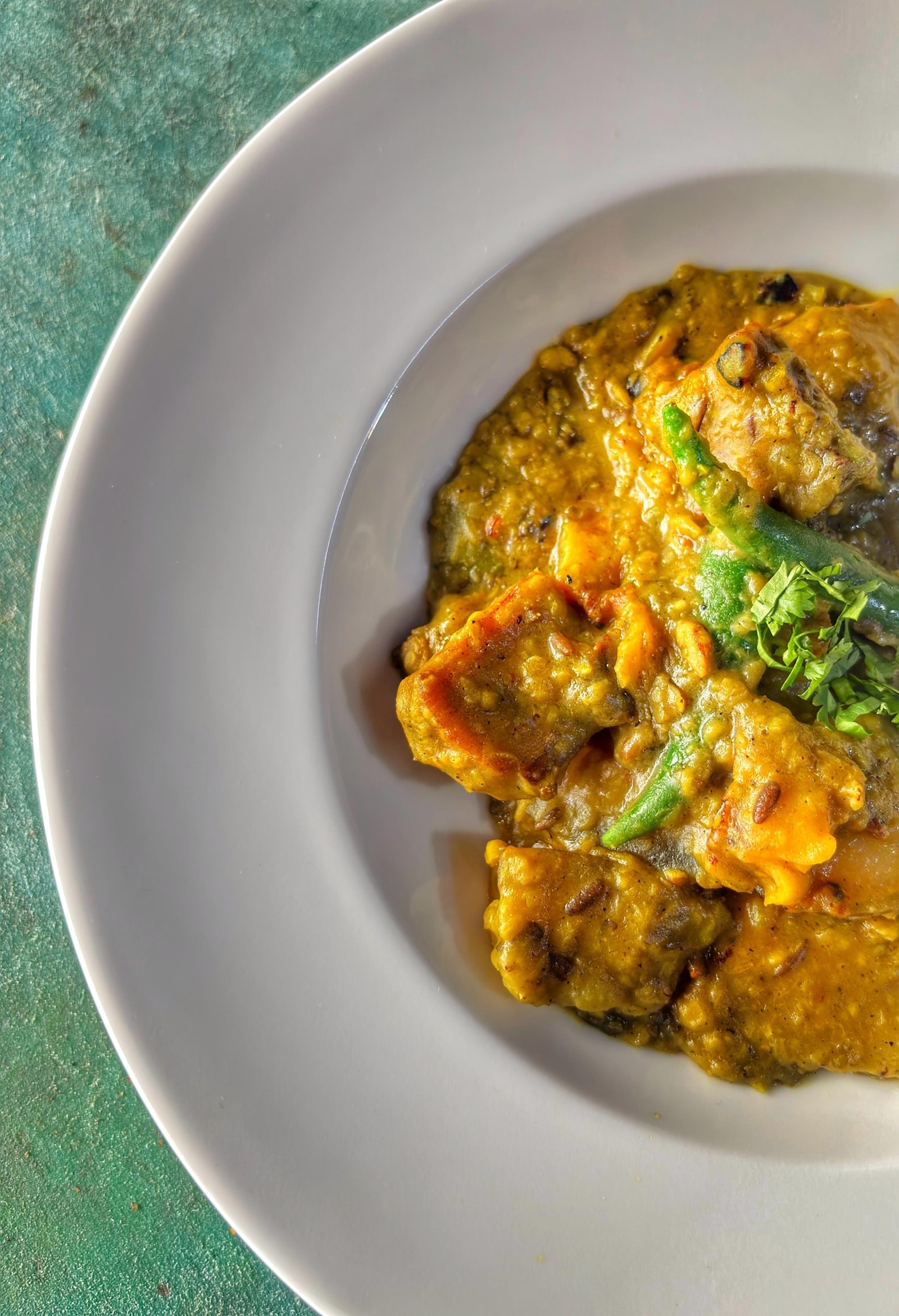 Smoked meat with black lentils – A traditional Assamese dish. (Credit: Chef Atul Lahkar)
What the future holds
To understand the tradition of smoking meat in the northeast is to read a chapter of food anthropology that speaks of adaptation, resilience and patience. Urbanisation, however, has changed how people cook, store food, and relate to tradition. In cities, people are turning to smart ovens and electric smokers to recreate the flavours once produced in open courtyards or traditional smokehouses.
Lahkar sees this shift as an opportunity, not a loss. “As a chef, I enjoy working with both worlds: the pure, traditional method and the modern progressive approach. The key is balance: never compromise on the flavour, but adapt the technique to the palate of the audience. While the age-old methods should be preserved for their cultural roots, smoked dishes also need to be reimagined for a larger global audience.”
Food researcher and consulting chef Sanjukta Das agrees. “Smoking was quintessentially a preservation technique, but now smoking of food is done mostly to enhance flavours and bring about a richness in flavour profiling. The longer the meat or fish is smoked, the better the taste.”
Accessibility is the key. Saikia says Manxho was built on this idea — to bring the smoky flavours of the northeast to tables across India, revive forgotten recipes, and introduce new ones, such as their pork curry with rum.
“With time, people are losing the practice of smoking meat, which was once common in households,” he says. “We are trying to bring our customers authentic smoked meat. We follow traditional methods, but also adapt them in ways that help us build a sustainable business.”
Saikia believes that “in the next five years, smoked meat will be considered a heritage food and a growing culinary trend.”
The time-honoured practice of smoking meat handed down through generations may not be as widespread in every household in the northeast today, but it has still stood the test of time. And as the world begins to discover its richness, smoked meat will always remain one of northeast India’s defining flavours — its culinary pride.
How meat is smoked across northeast India
Smoked meat with black lentils (A traditional Bodo dish from Assam)
Recipe by Chef Atul Lahkar
This dish carries the history of the Bodo people: the use of smoke for preservation, and their reliance on lentils and alkaline water. Each bowl reflects a way of life that respects the forest, the hearth, and the rhythms of simple living.
Ingredients (Serves 4–6):
-
Black lentil (urad dal) – 200 gm
-
Smoked meat (pork or chicken) – 500 gm
-
Onions – 2, finely chopped
-
Garlic cloves – 10, crushed
-
Green chillies – 4, slit
-
Mustard oil – 4 tbsp
-
Alkaline water (khaar) – 1 cup
-
Salt to taste
-
Water as required
Method:
-
Heat the mustard oil in a wok until it releases its sharp, nutty aroma.
-
Add the onions, garlic, and green chillies. Fry them gently until they turn soft and golden.
-
Add the smoked meat to the wok. Fry continuously so that the meat absorbs the aromatics and the mustard oil. This step deepens the smoky notes.
-
Season with salt and pour alkaline water. Continue frying. Alkaline water is essential in many Bodo dishes — it tenderises the meat and gives the gravy a smooth, earthy character.
-
Add the soaked black lentils and fry everything together for a few minutes. This allows the lentils to absorb the flavours of the meat.
-
Pour enough water to cover the ingredients and bring the pot to a boil.
-
Simmer gently until the smoked meat becomes tender and the lentils break down to form a thick gravy. The final texture should be hearty, with the smokiness shining through every spoonful.
Chef’s Notes:
-
Soak the black lentils overnight – this softens them and develops their natural sweetness.
-
Rinse the smoked meat briefly in hot water. This cleans the surface and balances the intensity of the smoke while keeping the aroma intact.
-
The dish tastes best when cooked slowly, letting the smoke, alkaline, and lentils melt together naturally.
-
Using pork gives a richer flavour, while smoked chicken creates a lighter, slightly sharper profile.
-
Serve it with steamed rice or soft millet preparations traditionally eaten by the Bodo community.
