

Every year around this time, I start getting queries about the Galaxy S series, Samsung’s flagship smartphone lineup. By this point, the iPhone has already been out for a few months, and so have the Google Pixel and other Android flagships from major phone makers.
For Samsung, the Galaxy S series is its main flagship lineup and is critical to the company’s smartphone business, helping it compete with the iPhone in the highly competitive premium smartphone market. A lot rides on the success of the Galaxy S series, as it often sets trends for how smartphones evolve and the direction they are headed.

Samsung’s new Galaxy S26 series, introduced in San Francisco at the company’s annual Unpacked event, offers a glimpse of what 2026’s flagship Android smartphones will look like. The lineup includes three smartphones, excluding the ultra-slim Edge device, each catering to a different segment, including the top-end Galaxy S26 Ultra (starts at $1300)
All three smartphones feature upgraded hardware, but the real story, as expected, is how software and AI are changing the smartphone experience. That’s the biggest takeaway from the Galaxy S26 series, reflecting the industry’s mood.
While I spent a few minutes with the Galaxy S26 and S26 Plus, I gave most of my time to the Galaxy S26 Ultra.
Here’s my early take on the S26 series, what I learned from them, and where I think smartphones are headed.
Samsung Galaxy S26 Ultra
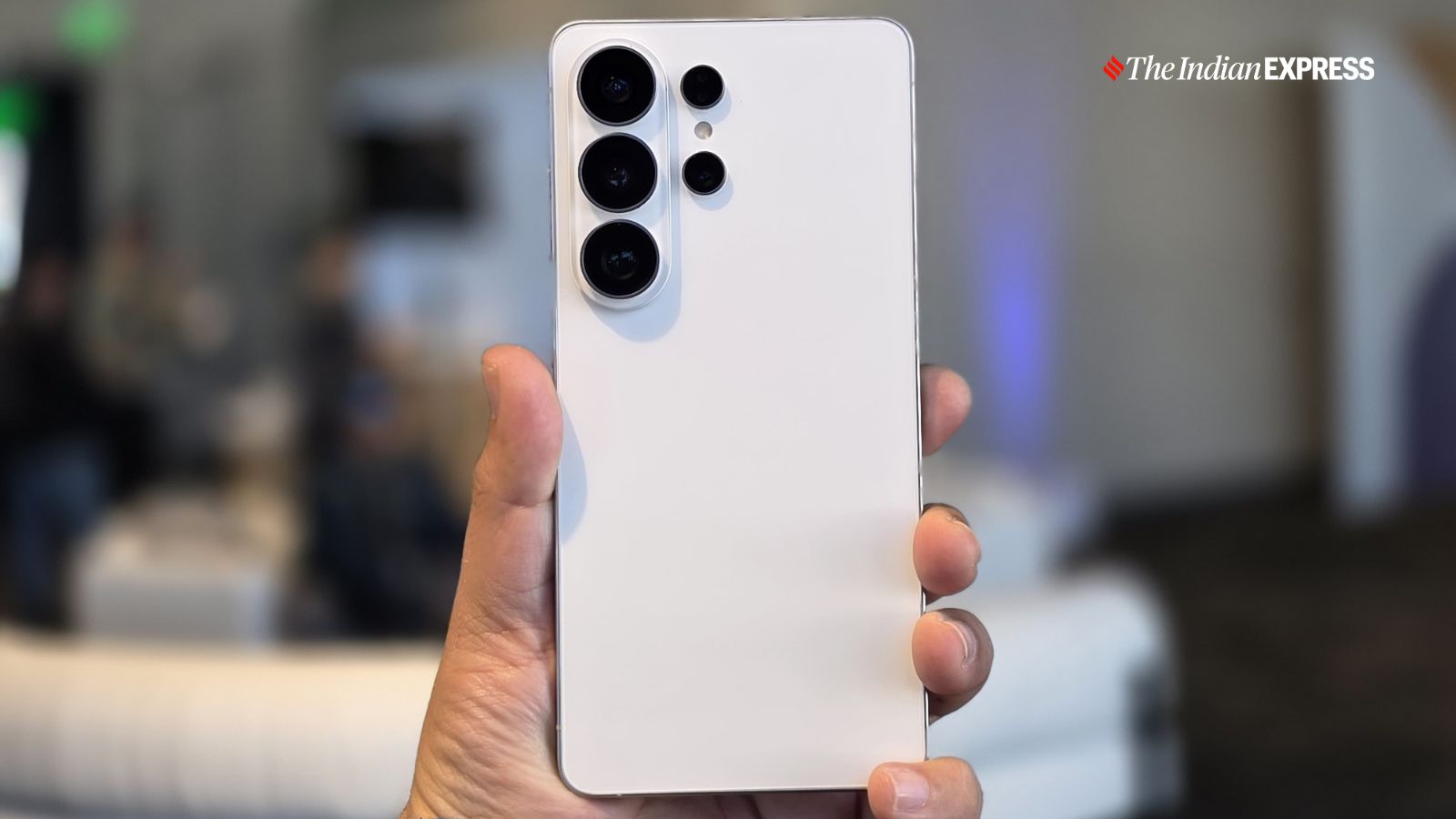
At first glance, the Galaxy S26 Ultra could be mistaken for the Galaxy S25 Ultra, as there are very few cosmetic changes. Yes, it feels lighter in the hand and has curvier corners, but it is still a large phone that requires two-handed use. It features a 6.9-inch QHD+ display that is exceptionally bright and coloruful, as always. The phone also includes the S Pen, like the S25 Ultra, but it lacks Bluetooth LE functionality, which means it misses out on remote features such as Air Actions.
Story continues below this ad
The only major design change is the use of an aluminium armour casing to help dissipate heat, replacing the titanium previously used on the S25 Ultra.
 The S Pen no longer has Bluetooth connectivity. (Image: Anuj Bhatia/The Indian Express)
Inside, the S26 Ultra is powered by Qualcomm’s Snapdragon 8 Elite Gen 5 for Galaxy chip, along with 12GB of RAM (the top-end variant gets a boost to 16GB) and up to 1TB of storage. Samsung claims that general CPU performance is up by 19 per cent. Meanwhile, GPU speeds are up 24 per cent, while the S26 Ultra’s NPU has received the biggest boost of around 39 per cent.
To help provide improved sustained performance for tasks like gaming, Samsung says the S26 Ultra’s vapour chamber has been redesigned to allow heat to spread more effectively across a larger surface area.
In my brief testing, the phone felt predictably responsive, though it was hard to tell whether that was entirely due to the new chip or partly thanks to the snappier One UI 8.5, which comes pre-installed on the Galaxy S26 series.
Story continues below this ad
Privacy Display is a game-changer
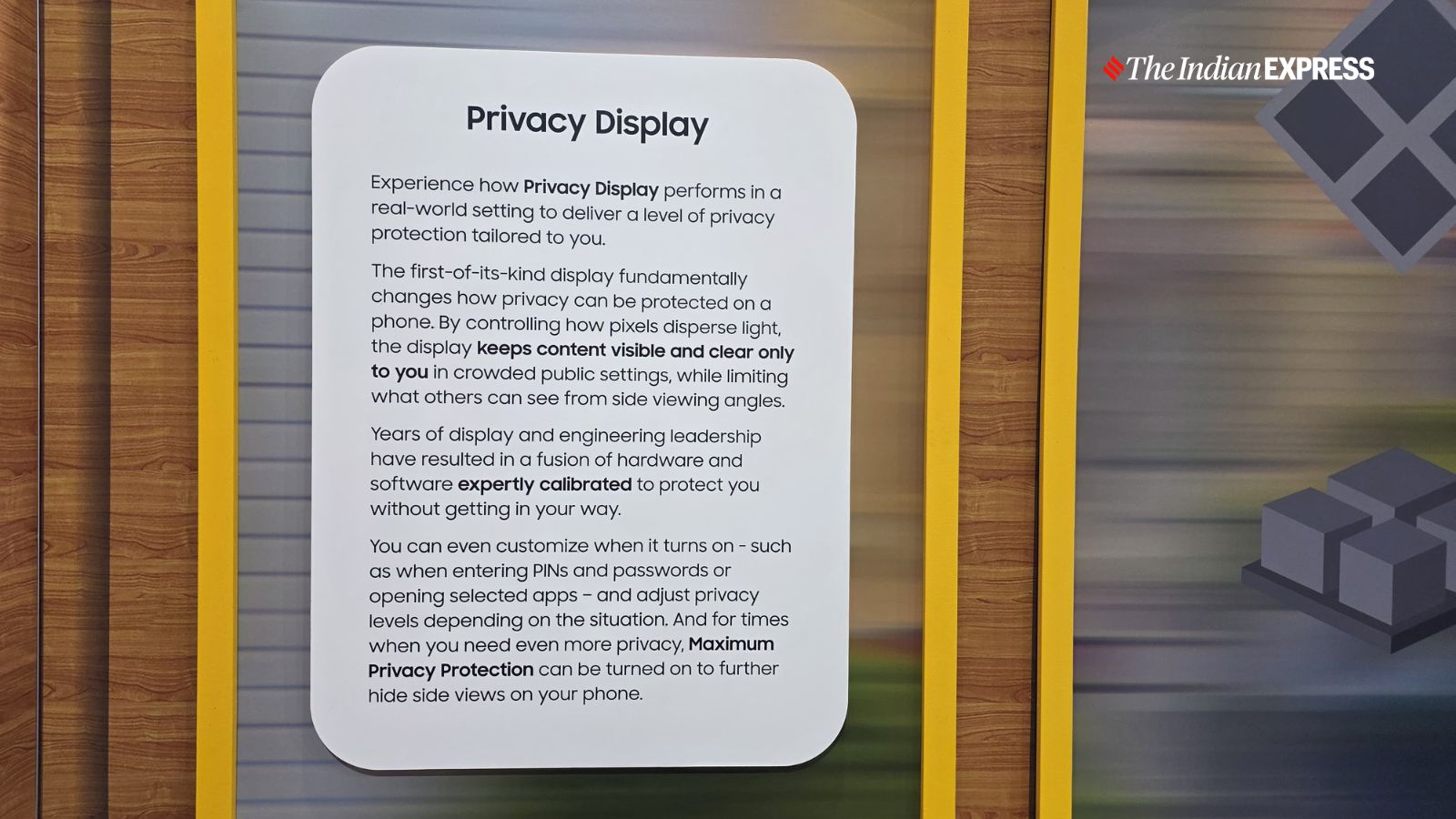
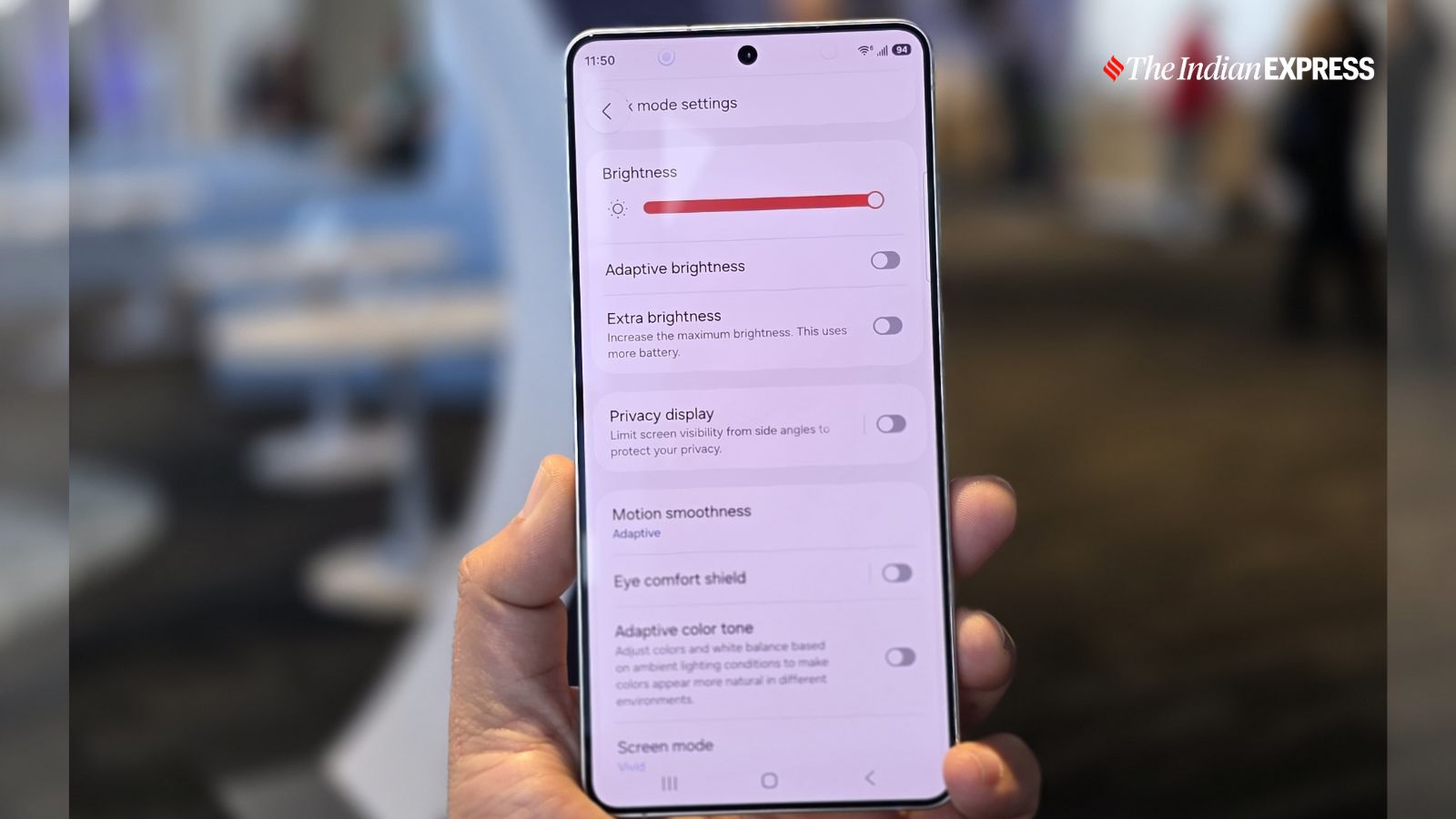
For me, though, the standout feature of the Galaxy S26 Ultra is the Privacy Display – perhaps the first smartphone to offer it. When turned on, the feature prevents others from glancing over your shoulder or from the side to see potentially private content on your screen. A software toggle enables this setting, which shades the screen when you’re not looking at it directly.
You can adjust the intensity of the privacy display, adding just a slight shadow at off angles if you prefer, or dive deeper into the settings and enable the “Maximum Privacy Protection” option, which makes the screen even harder to view when the privacy display is on.
 The privacy screen no longer darkens the entire display, and it protects only the content you do not want others to see. (Image: Anuj Bhatia/The Indian Express)
I think it’s a great implementation of a feature that most people who travel by public transport can relate to. There are times when others sneak a look at your phone and read personal or intimate details. I have personally experienced this many times during my commute on the Delhi Metro.
I am told that the Privacy Display feature is exclusive to the Galaxy S26 Ultra and won’t be available on the Galaxy S26 or S26 Plus. This is because it requires a specialised display and a combination of both hardware and software.
Story continues below this ad
Designed for the agentic AI era
During the Unpacked event, Samsung executives pitched the Galaxy S26 series as designed for the Agentic AI era, and the devices are no longer just AI phones, as was the case with the S25 lineup. It’s a bold claim, but the question is how close we really are to the Agentic AI era, or whether we are already in it. I can certainly see the progress artificial intelligence has made over the past few months, and how phones are evolving too, though it is still difficult to fully comprehend how useful AI is on a smartphone.
For example, new to the Galaxy S26 series is a feature called Now Nudge, which supports a wide range of capabilities and improved context awareness. A friend of mine just sent me a message to make plans for going out to dinner. Once I opened the message, Now Nudge kicked in and started providing me with relevant information and suggested actions.
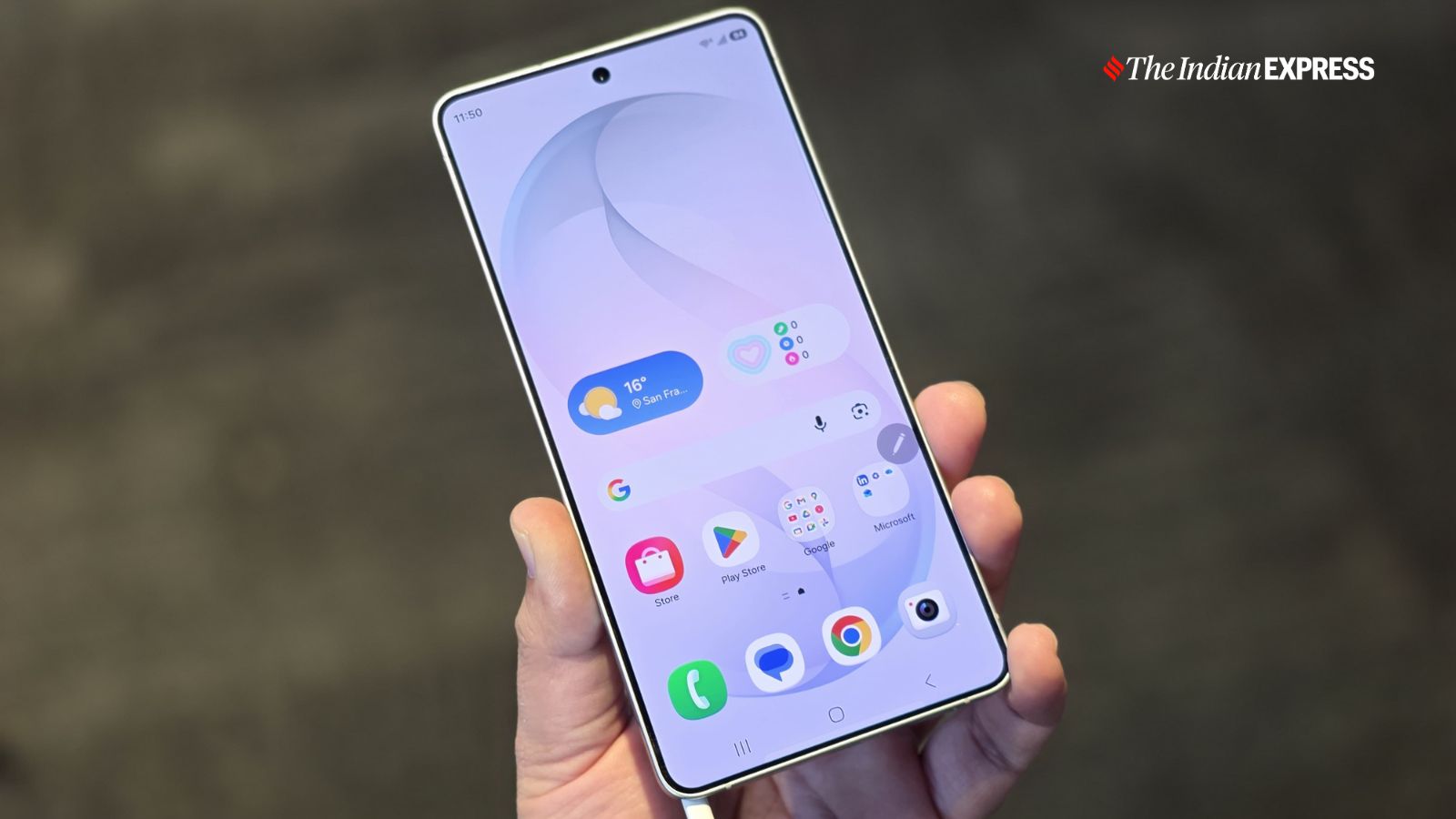
 At the heart of the Galaxy S26 Ultra is a custom version of the Snapdragon 8 Elite chip and 12GB of RAM (Image: Anuj Bhatia/The Indian Express)
Basically, my phone already knows plans I have in progress, for example, that I have to attend the Unpacked event in San Francisco on February 25, based on my calendar. Instead of having to check my calendar manually, it gives me all that information and reasoning proactively. That’s Now Nudge for you.
Another way AI is becoming part of everyday life is the new AI Search Finder on the Galaxy S26 series. It sits above the dock, where you can access the AI search interface. Instead of typing, I can simply say, “Search for restaurants in San Francisco” in natural language, and it pulls information from my Samsung Notes, which already contain a list of recommended restaurants I had noted down before I arrived in the city.
Story continues below this ad
Samsung is also bringing a new automation feature that works with Uber, for example, allowing fully hands-free operation without touching the phone. During the demo, the feature was neither brittle nor erratic, pointing to a future of powerful AI agents.
Beyond hardware
After a few minutes with the Galaxy S26 Ultra, it gave me a sense that hardware or the camera won’t be the only parameters by which smartphones are critiqued. Sure, they were once important (and still are), but now AI is at the centre of the experience, reflecting how smartphones have evolved. The voice interface and the way AI agents operate in parallel to retrieve and analyse information seem to be the backbone of the modern software experience on phones, and the Galaxy S26 Ultra reflects that.
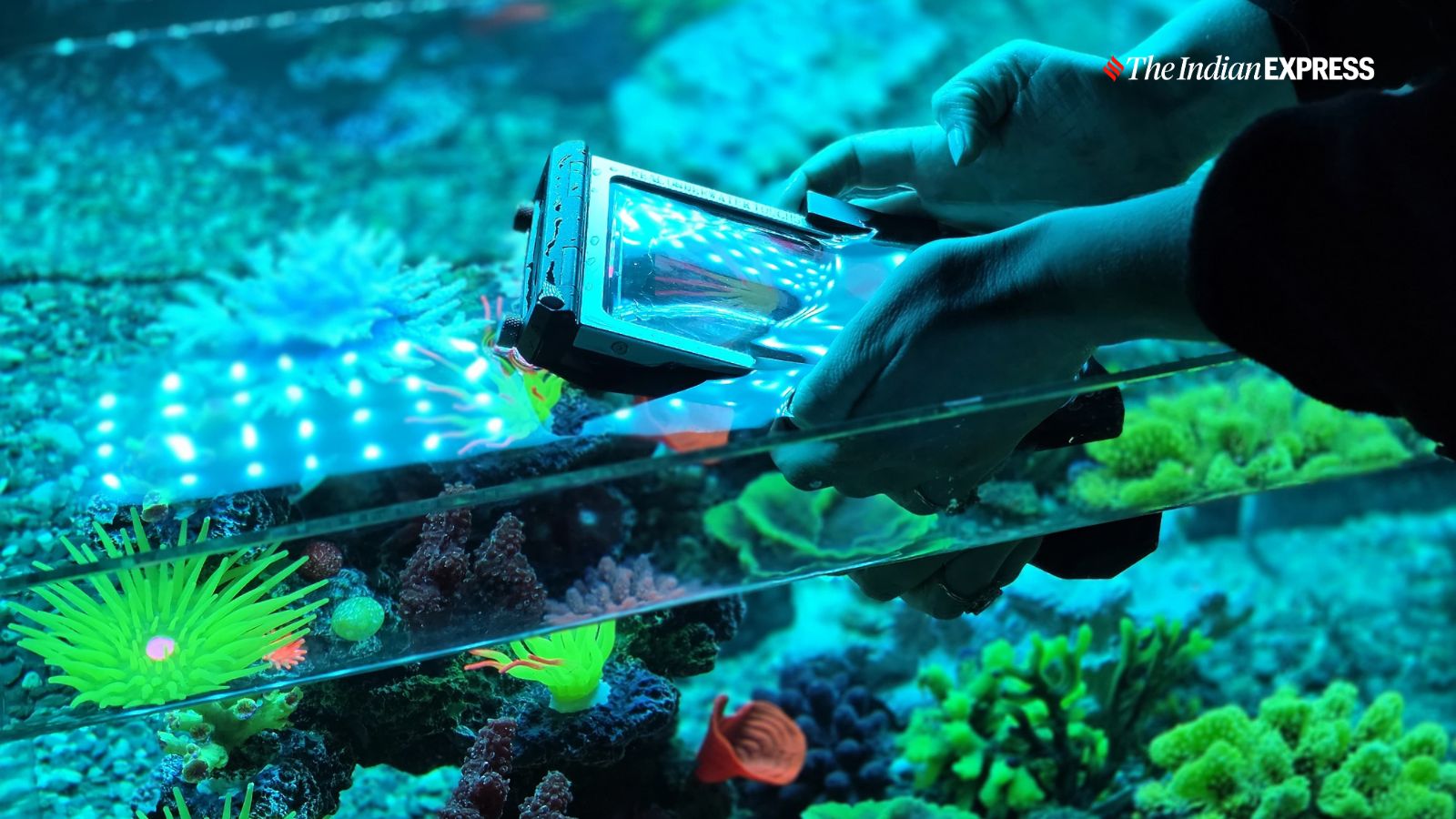 Samsung’s Ocean mode is exclusive to the Galaxy S26 Ultra. (Image: Anuj Bhatia/The Indian Express)
I have come to the conclusion that while hardware innovation has somewhat plateaued, you still need powerful hardware to support on-device AI features. You also need a beefier battery, which the Galaxy S26 Ultra has, a 5000 mAh cell that supports faster 60W wired charging, reaching up to 75 per cent charge in 30 minutes.
That is also true for the camera. The camera specs on the Galaxy S26 Ultra remain largely unchanged: it still has a 200-megapixel main camera, a 50-megapixel ultrawide camera, a 10-megapixel 3x telephoto camera, and a 50-megapixel 5x telephoto camera. The front-facing 12-megapixel camera also appears unchanged. However, I was impressed by how the Galaxy S26 Ultra records video in low light.
Story continues below this ad
The Galaxy S26 Ultra’s camera is aimed at pro-consumers who want more control over how they record videos or take pictures. Samsung says it has improved the ISP, added a new video standard called APV designed for professional video capture, and enhanced editing with upgraded Photo Assist and Creative Studio.
Samsung Galaxy S26 and S26 Plus are getting upgrades, too
Alongside the high-end Galaxy S26 Ultra, Samsung is also launching the Galaxy S26, the base variant, and a semi-premium variant, the Galaxy S26 Plus. Both phones look identical to the previous generation but offer upgrades in both hardware and software. In India, Samsung will be selling the S26 and S26 Plus with the Exynos 2600 chipset.
Early outlook
AI is the big selling point of the Galaxy S26 line, and while Agentic AI looks impressive, the question still hinges on how useful it will be in everyday life. I can see that AI does elevate the experience in bits and pieces, especially in how Galaxy AI has been implemented in AI-assisted image editing and creation tools.
The Galaxy S26 lineup reflects the direction smartphones may take in the future, though I still believe that AI feels a bit scattered across the system. But I can’t deny that software is now the biggest way phone companies can differentiate their devices.
Story continues below this ad
Welcome to the era of Agentic AI on phones, even if we are just scratching the surface.
