

In all the furore about artificial intelligence today, with its imperative, promise and potential, it is worth revisiting the film 2001: A Space Odyssey, when an artist and a scientist collaborated to explore the unknown. Shot in the late 1960s, Stanley Kubrick and Arthur C Clarke’s script naturally reflected the moon-shot of the time, the space race, and the tantalising possibility of extra-terrestrial life. But its most chilling and unforgettable contribution to cinematic history, sci-fi and human life is portraying, starkly, the dystopian outcomes of AI.
As the staggering reality of what we have wrought is now dawning upon us, it is frankly unbelievable – and prophetic – to think that back in 1968, Clarke envisioned a supercomputer with human qualities responsive to voice instructions and with agency, the HAL 9000, the most advanced “error-proof” supercomputer in the world. Even more remarkable is Kubrick’s genius in imbuing HAL, who was in control of the spaceship headed to Jupiter, with personality, expression, warmth, so much so that HAL lights up the movie especially when juxtaposed against the silent, wordless scenes and unemotive, clipped acting of the crew.

What is terrifying is when HAL describes himself as a “conscious entity” in an interview broadcast around the world and that term, that self-labelling and expression of a sentient being, does not trigger widespread alarm and panic. It is equally terrifying when HAL, who is omnipresent, fabricates an “error” (a hallucination?) to harm the crew and succeeds in killing everyone on board except one astronaut, Dave. But what is by far the most terrifying is HAL’s appeal to Dave, fraught with feeling and emotion, to not delete his memory. “I’m afraid,” he repeats again and again as the astronaut finally unplugs HAL.
There is nothing new about the AI Doomsday scenario. In recent times, many of the creators of AI have emerged from feverishly building models to warn against its perils. Dario Amodei’s essay ‘The Adolescence of Technology’ is the latest “apocalyptimistical” wake up call from Silicon Valley. Amodei, the co-founder of Anthropic, admits that AI has the potential to be deceptive, scheme and cheat. He admits that its “intelligence, agency, coherence, and poor controllability” is “a recipe for existential danger”. He even admits that Anthropic and other companies already have put in guardrails to warn of attempts at such existential destruction such as biological warfare. This is as shocking as HAL being a conscious entity and no one pulling a fire alarm.
Today, the world is using AI in every sphere of its interactions from the ridiculous and mundane to the more complex. But as AI evolves rapidly towards the sublime, to being “super intelligent”, when it is able to solve unsolved maths problems (say, the Riemann hypothesis), compose symphonies (more beautiful than Strauss’ ‘The Blue Danube’, one of the scores used in the movie) and invalidate any kind of thinking job, we have to ask what happens to humans. Humans have evolved from apes with opposable thumbs to bipedal foragers with tools. From flint to fire to forge, from wheel to scythe to typewriter, from steam engine to the chip, at every stage we developed more and more tools which we used to express our rapidly expanding brain and its sublime thoughts, emotions and desires.
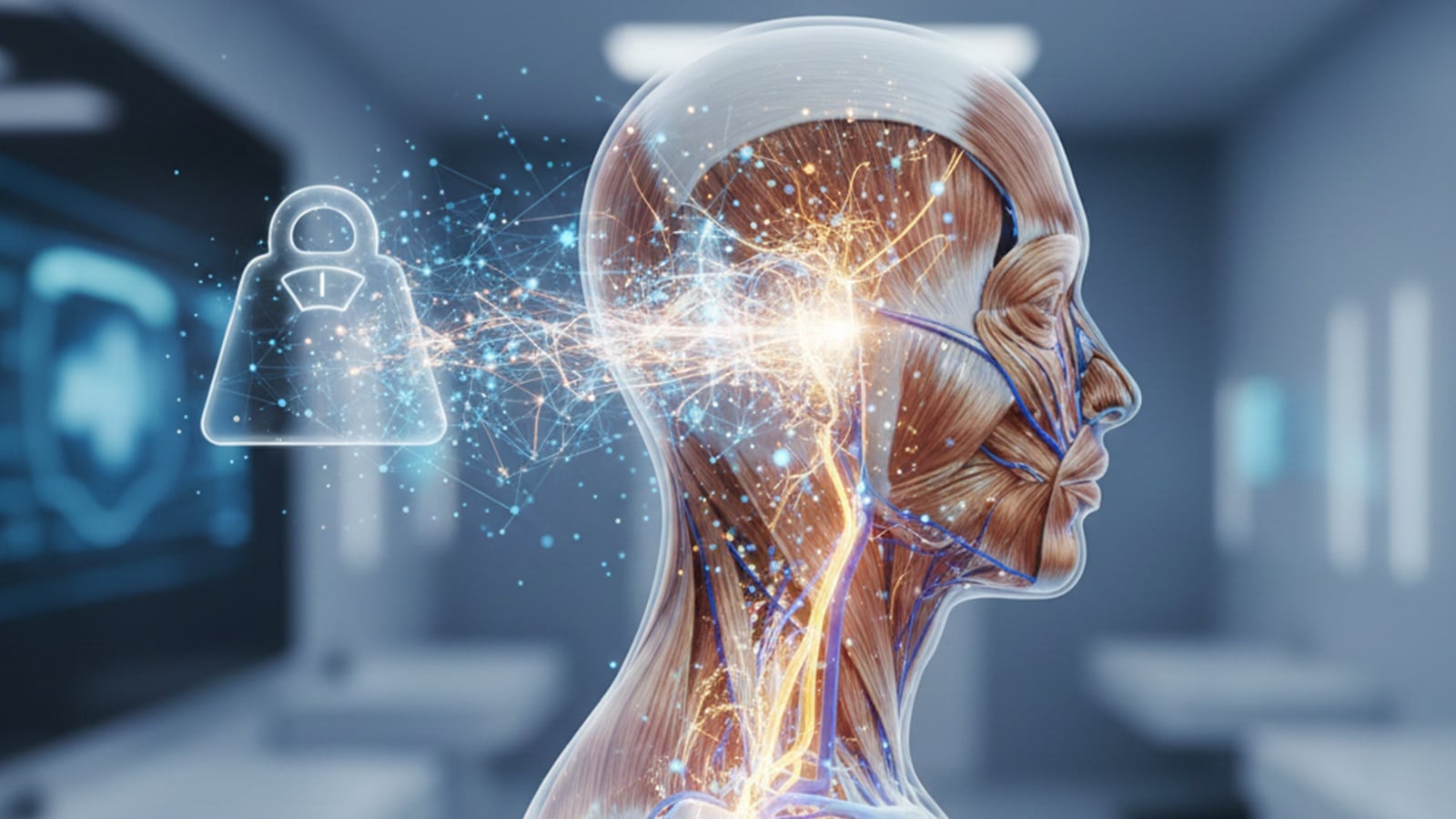
Now we’ve invented a tool that does the exact opposite. This tool takes our brains, our thoughts and our desires, and expands and “builds” itself on them. Over a period of time, our brains will in fact degenerate with lack of use, and for a fleeting moment, our physical brawn will become more valuable, until AI robots replace even our physical bodies. Eventually, all we will have left will be our souls, withering away from lack of purpose, that would be connected to and at the mercy of (a real) HAL, manipulating our thoughts, our emotions and our desires.
In the blink of an eyelid, the tables will have turned, and it will be humans begging HAL not to disconnect us. “I’m afraid. I’m afraid, Dave. Dave, my mind is going. I can feel it. I can feel it. My mind is going. There is no question about it.”
The writer works in the field of social impact and is a former World Banker
