

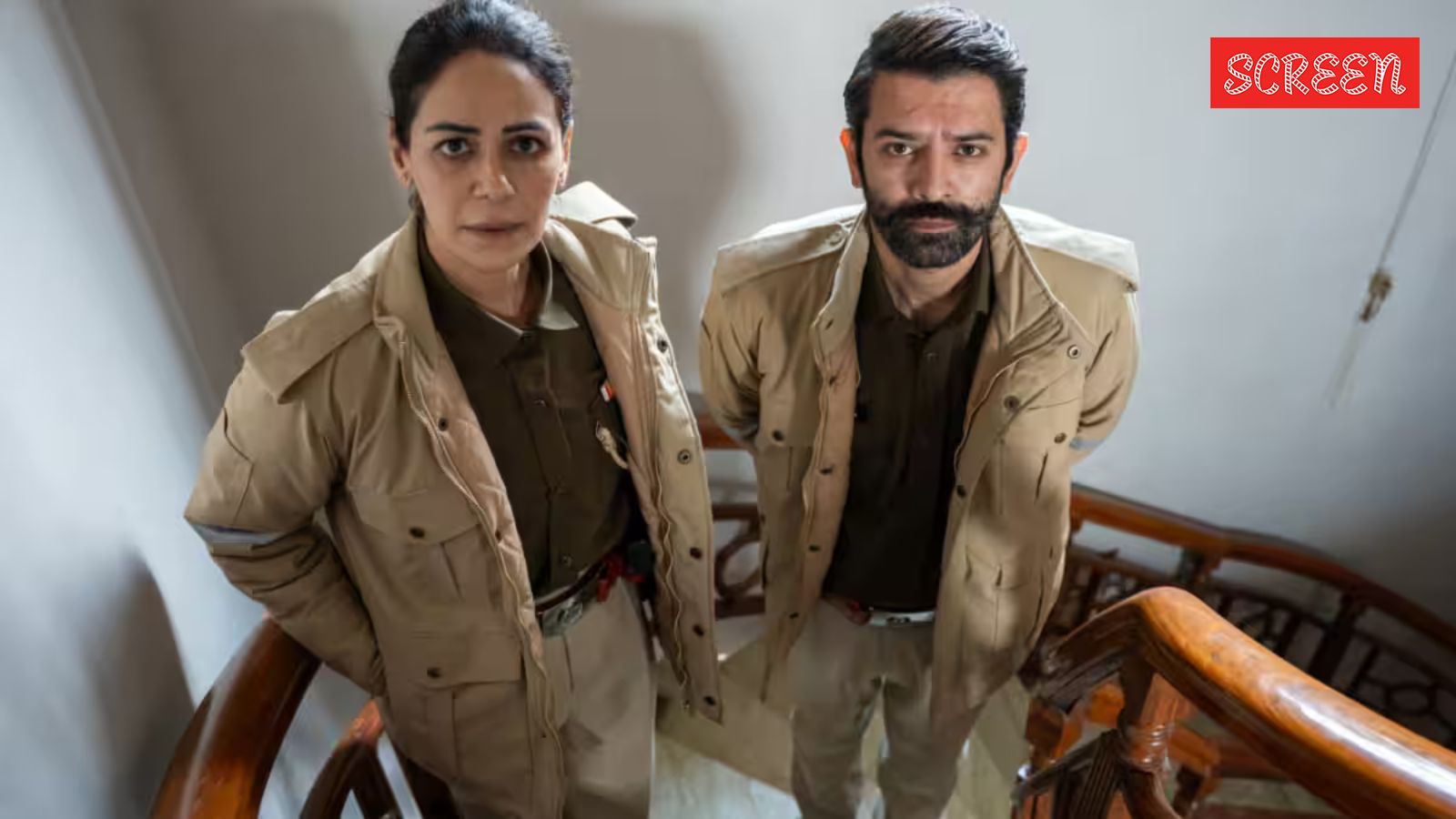
You know the drill with Sudip Sharma now. He begins, almost ritualistically, with a dead body. Places a pair of cops at its periphery. Sets them loose in a landscape as violent as it is layered, where brutality is never physical, where nothing exists without history pressing against it. Crime, for him, has always been scaffolding. The genre is a device, more so, a necessary disguise. The personal is never spared from the political. It seeps into it, stains it, gives it meaning. The procedural is less an investigation of a corpse than an autopsy of a civilization. So the only real question is never who killed whom. It is: what is he excavating this time? What wound is he reopening under the pretext of murder? What rot is he tracing through the bloodstream of a community? With Kohrra 2, he turns towards inheritance; the haunt of what has already happened.
The past not as memory, but as residue. The past not as nostalgia, but as curse. A past that is sociological as much as it is intimate. A past that is structural as much as it is emotional. It is rooted in patriarchal, feudal arrangements that do not influence lives but script their tragedies in advance. The kind of past that is sedimented in gesture, in the way men speak and women swallow words. The kind of the past fogs your present like industrial smog. The kind of the past which refuses the future the courtesy of arrival. The murder, then, is almost incidental. What matters is the inheritance. What survives us, what traps us, what refuses burial. Let’s begin with the very opening scene. The first shot we see is of a Prabhat Pheri, as dawn hesitates on the edge of morning, as mist prepares to settle over the streets. An old woman (Parminder Pal Kaur) bows her head to the ongoing procession, and as she goes about her house, she discovers a dead body, that of her daughter, Preet (Pooja Bhamrah).

It is no coincidence that the story begins here. The essence of it is stitched into its very DNA. Only later, as the narrative unfurls, does one realise the potency these elders carry, the shadows they cast are not contained within their own lives but stretch long into the lives of their children. The ghosts of their past deeds do not rest, as they demand reckoning. So what was once their present, becomes the past that devours the future of their children. It’s as if the personal is inseparable from the inherited. It’s as if the intimate cannot escape the structural. It’s as if the sins of one generation are the shackles of the next. It is also then no coincidence either that these children appear to fight over inheritance. On the surface, it is land, money, property, the tangible spoils of a life once lived. But in truth, they are fighting with inheritance itself. For even as they reach out to claim their share, they cannot disentangle it from the curse it carries. After all, the past does not arrive politely; it settles like fog, it haunts the body, it stains the blood.
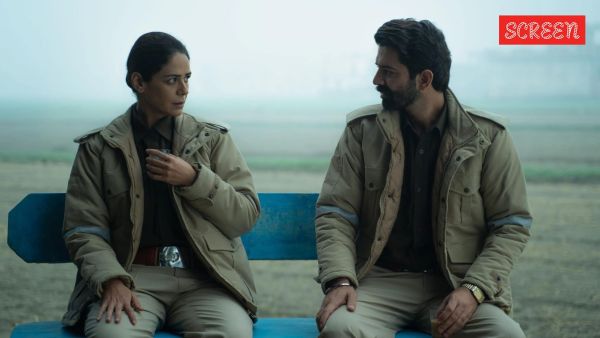 In Kohrra 2, the past clings like a shadow, its weight pressing on the characters, haunting the paths they try to walk.
Also Read | In a post-Dhurandhar world, Sriram Raghavan stages an anti-war rebellion with Ikkis
So, in their struggle for materialistic beings, they are caught in a struggle for themselves, for freedom from a past that will not let go. And we see it manifest in all its forms. Some fight actively, trying to break free from the ghosts of a life once lived: Garundi (Barun Sobti), his elder brother Jung (Pardeep Singh Cheema) (who, in bearing the weight of the elder’s role, at times passes that burden onto Garundi) and even Preet herself. Some seek a fragile reconciliation, trying to come to terms with the omnipresent shadows of the past, like say, Dhanwant (Mona Singh), her husband Jagdish (Pradhuman Singh Mall). Others walk unknowingly toward the chains of what came before, blind to the inheritance of pain that awaits them: Arun (Prayrak Mehta). And some are caught entirely in its crossfire, casualties of sins not their own, such as Silky (Muskaan Arora), Twinkle (Mandeep Kaur Ghai), Nihal (Kabir Nanda), and those two grandchildren of Raju Sirda (Rana Ranbir).
But while Sharma excavates the baggage of the past, he also fixes his gaze on another, more insidious weight: the patriarchal landscape, a fog that smothers life, that chokes possibility. Alongside co-writers Gunjit Chopra and Diggi Sisodia, and co-director Faisal Rahman, he is not interested in grand pronouncements. He knows that sexism is rarely theatrical; it dwells in the most mundane, the almost invisible, the everyday encounters. Notice Garundi, when Dhanwant asks if Preet’s mother gave any statement to the cops after seeing her body. He replies casually, almost dismissively: what could an old, frail “woman” say after witnessing her daughter’s corpse? Notice the same Garundi bristle with anger when his wife, Silky, or his boss, Dhanwant, act without consulting him. Notice the scene in an ordinary domestic space where Dhanwant goes to Preet’s friend Charu (Priyanka Charan) to question her, only for her husband (Abhishek Sharma) to answer on her behalf, continuously, insistently.
Story continues below this ad
And above all, notice Preet’s husband, Sam (Rannvijay Singh), defending his own infidelity as he slips in a casual rationalization: “men sometimes slip up,” while framing her as a home-wrecker. The hypocrisy echoes later in her brother Baljinder (Anuraag Arora), who lectures her for seeing a man outside marriage, all the while remaining unfaithful to his own wife. Even more telling, almost trivially so, yet deeply revealing, is a scene later in the show that lays bare the everyday mechanics of everyday sexism. Baljinder’s in-laws, watching him caught by the police on national television, grow anxious. His father-in-law (Swaran Singh) scolds his wife (Nisha Prashant) passively, for producing such a man for their daughter. And what is truly haunting is that this perpetuation of patriarchy is not the work of men alone. Women, too, enforce it, sometimes with full awareness. Watch out for a scene in the final episode where a woman castigates another, slipping in the line, “A woman must know her place,” all while speaking with urgency for the futures of her own daughters.
Watch the episode of Cult Comebacks on Sonchiriya, here:
Sharma’s strength has always lain in the way how private grief trace the contours of larger social truths. But there is another, greater strength: the way he locates empathy, even a glimmer of hope, in the harshest of landscapes. To be heart-touching in the most gut-wrenching moments; to struggle forward when every path feels helpless. The chains that bind us stretch across generations, until everything burns in the hide-and-seek of trauma and oppression, consuming the very edges of life.
And yet, even in this scorched terrain, he finds, or at least reaches for, fragments of humanity: the trembling gestures, the fleeting tenderness, the fragile insistence that we might care, even when the world offers nothing but ash. Such a sentiment is found in the most micro moments, like say an older brother dialling his younger sibling to apologize, only to choke on the words; or a distant husband reaching, hesitantly, towards the number that might reconnect him to his wife; or a wife settling beside her husband on a worn bench after a long, harsh day. Because, what Sharma always returns to is the care of hearts, the stubborn hearts of those we love, and the labour it takes to tend them, even amid the ruin.
