

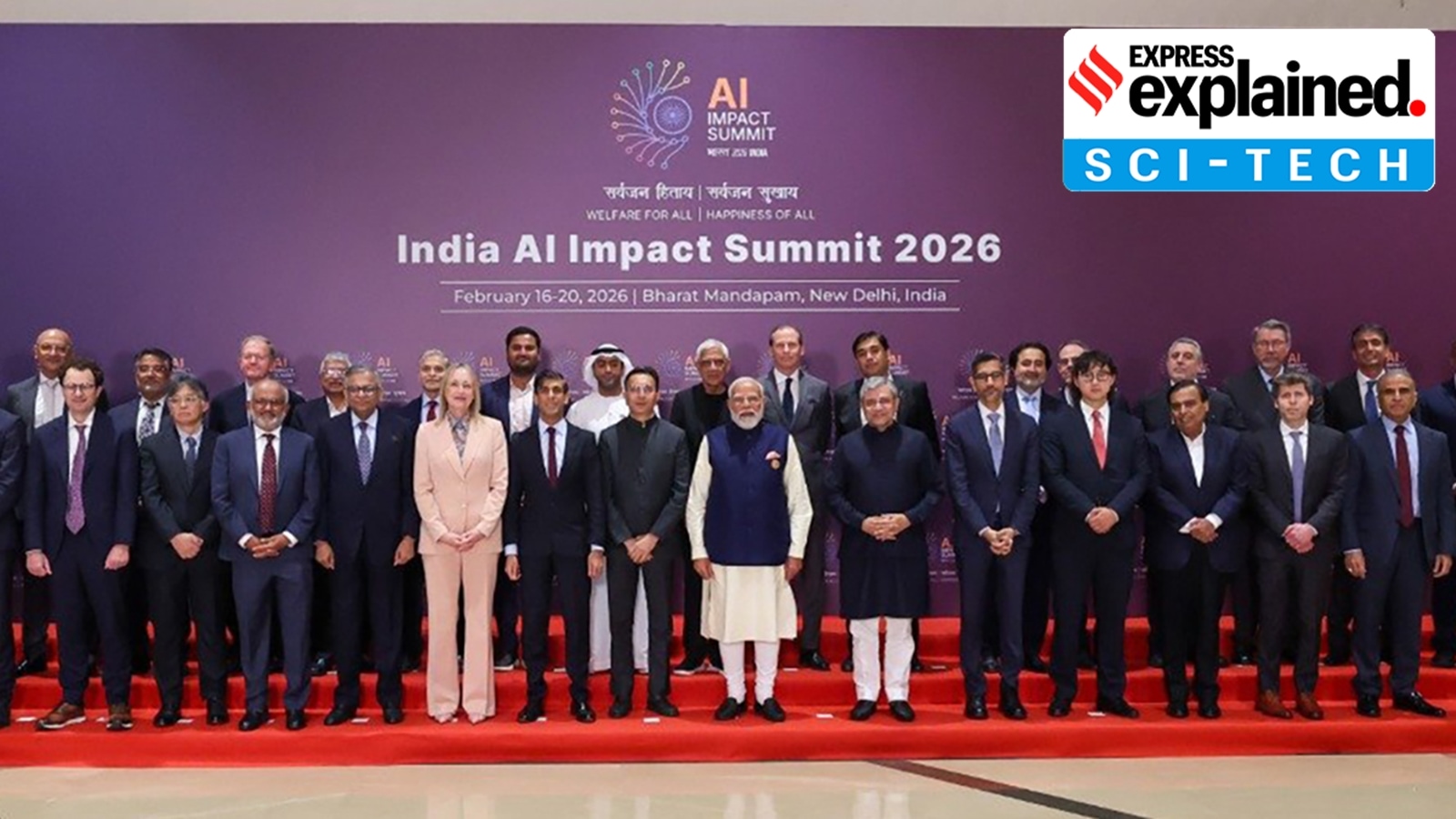
New Delhi wrapped up the India AI Impact Summit 2026 on February 21, with its organisers billing it as the world’s “largest and most historic” AI summit.
The six-day event, which kicked off February 16 at Bharat Mandapam, drew heads of state, global tech executives and thousands of visitors — a remarkable feat for a country that is still catching up to the United States and China on the AI frontier.
And the result was mixed.
The summit achieved real diplomatic heft, but exposed the limits of both India’s AI ambitions and its capacity to host an event of this scale.
The summit positioned New Delhi as a convening power in global AI governance discussions, producing a declaration with broader country sign-on than any previous summit in the series. It brought together the most prominent names in AI under one roof and generated large investment commitments.
But at the same time, the summit’s voluntary framework, the logistical difficulties that inconvenienced ordinary visitors and delegates alike, and some embarrassments around domestic AI claims all point to the gap between India’s ambitions and its present reality.
For India, the summit was a beginning, not an arrival.
A diplomatic win
The headline outcome of the summit was the New Delhi Declaration on AI Impact, which was endorsed by 88 countries and international organisations, including the US, China, Russia, the UK, France, and a wide range of developing nations.
Story continues below this ad
That count comfortably exceeded the 61 signatories at the previous Paris AI Action Summit in February 2025, something that India’s IT Minister Ashwini Vaishnaw was quick to point out. The breadth of endorsement — spanning geopolitical rivals, major economies, and the Global South — gave India grounds to claim it had built a broader consensus than its predecessors.
The declaration’s substance, however, is more measured. It lays out a shared vision for collaborative, trusted, and inclusive AI.
The commitments, though, are voluntary, with no enforcement mechanism.
The White House’s position made the limits of the declaration plain: senior US official Michael Kratsios told the summit that Washington “totally rejects global governance of AI,” framing its AI posture as one of dominance rather than coordination.
China, the world’s second-largest AI power, was also largely absent from proceedings, albeit not from headlines. The declaration is a political document; whether it translates into anything substantive remains an open question.
Changing themes: from safety to trade
Story continues below this ad
When the UK government organised the first summit in this series, at Bletchley Park in November 2023, the explicit mandate was narrow and serious: to build shared understanding of the risks posed by frontier AI models and to begin coordinating government responses to those risks.
The Seoul summit in May 2024 carried that thread forward.
But, by the time France hosted the third summit in Paris in February 2025, the momentum had already begun to dissipate. The emphasis in Paris shifted to boosting the AI sector and setting aside safety concerns — a far cry from Bletchley’s founding spirit.
India inherited and deepened this trajectory. Delhi’s pitch centred on inclusion, economic opportunity, and investment. The result was an event that functioned far more as an AI trade expo than a governance forum. Investment pledges, product launches, bilateral partnerships, and CEO appearances dominated the programme.
Governance, in the sense that Bletchley had originally intended — risk thresholds, safety standards, coordinated oversight of frontier models — was barely on the agenda. What was on the agenda was who gets to build AI, who gets to deploy it, and who gets to profit from it.
A long road, the dog, and lapses
Story continues below this ad
The summit’s logistics drew pointed criticism. Delegates were left stranded without food or water during the many security lockdowns that happened over the summit’s nearly week-long duration.
Across central Delhi, and beyond, road closures to facilitate VIP movement created prolonged traffic jams, affecting residents, delegates, and in some cases even speakers at the event. Attendees at the venue had to walk several kilometres to reach transportation. The city was not prepared for the scale of attendance the summit attracted.
There were also reputational embarrassments. An Indian university was caught presenting a commercially available Chinese-manufactured robot dog as a domestic innovation and was subsequently evicted from the expo. The episode drew attention at a summit where India’s AI sovereignty was a central theme.
A senior government official said that the ability to draw in the big leaders of AI, alongside world leaders, despite India being a bit player in the GenAI space was an achievement.
Story continues below this ad
But the inadequacies of state capacity and the government’s inability to conceptualise, coordinate and execute remained a challenge in an event of this scale.
This is despite Delhi having fared well in the G20 event in 2023, even though that was a staggered event unlike the AI summit.
Having combined a trade event with a G20-type tech leaders summit was clearly a problem, as was how smaller tech entrepreneurs were treated at the event. This does raise question marks on the government’s ability to foster and execute at scale, especially when it comes to newer, frontier segments of industry.
Star power and investment commitments
India managed to pull together a marquee lineup that few countries outside the US could manage. Alphabet CEO Sundar Pichai, OpenAI’s Sam Altman, Anthropic’s Dario Amodei, Google DeepMind CEO Demis Hassabis, and Microsoft President Brad Smith were all present, alongside French President Emmanuel Macron, UN Secretary-General Antonio Guterres, and a string of other heads of state.
Story continues below this ad
The summit secured investment commitments of over $250 billion for infrastructure and about $20 billion for venture capital deeptech investments, according to Vaishnaw.
OpenAI and AMD both announced partnerships with Tata Group. These are large numbers, though India still lacks the domestic private capital ecosystem to match the headline figures.
India’s domestic AI push
One of the summit’s more substantive domestic moments came from Sarvam AI, the Indian startup that announced it had trained a 30-billion-parameter model and a 105-billion-parameter model from scratch using a mixture-of-experts architecture.
The models, designed with multilingual Indian-language capability, represent a meaningful step for India’s homegrown AI development.
Story continues below this ad
It was not, by most accounts, a DeepSeek-scale disruption– but it was a credible demonstration that India can build at some level of the AI stack. Microsoft’s Brad Smith said there would be “a variety of different DeepSeek moments” to come, and that some of them would happen in India.
The big inference was that diffusion is where India would play a pivotal role, given that the Chinese market is walled off and closed for western tech majors.
Despite the cacophony and the obvious lack of foundational capacities, India was a port of call for tech leaders. It’s the market that holds the promise, at least for adoption.
