

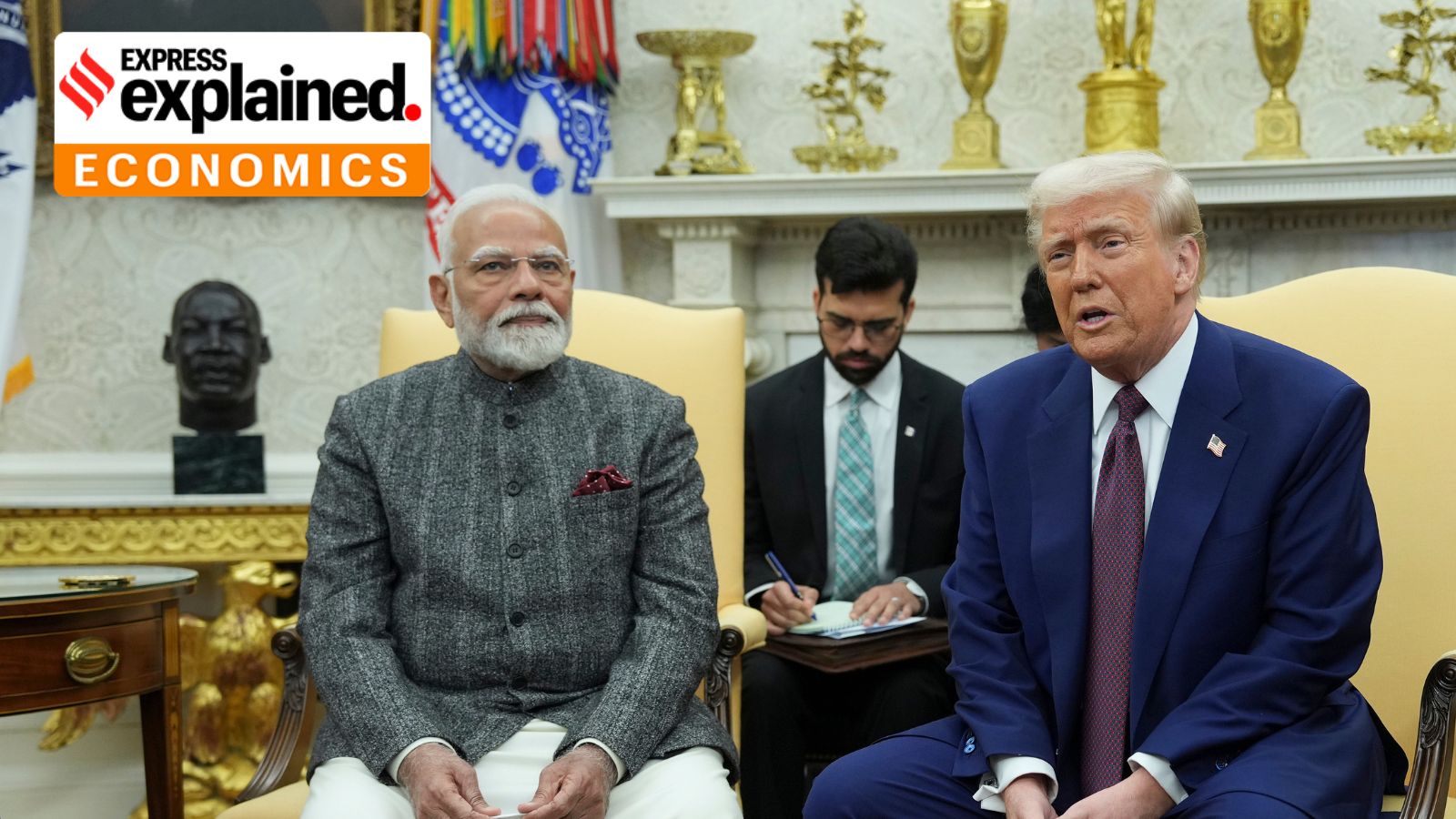
As part of their interim trade agreement, India and the United States have announced that they will “significantly increase trade in technology products, including Graphics Processing Units (GPUs) and other goods used in data centers, and expand joint technology cooperation”.
This comes as India has announced a tax holiday for foreign companies setting up data centres in India, slashed by half the budgetary allowance for its flagship AI mission under which it looked to subsidise compute costs for the country’s startups, and its iPhone exports are booming.
Since India does not have a local GPU production capacity, with American companies like Nvidia leading the race globally, it is understood that New Delhi will import these commodities to meet the ever-growing compute needs of its startups building AI models and applications.
On GPUs, a welcome change
Under the recently announced Union Budget, the allocation for the IndiaAI Mission to Rs 1,000 crore in 2026-27 from Rs 2,000 crore this fiscal year, raising concerns over the country’s AI push. India’s Rs 10,370 crore IndiaAI Mission subsidises GPU access for startups and researchers developing AI models.
Under the Mission, about 40,000 GPUs have been installed so far, which is widely considered as not enough computing capacity for companies, especially given that individual American companies leading the AI race have access to significantly more computing capacity.
However, the agreement between New Delhi and Washington to increase trade in GPUs is a different approach than what was adopted under the former US President Joe Biden. Ahead of leaving office last year, the Biden administration released an expansive regulatory framework on the export of GPUs, and placed restrictions on India on how many GPUs it can import from the country, as part of a broader national security push. Soon after President Trump took charge, the measure was set aside.
From that perspective, India has managed to sign favourable terms under the interim trade agreement and has done well to escape any kind of export control measure on GPUs, like the one that the US has imposed on China, which prohibits Beijing from directly importing the most cutting edge technology on offer – though the measure has seen dilution in recent weeks.
Story continues below this ad
India had addressed a key US demand on data centres
The other key area of cooperation is in data centres, and here too, India had earlier announced a tax holiday for such infrastructure being set up by foreign companies in this year’s Budget.
The Indian Express had earlier reported that as part of the bilateral trade agreement negotiations, the US had sought greater market access for its companies looking to establish their data centres in India. The demands are understood to have included tax breaks, affordable access to resources like land, energy and water, and duty exemptions on some imports. With the announcement of a tax holiday until 2047 to foreign companies for setting up data centres in the country, the government has acted on one of the US’s key demands.
Several US companies have announced massive investments in setting up data centres in India to fuel artificial intelligence’s hunger for such infrastructure. Last October, Google announced an investment of $15 billion to build a 1GW data centre, in partnership with the Adani Group. In December, Microsoft said it would invest $17.5 billion in the country, with primary focus on AI data centres.Amazon has announced it will invest $35 billion in India over five years, without specifying how much of it would go toward data centre expansion.
Story continues below this ad
Earlier this month, Union IT MInister Ashwini Vaishnaw said that the Budget announcement could spur investments of up to $200 billion towards data centres in India.
India’s data centre market is currently estimated to be worth $10 billion, with around $1.2 billion revenue generated in FY24, according to a recent report by Anarock. As per real estate firm JLL, India is expected to add 795 MW of new capacity by 2027, taking the total capacity to 1.8 GW.
A $100 billion opportunity
When the US first announced it was dropping tariffs on India from 50% to 18%, the domestic electronics industry said it could set the stage for a potential expansion of the country’s electronics manufacturing sector, with industry projections suggesting bilateral electronics trade could reach $100 billion.
India’s electronics industry, which has grown significantly in recent years, is expected to see increased activity as the new framework promises to provide improved market access and technology flows. Electronics exports, which the country has outlined as a key economic driver, stood at Rs 3.27 lakh crore (around $38 billion at current rates) in 2024-25, with the US being the largest market.
Story continues below this ad
The electronics manufacturing sector, concentrated in states including Tamil Nadu, Karnataka, Uttar Pradesh and Maharashtra, currently employs more than two million workers directly. The sector supports a network of component suppliers, assemblers and technology service providers.
The escalation in tensions between India and the US had cast a shadow over the electronics sector in the country. At the height of the tensions, US President Donald Trump had threatened to impose a 25% tariff on Apple if it sold India-made iPhones in the US.
Apple, which has been a flagbearer of electronics exports from India owing to government subsidies under the production-linked incentive (PLI) scheme for smartphone manufacturing, has created a wide supply chain network in India to meet its manufacturing requirements.
India currently accounts for nearly a quarter of all iPhones that are produced, behind China.
Story continues below this ad
“The India-US trade deal can be a major catalyst for India’s electronics, semiconductor, and technology ecosystem. By improving market access, enabling smoother flow of capital equipment and advanced technologies, and—when complemented by the iCET and TRUST initiatives—strengthening trusted supply chains and deepening technology collaboration, the agreement significantly enhances India’s attractiveness as a global manufacturing and innovation hub,” Ashok Chandak, president of SEMI India and IESA, had said at the time.
