

India’s headline retail inflation rate based on the revised and updated Consumer Price Index (CPI) stood at 2.75% in January, the Ministry of Statistics and Programme Implementation (MoSPI) said on Thursday.
As per the old CPI inflation series, retail prices had risen 1.33% in the final month of 2025.
Broadly along expected lines, the newest CPI inflation comes after years of work by the statistics ministry to update the base year for prices of the CPI to 2024 from 2012, reconstitute the consumption basket based on the results of the 2023-24 Household Consumption Expenditure Survey (HCES) so that prices are measured as per the latest consumption patterns and not the 2011-12 survey, and revised methods to calculate price changes for certain items to more accurately measure inflation in the country. The new CPI basket contains 358 goods and services, up from 299 in the erstwhile basket, with new goods such as airpods being added to the CPI and obsolete ones like audio cassettes being removed.
The modernisation of CPI inflation, India’s most important macroeconomic indicator, is part of a larger overhaul of India’s official statistics by MoSPI. Later this month, the new GDP series – with 2022-23 as the base year and sweeping methodological changes – will be released on February 27 starting with data for October-December 2025 and the second advance estimate for 2025-26. Then, in May, the revised Index of Industrial Production will be released, also with a new base year of 2022-23.
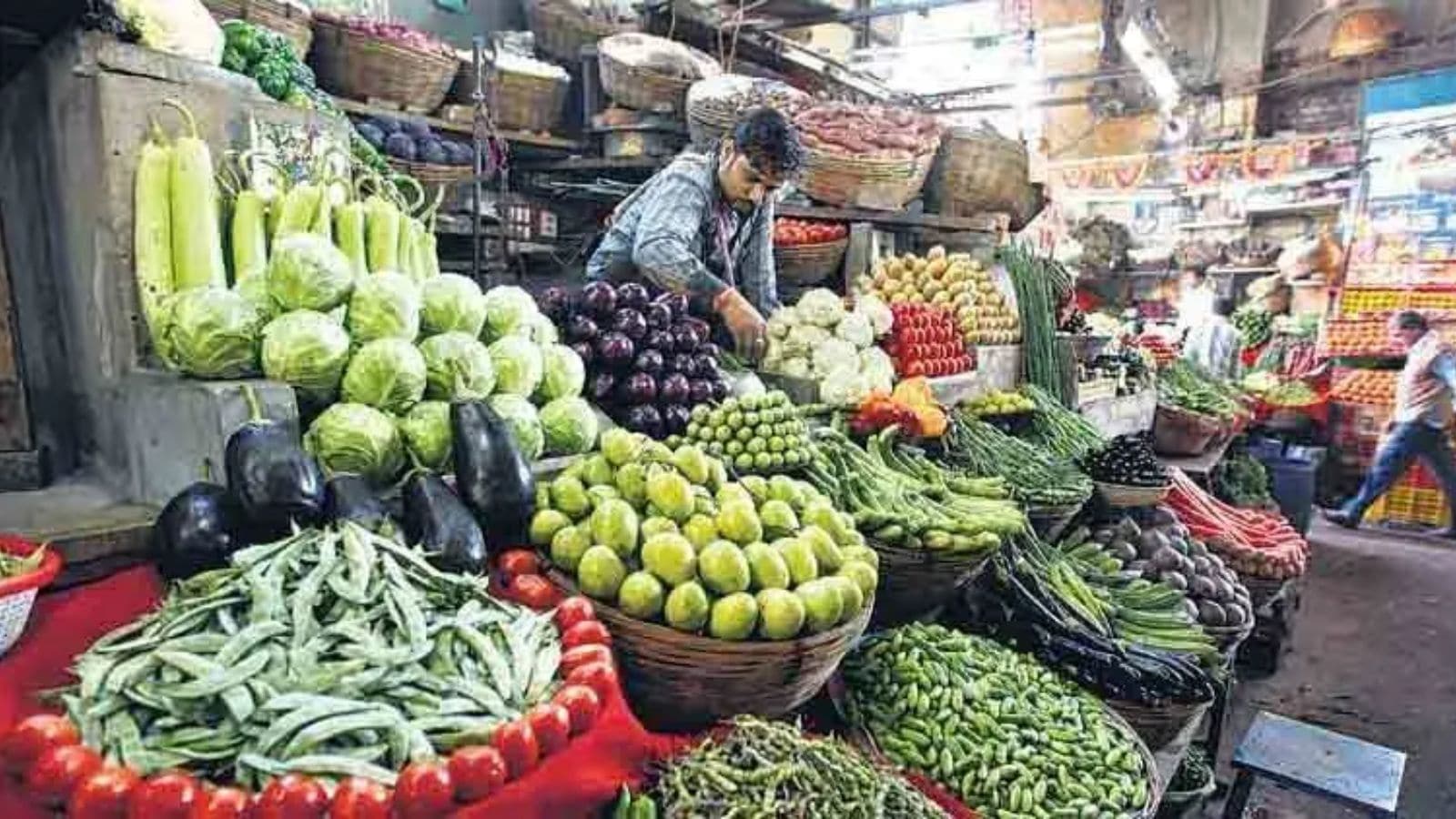
As per the revised CPI, while headline inflation stood at 2.75% in January, food inflation was 2.13%. This represents a dramatic change in the food inflation picture from 2025 under the old series, when food prices had fallen on a year-on-year basis in the last seven months. However, MoSPI officials warned that making direct comparisons between inflation numbers under the old and new series would not be correct due to changes in the consumption baskets, item weights, and methodologies, although a ‘linking factor’ has been provided by the ministry to connect the old and new data series.
According to BofA Securities economists Rahul Bajoria and Smriti Mehra, food inflation rising above 2% in January from (-)2.7% in December under the old series is largely due to the lower weight of vegetables and pulses in the new CPI and an increase in the weight of fruits.
“In the new index, while the level of food price decline appears to have prima facie corrected, the extent of underperformance has not. As such, our underlying logic of food prices mean reverting in 2026 due to their cyclical nature remains intact. As we await more information, we see food inflation normalising back to around 5% in FY27 (close to decadal average of 5.1%), with risks balanced evenly,” Bajoria and Mehra said in a note.
Story continues below this ad
Going by the back-series of the general index of the CPI for 2025, provided by MoSPI on Thursday, January saw a pick up in the overall price momentum, as measured by the month-on-month change in the index. In January, the CPI was 0.35% higher compared to December 2025. This was a higher sequential increase in the overall price level than the 0.08% month-on-month rise registered in December 2025 compared to the previous month.
According to Paras Jasrai, Economist at India Ratings & Research, the pick-up in prices in January was on account of food items becoming more expensive, which were driven higher by tomato inflation surging to 64.8%. Meanwhile, other key vegetables such as onions, potatoes, and garlic all saw their prices falling sharply by 29.3%, 29%, and 53.0%, respectively. The Consumer Food Price Index declined 0.05% in January compared to December, suggesting the presence of an unfavourable base effect.
Apart from food, clothing and footwear inflation doubled to 2.98% in the new series in January from 1.44% in December as per the old series. Inflation for the reorganised ‘housing, water, electricity, gas and other fuels’ category stood at 1.53%.
Some of the other broad categories, called ‘divisions’, and their respective inflation rates in January are as follows: i) Furnishings, household equipment and routine household maintenance at 1.45%, ii) health at 2.19%, iii) transport at 0.09%, iv) recreation, sport and culture and 2.32%, v) education services at 3.35%, vi) restaurants and accommodation services at 2.87%, and vii) personal care, social protection and miscellaneous goods and services at 19.02%.
Story continues below this ad
“Core items (excluding food, fuel segments) which now have a higher weight in the new series had majority of the prices being around 3% (reflecting the impact of GST rate rationalisation) barring personal effects. The personal effects inflation stood at 19.0% in January 2026 led by significantly high inflation in jewellery items,” Jasrai of India Ratings said.
Silver jewellery, which has a weight of 0.31% in the new CPI, had the highest inflation rate of any item in January at 160%. This reflects the continued rapid rise in silver prices globally.
