

With airfares skyrocketing due to widespread disruption in IndiGo’s flight operations, the government has stepped in to regulate non-business class airfares for all airlines by prescribing fare caps. The Ministry of Civil Aviation (MoCA) Saturday invoked its regulatory powers “to ensure fair and reasonable fares across all affected routes” and protect passengers from “any form of opportunistic pricing”.
The airfare caps are: Rs 7,500 for a stage length of up to 500 km (Delhi-Jaipur/ Chandigarh), Rs 12,000 for 500-1,000 km (Delhi-Bhopal/ Jammu), Rs 15,000 for 1,000-1,500 km (Delhi-Mumbai/ Kolkata), and Rs 18,000 for over 1,500 km (say Delhi-Chennai/ Bengaluru).
These caps are exclusive of airport levies and taxes, and are not applicable for business class fares and on flights operated under the regional connectivity scheme, the MoCA order stated. The fare limits are applicable for travel “until fares stabilise or till further review”, it said.

On Friday, the Directorate General of Civil Aviation had granted IndiGo special concessions from a few changes related to night operations for pilots in the new Flight Duty Time Limitation norms till February 10. These include lifting the cap on the number of night landings for IndiGo pilots, which had been reduced to two in the new FDTL norms from six earlier, and doing away with the restrictions on the maximum number of hours a pilot can fly in the night, which were capped at eight hours instead of maximum permissible 10 hours in a 24-hour period.
These should help IndiGo in the coming days and weeks, but the chaos in the airline’s counter persisted with over 800 cancellations on Saturday. The airline said it was on its ways to operate over 1,500 flights by the end of day, compared with 700 flights on Friday. The airline has over 2,300 daily flights.
“With regards to destinations, over 95% of network connectivity has already been re-established as we are able to operate to 135 out of the existing 138 destinations in operations,” an IndiGo spokesperson said.
This continued to put pressure on air fares. For instance, one-way fare for Monday, December 8, on all Delhi–Mumbai Air India flights, as displayed on its website, was at least 25 per cent higher than the Rs 15,000 cap, despite the government order. A similar trend was observed with fares offered by other airlines.
Industry sources said the fare caps are being implemented progressively and systems are being recalibrated accordingly, so it might take some time for the changes to reflect in offered fares.
Story continues below this ad
“An official directive has been issued to all airlines mandating strict adherence to the fare caps that have now been prescribed. These caps will remain in force until the situation fully stabilises. The objective of this directive is to maintain pricing discipline in the market, prevent any exploitation of passengers in distress, and ensure that citizens who urgently need to travel—including senior citizens, students, and patients—are not subjected to financial hardship during this period,” MoCA said.
“These fare limits shall be applicable for all forms of bookings, regardless of whether the purchase is made directly through the airline’s official website or through various online travel agents’ platforms. The airlines shall maintain air ticket availability across all buckets for travel and if need be consider capacity enhancement on sectors characterised by surge in demand,” the order said.
Airfares are deregulated in India and are decided by market forces, but the government can intervene to regulate fares if major disruptions hit the sector. For instance, airfare bands were imposed by the government during Covid-19. After two months of shutdown following the pandemic when domestic air travel was opened up, the government introduced seven lower and upper fare bands based on flight duration. These were reviewed periodically.
Govt firefights Indigo-induced pain
Poor planning by the country’s largest airline has resulted in an unprecedented crisis. Warning signals were visible through November, but before the government acted, it descended upon passengers with flight cancellations and skyrocketing fares.
MoCA on Saturday said it will continue to closely monitor fare levels through real-time data and active coordination with airlines and online travel platforms, it said, adding that any deviation from the prescribed norms will “attract immediate corrective action in the larger public interest”. The ministry also directed the carriers to avoid “steep or unusual upward fare revisions” on sectors hit by flight cancellations.
Story continues below this ad
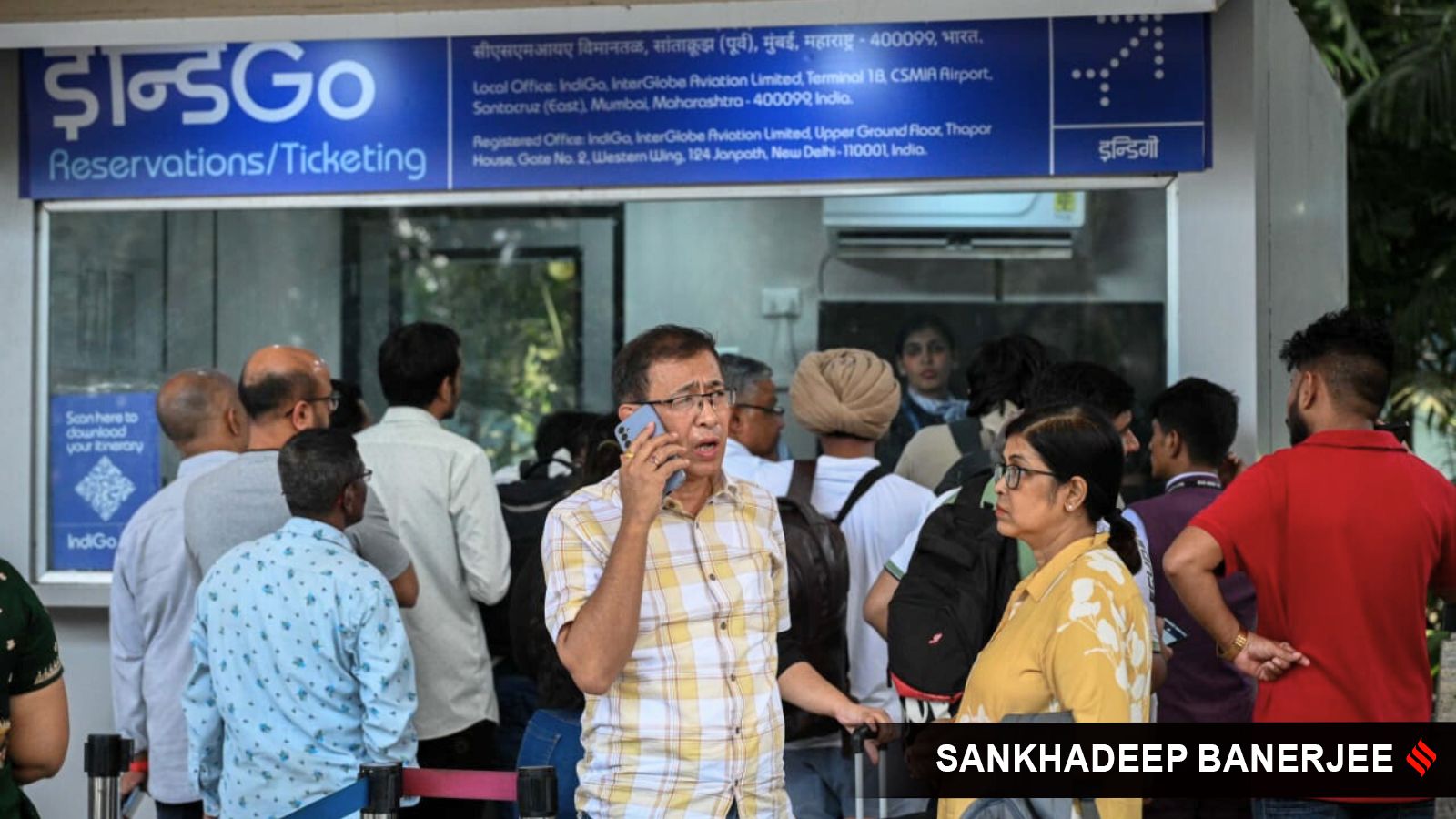
The massive disruption at IndiGo—India’s largest airline that commands over 60 per cent of the domestic market share—has thrown commercial flight operations out of gear all over the country. With scores of IndiGo flights cancelled daily this week—over 1,000 cancellations or over half its scheduled flights on Friday alone—thousands of passengers were stranded, and scenes of chaos erupted at major airports across India. Due to this large-scale disruption, airfares have surged as passengers scramble to secure a flight ticket for essential travel. Demands for MoCA’s intervention to keep airfares in check were being made from various quarters amid the IndiGo crisis.
Last-minute and day-ahead airfares have shot up to multiple times the regular fares on various routes across the country. Last-minute fares tend to be expensive anyway, but the IndiGo crisis has sent them through the roof with some seats going for as much as seven to eight times the regular fare on those routes.
An Air India spokesperson said that since December 4 economy class airfares on non-stop domestic flights of both Air India and Air India Express have been proactively capped to prevent the usual demand-and-supply mechanism being applied by revenue management systems.
“We are aware of screenshots of last-minute itineraries with one-stop or two-stop flights or a combination of economy and premium economy or business cabins taken from third party platforms. It is not technically possible to cap all such permutations, but we are engaging such platforms to exercise oversight,” an Air India spokesperson said.
Story continues below this ad
“Air India and Air India Express are seeking to add capacity to help travellers and their baggage reach their destinations as quickly as possible,” the spokesperson said.
