


India’s diversity has long made it a melting pot of cultures. And there is no place better than Delhi, which embodies a truly cosmopolitan identity. As someone who has always enjoyed the sweetness of sewaiyan and the tantalising flavours of biryani, the holy month of Ramadan felt like the right time to experience the festival beyond what I had learnt from books and friends. And what better way to do it than through food?
I decided to take a food walk with celebrated food author Sadaf Hussain, whose culinary finesse left me amazed. From enriching me with the historical backdrop of dishes to explaining the right balance of spices that make a meal memorable, Hussain’s wisdom became the cherry on top of this food experience.

Interestingly, the conversation on Ramadan celebrations often circles back to the bustling lanes around Jama Masjid in Old Delhi, where the aroma of kebabs and biryani fills the air well into the night. However, Shaheen Bagh, an emerging food hub in South Delhi, has its own unique rhythm. Its story is closely tied to the CAA-NRC protests, when local women led a peaceful sit-in that drew people from across the city. Over time, what began as a political gathering gradually turned into a space where people also shared food, conversations and community.
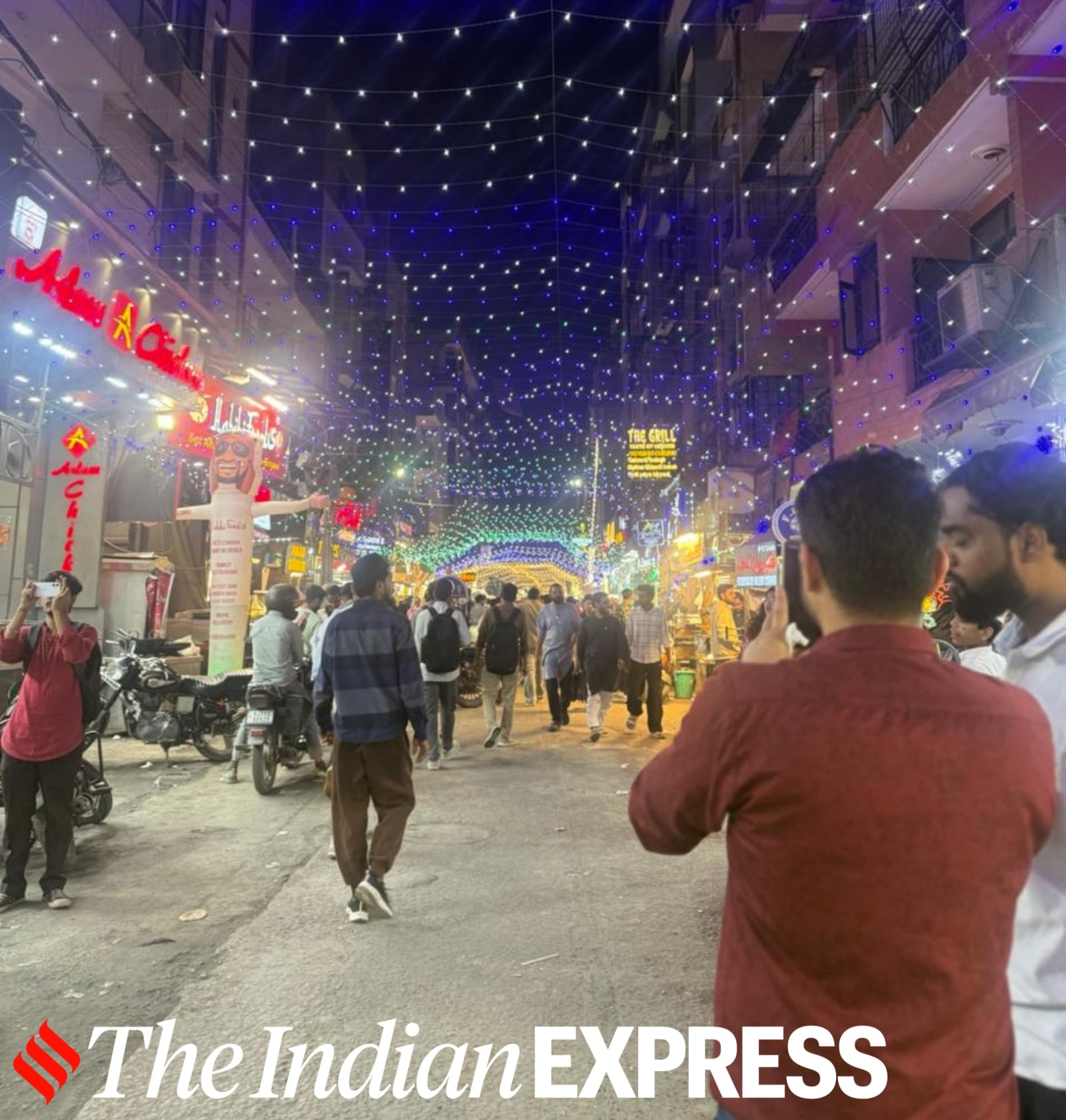 Shaheen Bagh during Ramadan (Photo: Himakshi Panwar)
The evolution of ‘Chaalis-foota road’
Shaheen Bagh turned into a food hub during the protests. “Log baithte the, aur itni bheed mein aadmi bhooka toh nahi reh sakta na (People would sit together, and in such a huge crowd, you can’t really let someone stay hungry, can you?),” Mohammad Parvez, manager of Zaika restaurant, told indianexpress.com.
“So people needed food and snacks. That’s when locals began setting up biryani and other food stalls. After the lockdown, people realised it’s a good place to come and eat,” he shares.
Walking through the stretch locals refer to as “chaalis-foota road” (40-feet road), I felt an unexpected sense of familiarity. The narrow lanes, small eateries, and the hum of evening crowds reminded me of Purani Dilli in many ways. Except this was South Delhi, and the transition from quiet residential pockets to a lively food street felt almost magical.
But the most fascinating sight that evening was the preparation for Iftar, the meal that marks the end of the daily fast during Ramadan. For the first time, I witnessed how an entire neighbourhood seemed to move in quiet synchrony. Shopkeepers began setting up long tables outside their establishments. Plates of fruits, glasses of mohabbat-e-sharbat, and bowls of dates and fritters were laid out neatly as the sun began to dip.
Story continues below this ad
“This is for everyone, from our staff to passersby,” a worker at SKC restaurant told me while arranging plates. Anyone can come and break the fast with us.” He asked me to wait until 6:15 pm and join them.
First Iftari
By the time it was quarter past 6, the streets of Shaheen Bagh had grown noticeably busier. Hussain had also arrived by then, ready to guide me through what would be my first iftar experience.
He explained that Ramadan meals follow two distinct rhythms, Sehri in the early morning and Iftar in the evening, each with its own food traditions.
“Sometimes Sehri can be very simple. You will find something like bun and jam dipped in hot chai, quick, filling and enough to get you through the fast,” he said.
But the morning meal can look very different depending on where you are in the country. “If you go to different cities, Sehri looks completely different. In Hyderabad, you’ll find khichdi and khatta, in Lucknow, the spread changes again, every region has its own rhythm,” Hussain explained.
Story continues below this ad
In fact, many of the foods people enjoy at night remain available until dawn. “Most of the dishes you see during Iftar — biryani, shawarma, kebabs, nihari, continue into the morning as well. The stalls stay open through the night for people coming in for Sehri,” he said.
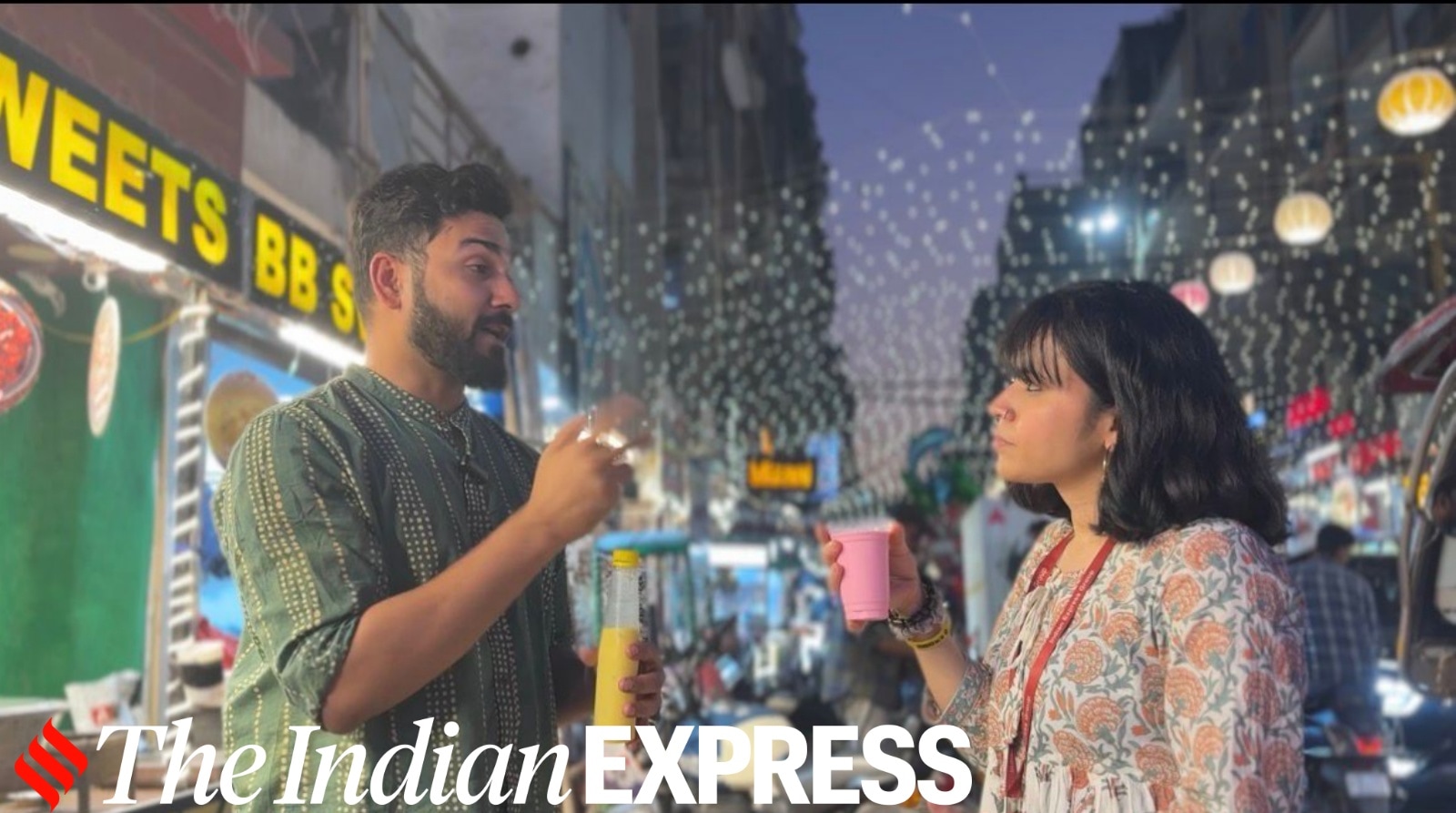 Food author Sadaf Hussain on what makes Mohabbat-e-Sharbat so unique (Photo: Kapil Joshi)
The science behind Sehri
Beyond tradition, he added, there is also a practical logic behind what people eat before beginning a day-long fast. “There is actually some science behind Sehri. You want food that lasts longer in the body, something that gives sustained energy, hydrates you, and doesn’t burn down quickly,” Hussain said.
This is why Sehri meals often focus on foods that release energy slowly. “A good Sehri meal usually has heavy carbohydrates, some sweetness, and a bit of liquid or gravy. Basically, food that is slow-burning and keeps you going through the day.”
As the sun continued to dip and the final minutes of fasting approached, our attention shifted back to the Iftar table. “Iftar follows a very logical flow,” Hussain explained. “You begin with dates because your body needs sugar, then water or sharbat, then snacks, and slowly move towards heavier food.”
Story continues below this ad
Soon enough, the faint sound of the siren from the mosque cut through the chatter, followed moments later by the azaan echoing across the neighbourhood. Almost instantly, people reached for dates and glasses of sharbat. Conversations softened. Hands moved quickly but calmly across the tables. The first sip of water, the first bite after hours of fasting, small, quiet gestures that carried a deeper sense of gratitude.
But the night was only getting started.
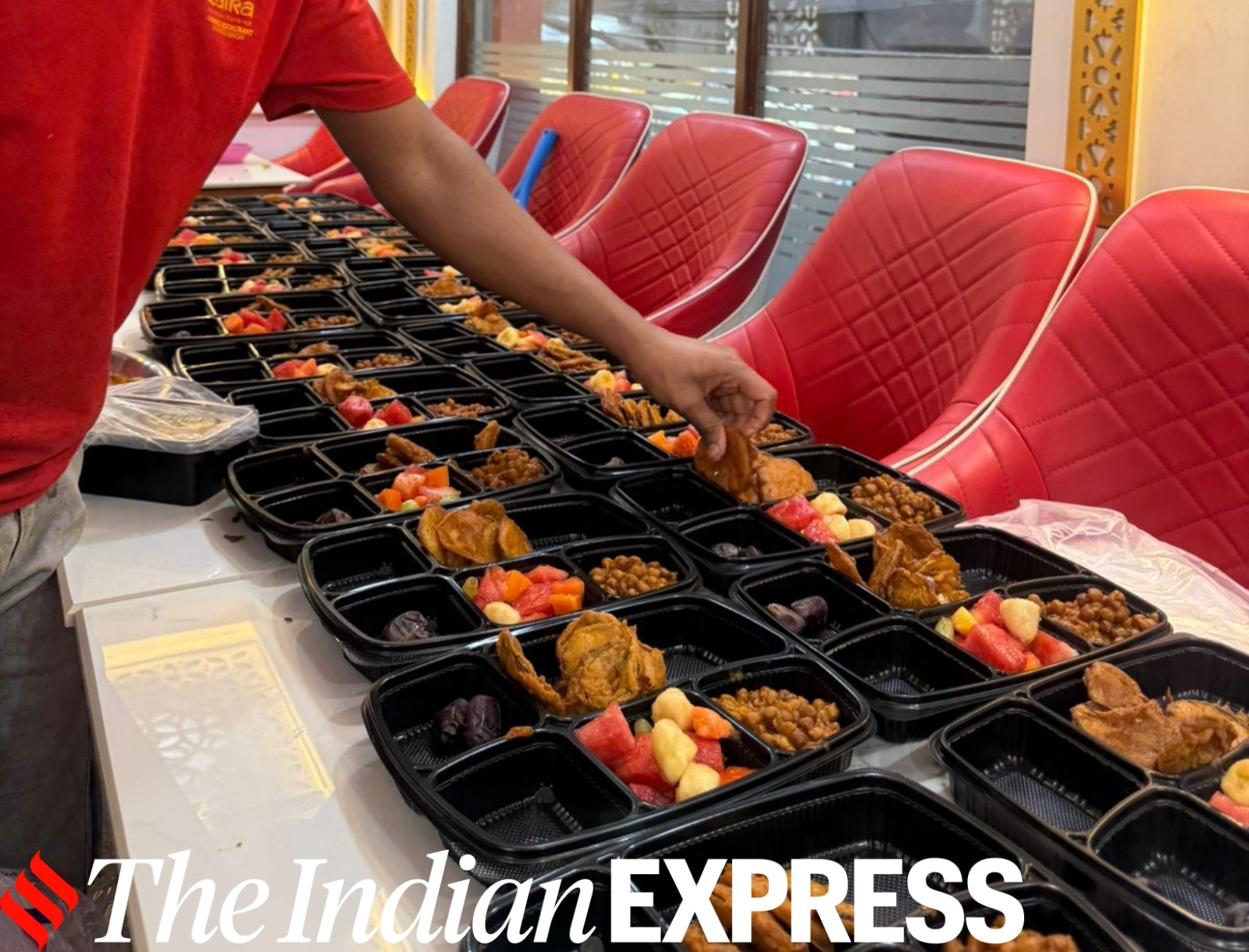 Fruits, fritters and sharbat are primary Iftar staples (Photo: Himakshi Panwar)
Ramadan special
A little further down the lane, the smoky aroma of kebabs drifting from a small shop caught our attention. Hussain stopped beside the sizzling stall and pointed to the wide, flat patties being cooked.
Chapli Kebab
“Chapli kebab comes from the word chappal because it’s flat like a slipper,” he explained. “The meat is pounded and shaped into a thin patty before being cooked.” Unlike some of Delhi’s more famous kebabs, chapli kebabs are meant to retain texture. “Unlike galawat kebabs that completely melt in the mouth, chapli kebabs have a bite to them. Delhiites usually prefer that meaty texture,” he said.
The preparation itself is rooted in simplicity. “Chapli kebab belongs to the family of kacche keema kebabs — the meat is raw when it’s mixed with spices and pounded together before cooking,” Hussain explained.
Story continues below this ad
He added that the dish reflects the culinary realities of its origins. “Think of its beginnings in the mountainous regions. People didn’t always have access to elaborate spices, so they used whatever they had, pounded the meat with simple masalas, and cooked it fresh.”
As we watched the cook shape another kebab, Hussain pointed out that chapli kebabs themselves have regional variations. “The Peshawari version is slightly heavier and more robust in flavour, while the Afghani style tends to be a bit milder and fattier,” he said. “Personally, I prefer the Afghan version; it’s meaty but not overpowering.”
What made this stall particularly interesting, however, was the cook’s story. “He actually learnt to make authentic Peshawari kebabs in Dubai while working as a chef, and then brought those flavours back to Shaheen Bagh.”
In many ways, the kebab on the griddle felt like a journey in itself. “So what you’re tasting here,” Hussain added, smiling as the kebab was finally served, “is essentially a Peshawari kebab that travelled from the streets of Peshawar to Dubai and finally found its way to Delhi.”
Story continues below this ad
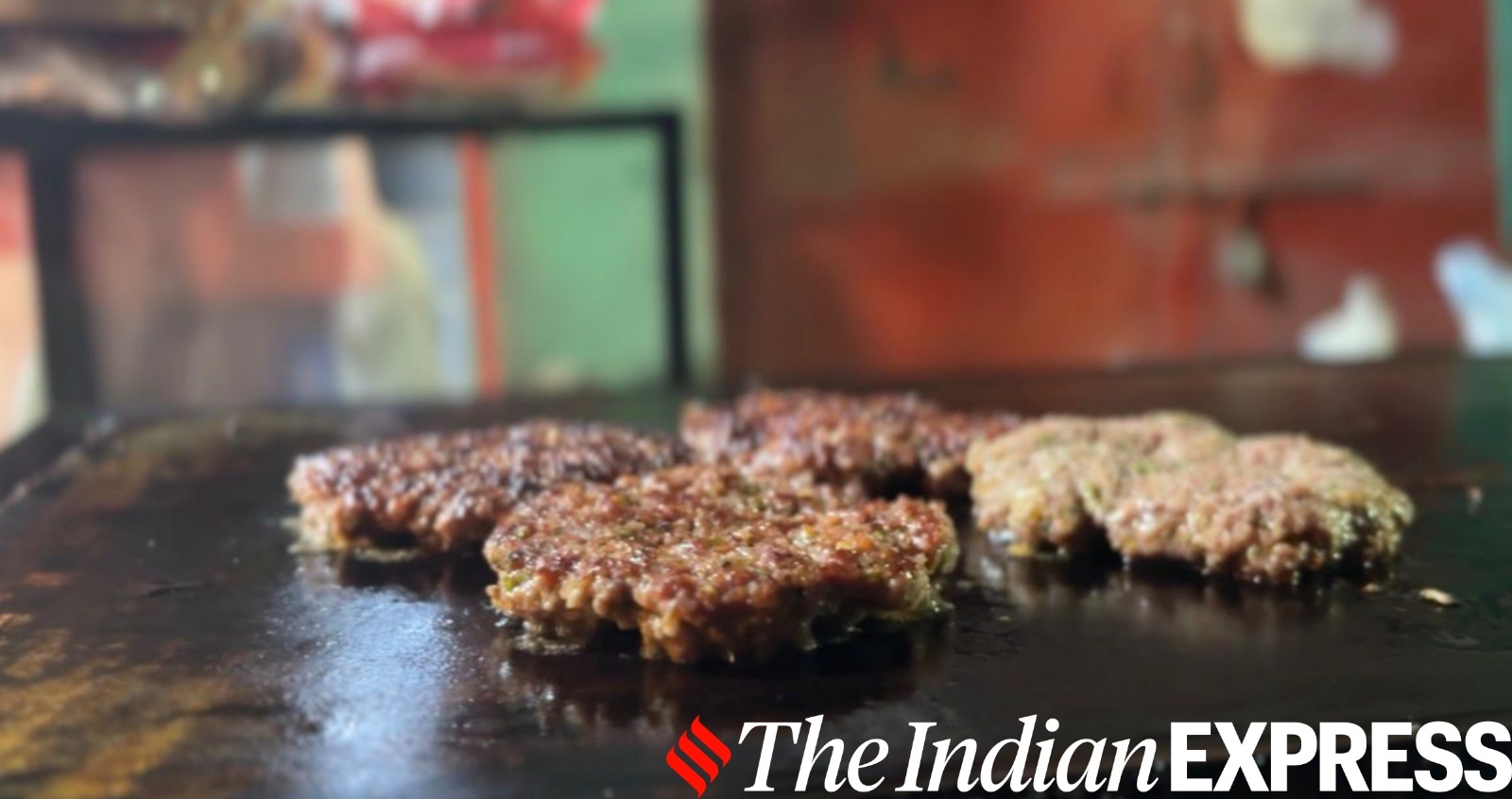 Chapli Kebab (Photo: Himakshi Panwar)
Ande ka Halwa
A surprise element during the food walk was Ande ka Halwa. At first, the idea of a halwa made with eggs sounded unconvincing. But one bite was enough to change that perception. Hussain shared that the recipe has been passed down in his family from his paternal grandmother. The preparation is simple , but the process takes time. Pick everyday ingredients like ghee, milk, sugar, and eggs, and cook them well for at least 40 minutes. “Mind you, it’s not scrambled eggs,”he quipped. Once cooked, the dessert bears a resemblance to milk cake in both taste and texture.
With just one bite of the halwa, I was reminded how street food opens doors. Suddenly, everyone becomes part of the celebration, sharing flavours, stories, and traditions. In that moment, I realised that while cultures may seem different, they often feel comfortingly the same. Standing there amid the clatter of plates and the smell of sizzling delicacies, Shaheen Bagh felt less like a market and more like a shared table, where generosity, patience and community quietly came together, one evening at a time. One Iftar at a time.
