

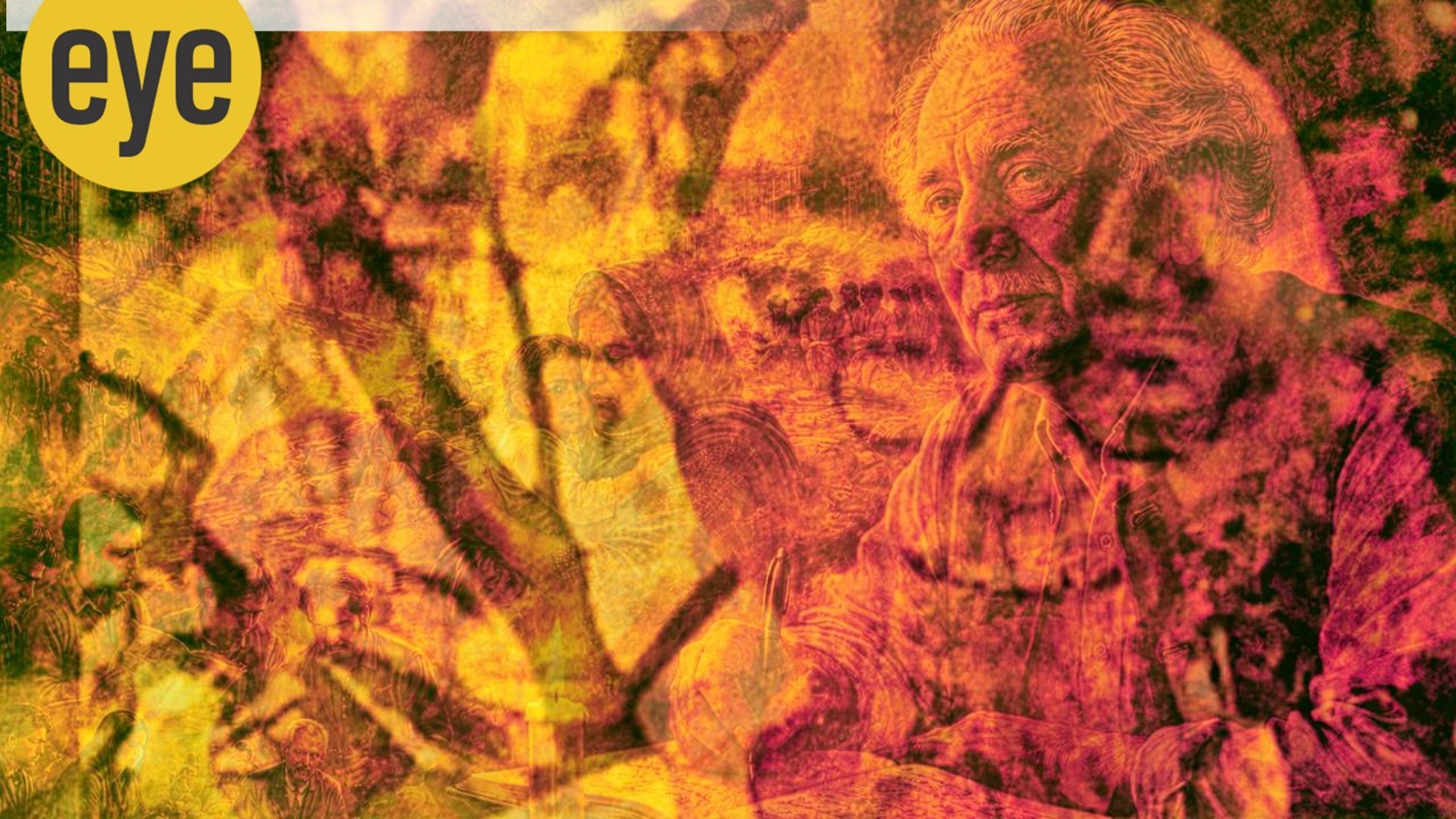
We are living in a time when the world feels both unbearably loud and eerily silent. Loud with the language of war—missiles, mandates, mobilisations—and silent in the spaces where empathy once echoed. Cities are reduced to statistics before they are reduced to rubble.
Economies tremble not from lack of ambition but from an excess of aggression. And far from the frontlines, in kitchens and corridors across continents, the consequences arrive quietly: in rising prices, in shrinking plates, in choices that grow sharper and smaller with each passing day.
This is the new geography of war. It is no longer confined to borders or battlegrounds. It seeps. It spreads. It settles into the seams of everyday life. The cost of conflict is no longer counted only in casualties, but in commodities—in the price of grain, in the scarcity of fuel, in the slow suffocation of those already struggling to breathe. The powerful posture; the poor pay.
And in moments like these, when the world feels fractured beyond repair and language itself seems inadequate, we turn—not to policy, not to pundits—but to poetry. To voices that have seen the cycles before, that have named the patterns we are only now beginning to recognise.
There are poets we admire, and there are poets we inherit.
Faiz Ahmad Faiz belongs not to bookshelves but to bloodstream—to that deep, rhythmic place where language becomes lifeline.
I did not discover Faiz. I was delivered to him—delicately, deliberately—at a moment when I was dissolving into doubt.
Story continues below this ad
I was being bullied. Not broken in ways that could be bandaged, but bent in ways that blurred belief. The kind of quiet cruelty that corrodes confidence, that chips at the spirit, that whispers, you are less. I was too young to articulate despair, but old enough to feel its firm fingers around my throat.
And then, in a classroom that did not know it was saving me, stood Sabiha Hashmi.
My art teacher, yes—but also my mentor, my moral map, my borrowed voice when mine had fled.
She did not lecture. She did not label. She simply leaned into language and let it lead.
Story continues below this ad
“aaj ke naam
aur aaj ke gham ke naam”
To this day,
and to the sorrow of this day.
The words did not land like literature. They landed like recognition.
Here, at last, was a sentence that did not deny sorrow. It named it. It honored it. It held it up, not as weakness, but as witness.
At home, another quiet curriculum unfolded. My grandmother, gentle but firm, insisted that Urdu be part of my weekends—not as subject, but as sustenance. Letters curled into language; language softened into song.
Story continues below this ad
At school, between bells and breaks, Mr Tauquir Ahmad, my history teacher at Modern School Vasant Vihar, became my unlikely linguist. In the margins of time—those brief, borrowed minutes between classes—he taught me to read and write Urdu. Not hurriedly, not perfunctorily, but with patience and pride. He gave me a script, but more than that, he gave me structure—a way to see the world in sentences that sang.
And at home, evenings turned into mehfils.
My father, Guru Saran, believed that language must be lived, not merely learned. He made me sing. Made me read. Made me repeat ghazals and nazms until they moved from memory into marrow.
For my Bhua, Deepa Bhatnagar, whose listening was luminous.
For my Phupaji, Hargobind Prasad Bhatnagar, former Director General of the Border Security Force, a man shaped by borders yet softened by verse, who came from Lahore and carried Urdu like an inheritance. He would review my writing, test my reading, and correct my cadence. He did not allow approximation. He demanded accuracy, authenticity, and attention.
Story continues below this ad
Some moments feel like culmination without culmination. Sitting beside her, sharing my words, I felt the quiet convergence of past and present—of a boy once saved by poetry, now speaking in its presence.
She carried her father not as a relic, but as a resonance.
And I think of Sabiha Hashmi, of Mr Tauquir Ahmad, of my father Guru Saran, of Bhua Deepa, of Phupaji Hargobind—each, in their own way, placing words in my hands and saying, this is how you survive.
Not by silencing your sorrow.
But by speaking it.
Not by shrinking from the world.
But by seeing it—clearly, courageously, completely.
“aaj ke naam
aur aaj ke gham ke naam”
To this day.
To this sorrow.
To the shared, stubborn, soaring spirit of humanity.
And to Faiz, who taught us that even in our darkest hours, language can be light, poetry can be protest, and words, when wielded with wisdom, can make the world not perfect—but profoundly more possible.
