

4 min readUpdated: Mar 5, 2026 09:19 PM IST
Iran’s IRIS Dena sinking: The sinking of the Iranian warship IRIS Dena near Sri Lanka on Wednesday has drawn global attention to an often-confusing aspect of international law: who controls the seas. A US submarine strike sank the Iranian frigate IRIS Dena about 40 nautical miles off Lanka’s southern city of Galle, killing 87 sailors and leaving several others missing, news agency Associated Press reported.
Iran has warned Washington will “bitterly regret” the attack, saying the ship was operating in international waters when it was struck.

Sri Lanka, meanwhile, said it is also dealing with another Iranian vessel inside its Exclusive Economic Zone (EEZ) while trying to safeguard lives following the incident.
The developments have brought renewed focus to the legal zones that divide the world’s oceans, territorial waters, Exclusive Economic Zones and international waters.
Under the United Nations Convention on the Law of the Sea (UNCLOS), a country’s territorial waters extend up to 12 nautical miles from its coastline.
Within this zone:
- The coastal state exercises full sovereignty, similar to its land territory.
- It can regulate security, fishing, navigation and military activity.
- Foreign ships are allowed to pass only under the principle of “innocent passage”.
If a military strike occurs in territorial waters, it is usually considered a direct violation of sovereignty, which can escalate diplomatic or military tensions.
Story continues below this ad
What is Exclusive Economic Zone (EEZ)?
Beyond territorial waters lies the Exclusive Economic Zone or EEZ, which stretches up to 200 nautical miles from the coast.
In an EEZ:
- The coastal state has exclusive rights over natural resources, including oil, gas and fisheries.
- However, the waters themselves remain open for navigation by other countries.
- Foreign vessels can sail through, but resource extraction requires permission.
The Sri Lankan government said the second Iranian ship currently being monitored is within its EEZ but outside the country’s maritime boundary, meaning Colombo has economic rights there but not complete control over navigation.
“An American submarine sank an Iranian warship that thought it was safe in international waters,” US Defense Secretary Pete Hegseth said at the Pentagon. “Instead, it was sunk by a torpedo. Quiet death.”
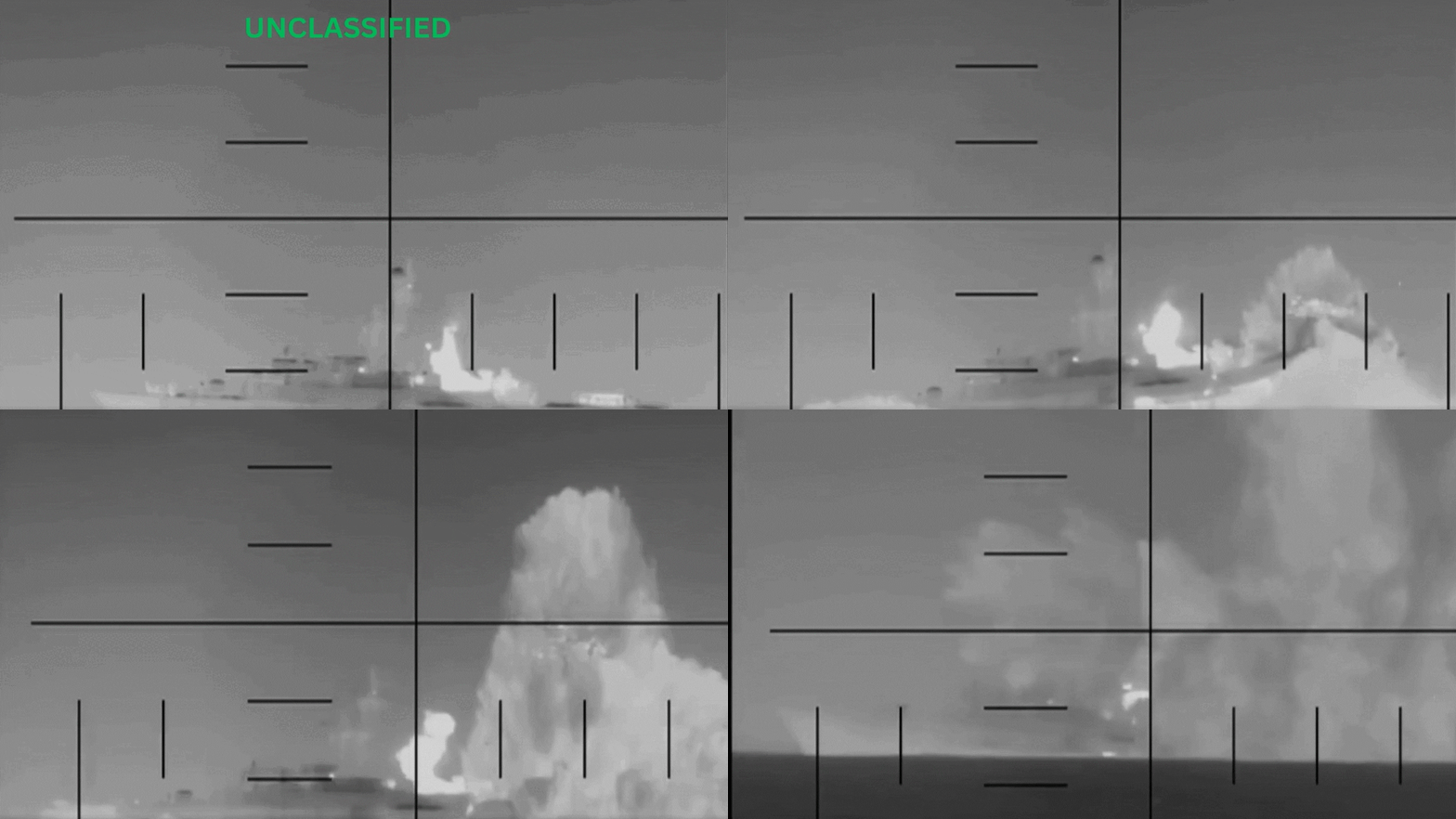
A Pentagon video purporting to have captured the attack showed a huge explosion blowing apart the rear of the vessel, lifting it from the water, and causing it to begin sinking from the stern.
Story continues below this ad
What is International waters?
Waters beyond 200 nautical miles from any country’s coast are known as international waters, or the high seas.
These areas:
- Do not belong to any single country.
- Are open for navigation, overflight and maritime operations by all states.
- Ships are governed by the “law of the flag”, meaning they fall under the jurisdiction of the country where they are registered.
Navies from different countries routinely operate in international waters, particularly for patrols, exercises and strategic deployments.
Why maritime zones matter in Iran-US war
Details of the incident: A United States Navy submarine torpedoed the IRIS Dena using a Mark 48 heavyweight torpedo. This is the first time a US submarine has sunk an enemy surface vessel with a torpedo since World War II.
Location: The sinking occurred approximately 40 nautical miles (74 km) off the coast of Galle, Sri Lanka.
Story continues below this ad
The sinking of the IRIS Dena, which had reportedly participated in a naval exercise organised by India in the Bay of Bengal before heading back, has raised concerns about the expansion of the US-Iran confrontation into the Indian Ocean region.
Because the attack allegedly occurred outside any country’s territorial waters, it falls under the rules of naval warfare on the high seas rather than a violation of national sovereignty.
However, such incidents can still have serious geopolitical consequences, especially when they occur along major global shipping routes used for energy and trade.
(With inputs from agencies)
Stay updated with the latest – Click here to follow us on Instagram
© IE Online Media Services Pvt Ltd
