

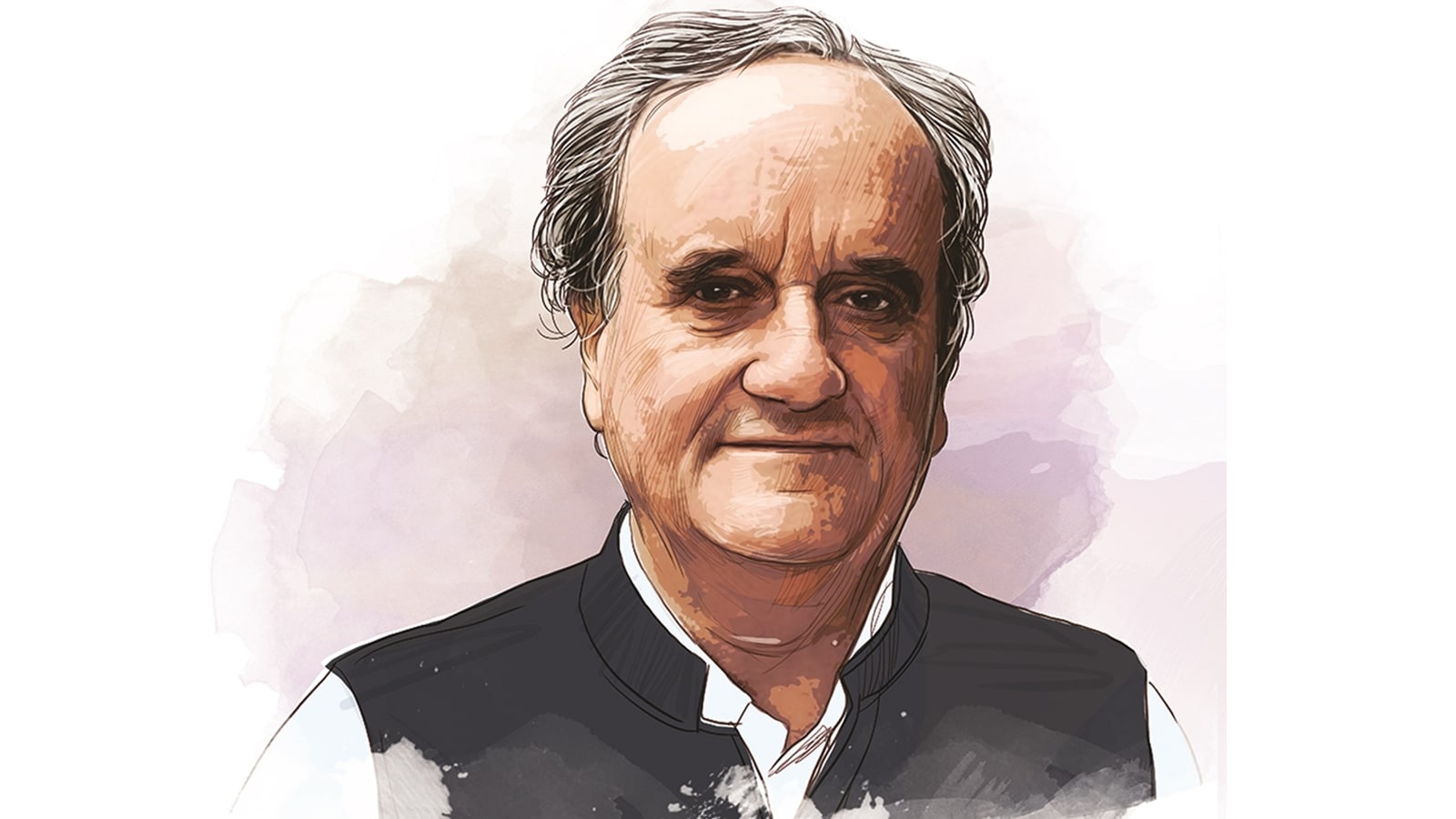
The last time I saw Mark Tully, he was sitting on a bench in the picturesque Sunder Nursery gardens, soft-spoken and warm hearted as ever, although the iconic scribe had become hard of hearing. As a resident of nearby Nizamuddin Colony in central Delhi, like me, he was a regular walker in the park, accompanied by his faithful labrador and his partner, writer Gillian Wright. But as age took its toll, I noticed with concern that of late Tully opted mostly to sit on a bench while Gillian walked the dog. It was but appropriate that Tully, who was born in India, died here at age 90.
From his birth in Kolkata, Tully had a deep connect and love for his adopted country and India, in turn, recognised his unique position in Indian journalism awarding him with some of its highest honours, the Padma Shri and Padma Bhushan.

During his decades of reporting for the BBC, Tully was the most recognised and trusted radio voice in India, at a time when the only real alternative was the completely government-controlled All India Radio. Acknowledging Tully’s premiere position as a foreign correspondent in South Asia, fellow journalist David Housego, formerly with the Financial Times in New Delhi, recalls, “In periods of sharply different and polarised accounts of what was happening in India or Pakistan, people turned to Mark to get a true account. At times of crisis, like the Indo-Pakistan conflict of 1971 or the election in 1977 after the Emergency, his was the voice that counted.” Housego recalls how it was extraordinary to see the way he attracted crowds. “Are you Mark Tully?”, Housego would be asked when it emerged that he was a foreign correspondent. To attribute Tully’s name to a news report was to bestow credibility on it.
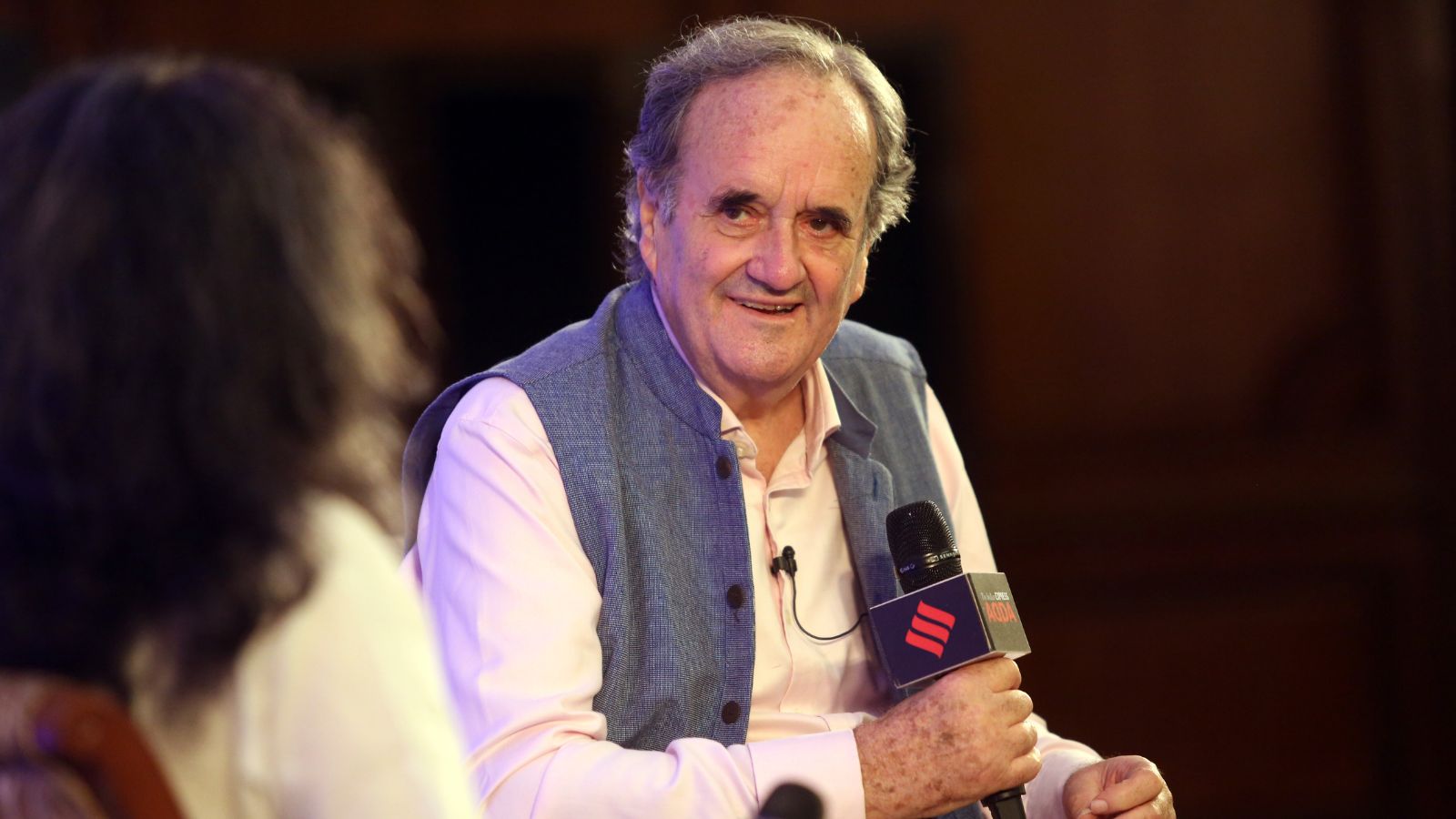 Author and senior journlist Mark Tully at the Express Adda in New Delhi. (Express Archive Photo by Neeraj Priyadarshi)
During the Emergency, when Prime Minister Indira Gandhi imposed censorship and threw out all foreign correspondents who were unwilling to sign an undertaking that they were agreeable to pre-censorship, Tully was but naturally the first non-Indian journalist to be targeted. He was pulled up for something he had never actually reported. A Pakistan news story attributed to BBC that when Indira Gandhi held a cabinet meeting announcing she was imposing an Emergency, some of her colleagues objected.
Mohammed Yunus advised Mrs Gandhi to give Tully a few lashes and put him in jail. When the then Minister for Information and Broadcasting V C Shukla called Tully to scream at him, Tully pointed out that BBC had not carried the report, but certainly would do so if Shukla would authenticate it. When he refused to sign the government declaration of pre-censorship, Tully was given 24 hours to leave the country. The BBC continued to broadcast news through its stringers and agencies. Tully joked with me that during the Emergency, BBC became a byword for anti-government news and a number of rumours spread were credited to him, although the reports had actually emanated from elsewhere and he was not in India.
Tully first made a mark in 1971 as a scribe when he travelled with the Indian Army into then East Pakistan and covered the uprising led by Sheikh Mujibur Rahman and his takeover as president of the newly formed state of Bangladesh. Tully was chief of BBC for South Asia for 20 years when he covered some of the most iconic moments in India’s history, in the days when communication technology was in its infancy and erratic telephones, telegrams and tape spools were the usual mode of communication to London. It was the BBC which scooped the news of Indira Gandhi’s assassination hours before official government sources disclosed the momentous event. Tully gave full credit to his longtime assistant Satish Jacob for breaking the story, but he himself rushed down from Mussoorie to follow up with the coverage.
 Tully at a political rally in New Delhi, 1991. Photo credit: Parthiv Shah
Tully’s gripping accounts of other epoch-making events such as Operation Blue Star, the Bhopal gas tragedy and Rajiv Gandhi’s assassination are etched in a generation of Indians in the 70s, 80s and 90s. During the destruction of the Babri masjid, a mob of Hindutva flag bearers attacked him and he had to be sheltered in a temple before being rescued by fellow journalists and the authorities. His deep understanding of the country and empathy with people of all walks of life was such that he could usually accurately decipher popular mood, as I discovered when we exchanged notes on pre-election trends.
Story continues below this ad
As a child, Tully grew up during the Raj, living with his family in colonial splendour in a large bungalow surrounded by a host of servants and regular holidays in hill stations since his father was a wealthy English businessman. To distance Tully from the country of his birth, he was sent to boarding school in England at the age of six, where he was deeply unhappy. Later, he studied theology at Cambridge University in the UK and planned on becoming an Anglican clergyman. The fun-loving Tully soon realised his true calling lay elsewhere. As journalist Satish Jacob, who worked closely with Tully for three decades, recalls, “News was something that was in his blood. He believed totally in following a story to its end, but always warned me to make doubly sure of all the facts and be bold and brief. In our time, radio had enormous credibility and respect. Today, there are so many conflicting voices from the media, people often find it difficult to decipher who is really credible.’’
Towering voice of journalism: PM
Expressing grief over Mark Tully’s death, Prime Minister Narendra Modi praised him as a towering voice of journalism. “Saddened by the passing of Sir Mark Tully, a towering voice of journalism. His connect with India and the people of our nation was reflected in his works,” the PM said in a post on X. “His reporting and insights have left an enduring mark on public discourse. Condolences to his family, friends and many admirers,” the PM said. —ENS
