


7 min readNew DelhiUpdated: Mar 3, 2026 08:59 AM IST
Chhattisgarh liquor scam news: Observing that courts must apply parity where risks like tampering or absconding are adequately mitigated by bail conditions rather than indefinite incarceration, the Chhattisgarh High Court allowed the bail plea to Saumya Chaurasia, the former deputy secretary in the Chief Minister’s Office involved in the alleged Rs 2,883 crore liquor scam case.
Justice Arvind Kumar Verma was hearing the bail plea of Chaurasia, who is accused of being involved in a case relating to the manufacture and sale of illegal liquor through a licensed government outlet, generating illegal profits.

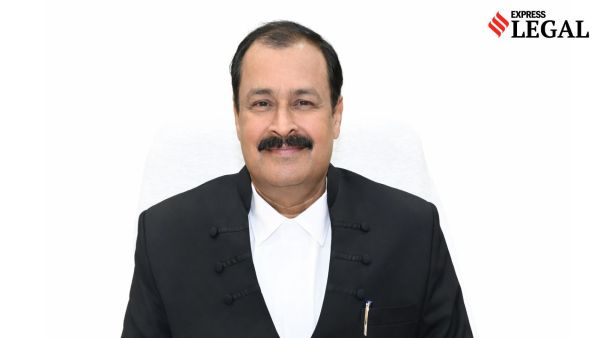 The applicant, a lady, bears a peripheral role dwarfed by principal conspirators conspicuously enlarged on bail by the Supreme Court, said the Chhatisgarh High Court. (Image enhanced using AI)
“This court is satisfied, at this stage, that the ends of justice would be adequately served by enlarging the Applicant on bail subject to stringent conditions so as to ensure her presence during trial and to obviate any possibility of misuse of liberty,” the court said on February 28.
Bail on parity
- A lady bears a peripheral role dwarfed by principal conspirators conspicuously enlarged on bail by the Supreme Court.
- Notably, the ED has filed prosecution complaints against over 40 accused, including deeply complicit excise officials, sans arrest.
- Manifest parity thus ensures in her favour.
- While the allegations pertain to economic offences of serious nature, it is equally well settled that the gravity of the accusation alone cannot be the sole ground to deny bail, particularly when the investigation is substantially complete, and the trial is likely to take considerable time.
- Section 45 Prevention of Money Laundering Act, 2002 (PMLA) stands satisfied that the twin conditions are met, no reasonable grounds exist to believe the applicant guilty of money laundering, and no material indicates the likelihood of reoffending while on bail.
- Section 45 of the PMLA makes offences under the act cognizable and non-bailable, establishing a stringent “twin test” for bail.
- Bail can only be granted if the court is satisfied that the accused is not guilty and is unlikely to commit further offences.
- The apprehension of the ED regarding evidence tampering remains entirely general and devoid of particulars.
- No specific material on record suggests the applicant has attempted witness influence or tampering.
- Such nebulous concerns stand addressed through stringent bail conditions (non-contact, reporting, GPS), as routinely imposed sans custodial predicate.
- Article 21 mandates liberty over speculative fears.
Bail riders
- Surrender passport before the trial court.
- Not leave the country without prior permission of the court.
- Furnish an undertaking on oath before the trial court that she shall regularly and punctually appear before the trial court on each and every date of hearing.
- Fully cooperate in the expeditious disposal of the trial.
- Not directly or indirectly attempt to contact, influence or intimidate any witness connected with the case and shall not tamper with the evidence in any manner.
- If found to be non-cooperative with the proceedings of the trial court or commits a breach of any of the conditions imposed, the ED can move an application for cancellation of bail.
ED case
- The case related to an alleged large-scale liquor procurement and distribution scam in Chhattisgarh during the period 2019 to 2023.
- This resulted in the generation of proceeds of crime amounting to approximately Rs 2883 crores, out of which about Rs 2161 crores are alleged to be illegal earnings.
- The prosecution alleged that the existence of a criminal syndicate comprising senior bureaucrats, political functionaries, intermediaries, and private individuals who allegedly manipulated the excise policy and liquor procurement system to generate illegal commissions and unaccounted income.
- The offence was registered by the economic offence wing on January 17, 2024.
- The case was registered under Sections 420 (cheating), 467 (forgery of valuable security), 468 (forgery for the purpose of cheating), 471 (using as genuine a forged document or electronic record), and 120-B (criminal conspiracy) of the IPC and Sections 7 (offence relating to public servant being bribed) and 12 (punishment for abetment of offences) of the Prevention of Corruption Act, 1988.
- The FIR alleged that certain public servants and private persons conspired to collect illegal commissions from distillers, facilitated the supply of unaccounted liquor, manipulated excise policy decisions, and caused wrongful loss to the state exchequer.
‘Not named in initial FIR’
- Senior advocate Siddhartha Dave, appearing for Chaurasia, argued that she was not named in the initial FIR registered by the economic offence wing of the anti-corruption bureau and was implicated subsequently without any independent incriminating material.
- Dave said that no proceeds of crime were directly traced or linked to her.
- He submitted that her arrest after nearly two years of investigation and after filing of multiple complaints was unnecessary and arbitrary, placing reliance on Arvind Kejriwal v. Directorate of Enforcement.
- She had already been granted bail by the Supreme Court in three cases and by the sessions court in one case, and had not violated any bail conditions.
- Of 81 accused persons, only nine were arrested, and key alleged conspirators were already on bail, invoking the principle of parity recognised.
- Several distillers and contractors allegedly involved in the scam were not arrested, indicating a selective or “pick and choose” approach by the prosecution.
- The senior advocate submitted that the twin conditions under Section 45 were satisfied, as there were reasonable grounds to believe she was not guilty.
ED’s arguments
- ED Special Prosecutor Zohaib Hossain contended that Chaurasia played a key supervisory and coordinating role in the alleged laundering of proceeds of crime by overseeing accounts, fund transfers, and appointments.
- A direct money trail of approximately Rs 115.5 crores was traced to her through intermediaries, the ED said.
- Statements recorded under Section 50 of the PMLA are admissible and constitute substantive evidence, the agency submitted.
- The ED argued that WhatsApp chats and electronic communications are valid pieces of evidence at the stage of bail.
- Emphasising the high gravity and magnitude of the alleged multi-crore liquor scam involving policy manipulation and systemic corruption, the ED said.
With inputs from Sumit Kumar Singh
(Sumit is an intern with The Indian Express)

© IE Online Media Services Pvt Ltd
