

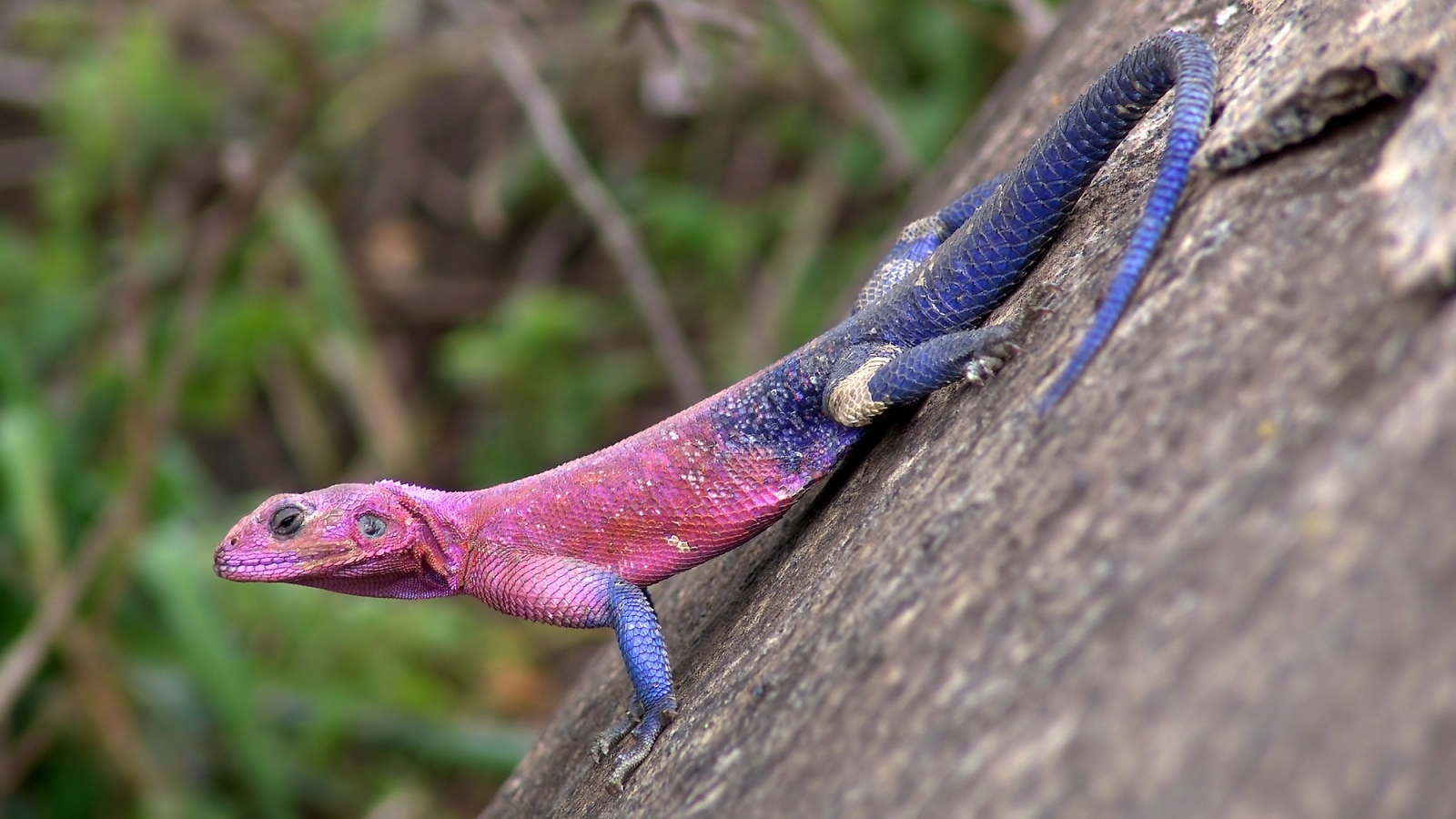
If you ever spot a lizard that looks like it’s dressed as Spider-Man, you’re not imagining things — it’s probably the Mwanza flat-headed rock agama (Agama mwanzae). With its striking red head and upper body paired with a deep blue lower body and tail, this reptile has become a social media sensation, often dubbed “the Spider-man lizard.”
The habitat

Native to East Africa, the Mwanza flat-headed rock agama is most commonly found in Tanzania, Kenya, and Rwanda, thriving in semi-arid regions with abundant rocky terrain. These rocks aren’t just part of the scenery — they’re essential to the agama’s lifestyle. The reptile spends most of its day basking on sun-warmed stones, quickly darting into crevices at the slightest sign of danger. Its flattened head and agile limbs help it slip easily into cracks, providing both protection and the perfect vantage point to hunt.
The diet
The agama’s diet mainly consists of insects, especially ants, beetles, and termites. Occasionally, it snacks on small vertebrates or plant material. Its sharp reflexes and bursts of speed make it an excellent hunter, capable of catching prey mid-crawl.
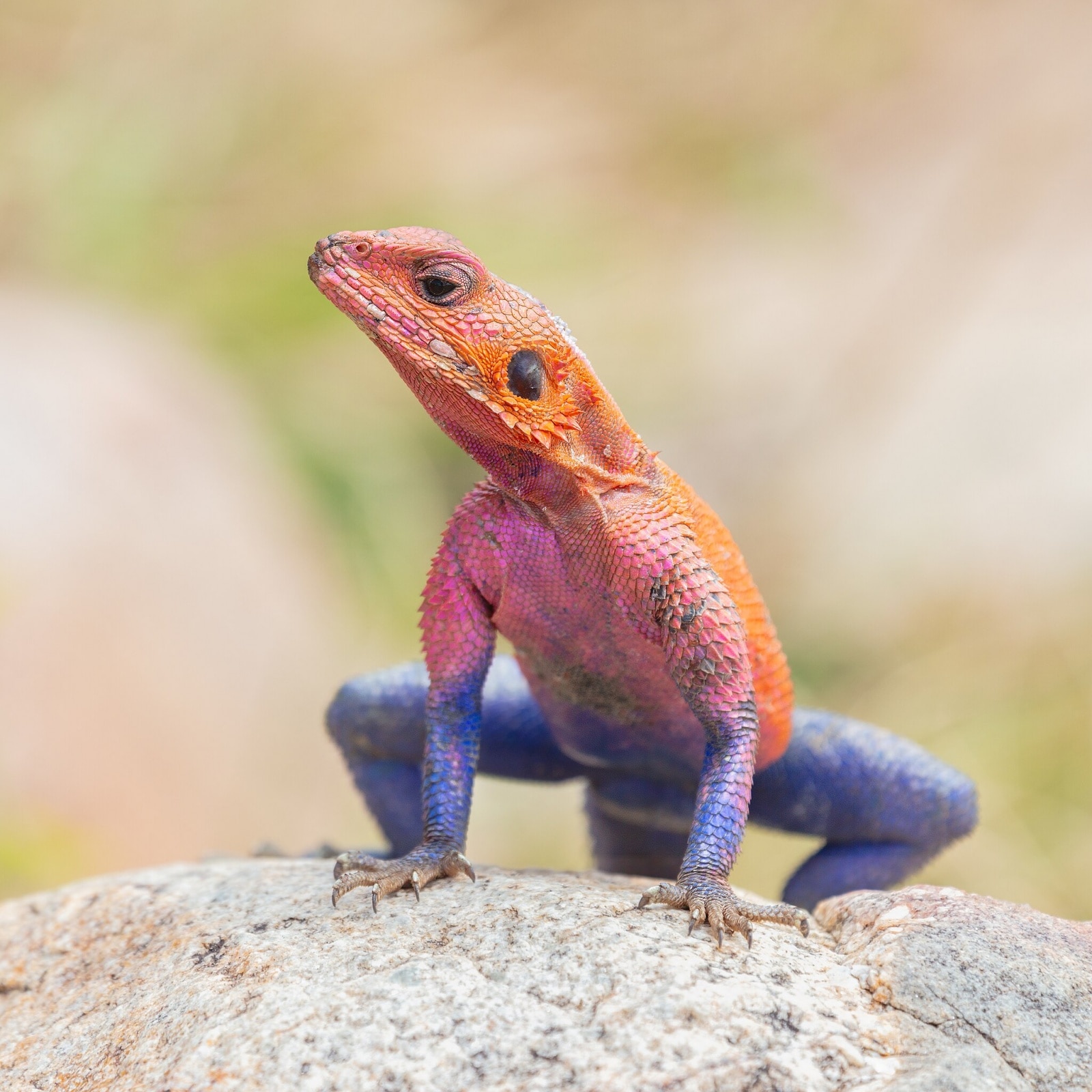 This reptile has become a social media sensation, often dubbed “the Spider-man lizard” (photo: wikimedia commons)
Appearance
Interestingly, only males display the vivid red-and-blue colouring — a result of territorial and mating displays. Females and subordinate males are typically dull brown or grey, allowing them to blend into their surroundings. During courtship, a dominant male performs head-bobbing and push-up motions to assert dominance and attract a mate, showing off his brilliant hues in the process.
Adaptation and behaviour
These lizards are diurnal, meaning they’re active during the day. Their flattened shape and strong limbs make them expert climbers — often seen scaling vertical surfaces or basking atop rocks under the blazing African sun. Despite their bold appearance, they are shy and quick to flee when approached.
Beyond their striking looks, the Mwanza flat-headed rock agama is a fascinating example of evolutionary adaptation — thriving in harsh, arid environments while balancing camouflage, display, and survival. They remind us that even the smallest creatures can wear the most extraordinary colours.
