

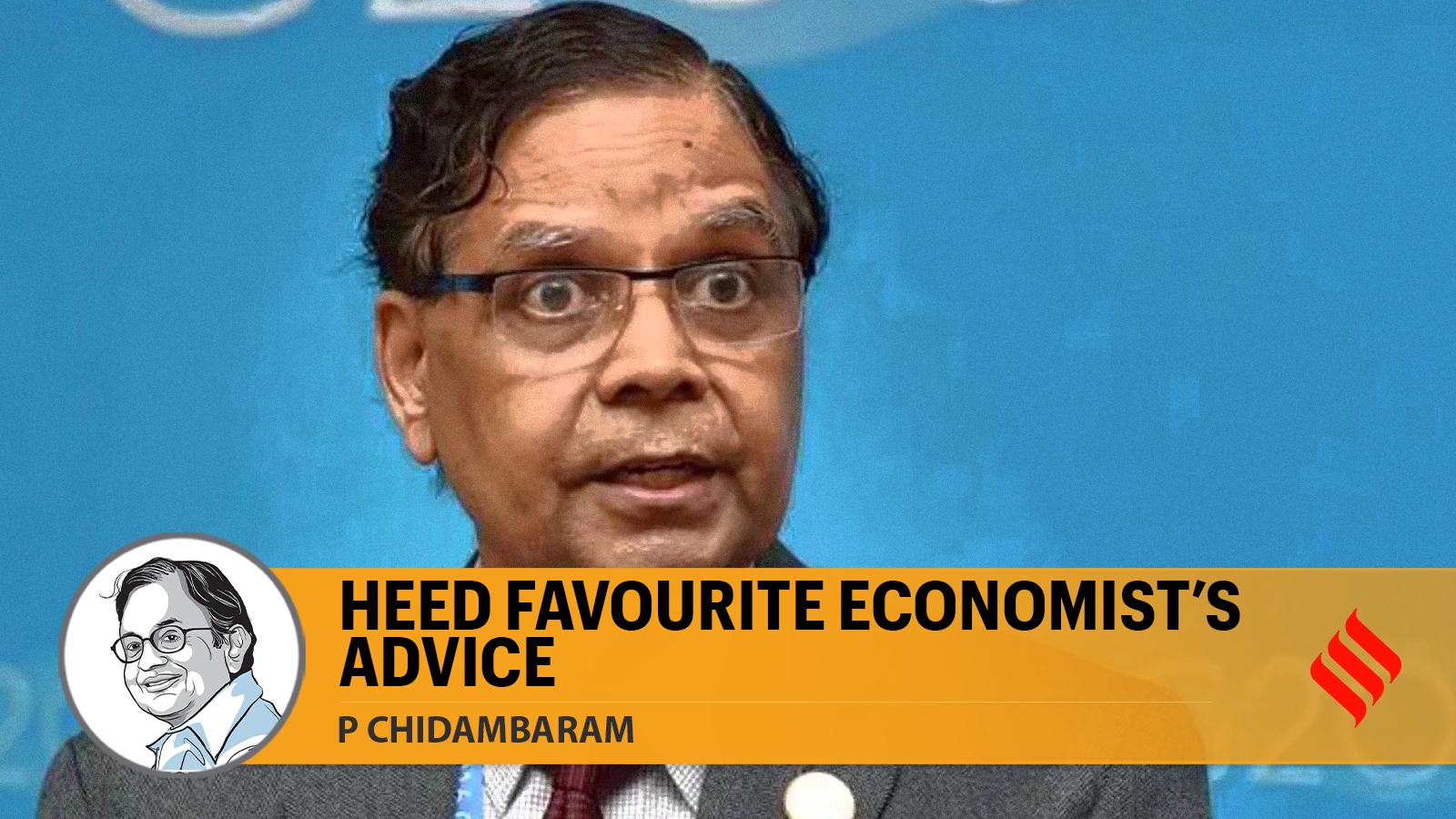
It is no secret that Professor Arvind Panagariya is Prime Minister Narendra Modi’s favourite economist. He is the resident friend, philosopher and guide in Delhi. He was the first Vice Chairman of NITI Aayog (January 2015 to August 2017). He served as India’s G20 Sherpa (2015-2017). He was appointed in April 2023 as Chancellor of Nalanda University and in December 2023 as Chairman of the 16th Finance Commission. He was head of several Task Forces. His longevity in the NDA government is remarkable.
Dr Panagariya is a tenured professor in Columbia University and a free trader in the footsteps of his mentor, Dr Jagdish Bhagwati. I admire them for their unfaltering commitment to an open economy and free trade. Since he is a loyal supporter of Mr Modi, his criticisms are discreetly disguised as ‘shabash, dil maange more’.

2025: No Reforms
In a recent article, Dr Panagariya complimented the government with the words “2025 will go down in history as the year of economic reforms in India”. He knows that it is not true. The year 2025 saw little reforms. A search in the media and parliamentary proceedings will show that nothing significant under the label of ‘economic reforms’ was done in 2025. For example,
- The simplification and reduction of the GST rates was a correction of the original sin committed in July 2017;
- The rationalisation of customs duties was also a correction of the relentless increase in customs duties and rampant use of anti-dumping and safeguard duties to advance protectionist measures;
- The consolidation of labour laws was a deliberate shift of the balance in favour of capital (which already enjoyed an advantage) and is fiercely opposed by the trade unions including the BJP-patronised Bharatiya Mazdoor Sangh (BMS); and
- The enactment of the unpronounceable VB G-RAM-G Act, far from a reform, destroyed the world’s largest work-cum-welfare programme that sustained the lives and livelihoods of 8.6 crore job card holders among the rural poor.
With respect, I am unable to put my finger on a measure in 2025 that will qualify as a significant economic reform. In a subtle dig at the government, Dr Panagariya has listed six measures the government ought to take in 2026. The agenda is an indictment of the anti-reform stance of the government in the last 11 years. It is a clever flip of the coin. By calling ‘heads’, Dr Panagariya has confessed that the call, so far, was ‘tails’.
Sensible Advice
Let’s look at the six recommendations:
Rollback customs duties: The chapter-wise uniform customs duty and reduction of duties were initiated by the UPA, and the trade-weighted average customs duty across all goods was brought down to 6.34 per cent. The reversal took place under the NDA, and the trade-weighted average customs duty climbed to nearly 12 per cent. Like most chief ministers, Mr Modi was instinctively protectionist in Gujarat and carried that mindset to the central government, and he was warmly applauded and encouraged by the protectionist lobbies. In fact, atmanirbharta was a new name for self-sufficiency and protectionism that had kept the Indian economy practically closed for nearly three decades. Dr Panagariya has recommended that the government commit itself to a uniform 7 per cent rate across imports.
Finish QCO withdrawal: Who rolled out a series of Quality Control Orders? QCOs are really non-tariff barriers to imports. If the same quality standards were applied to Indian products, few will pass muster. Dr Panagariya complimented the government for withdrawing 22 QCOs in 2025, but he did not say when these 22 QCOs were first announced. These very 22 QCOs were notified in the following years (see box):
The rest of the story is worse. After withdrawing 22 QCOs, it is estimated that there are still approximately over 700 in force!
Sign off trade deals: Dr Panigariya confesses to “our instinctive resistance to import liberalisation”. Who is our? None other than the NDA government. It reversed two decades of import liberalisation, hardened the Foreign Trade Policy, spurned the invitation to sign CPTPP in 2018 and withdrew from RCEP in 2019, and expressed distaste for Bilateral Trade Agreements.
Restrain DGTR: Despite a paltry share (2.8%) of world merchandise trade, India had imposed approximately 250 anti-dumping duties on products. Add customs, countervailing and safeguarding duties, India has high tariff barriers. DGTR was instructed to enforce the protectionist regime and, like all bureaucratic authorities, revelled in its role. The mandate to DGTR must be re-scripted.
Don’t overvalue the rupee: The exchange rate is a sensitive issue. It is affected by foreign exchange flows, supply and demand, inflation, fiscal deficit, etc. An overvalued rupee will affect exports, a depreciating rupee has second order effects. The value of the rupee is best left to the market and the RBI with intervention only in times of extreme volatility.
Monitor exports: Too many policy changes, rules, regulations, instructions, forms, compliances, etc. have impeded exports. The answer is to light a bonfire at the end of every year.
Dr Panagariya’s article may be a bellwether of what to expect in Budget 2026-27 or an expression of his frustration. If the government heeds his advice, I shall celebrate and urge him to outline the next six or sixty steps. Remember, India has miles to go.
(Next column: February 8, 2026)
