

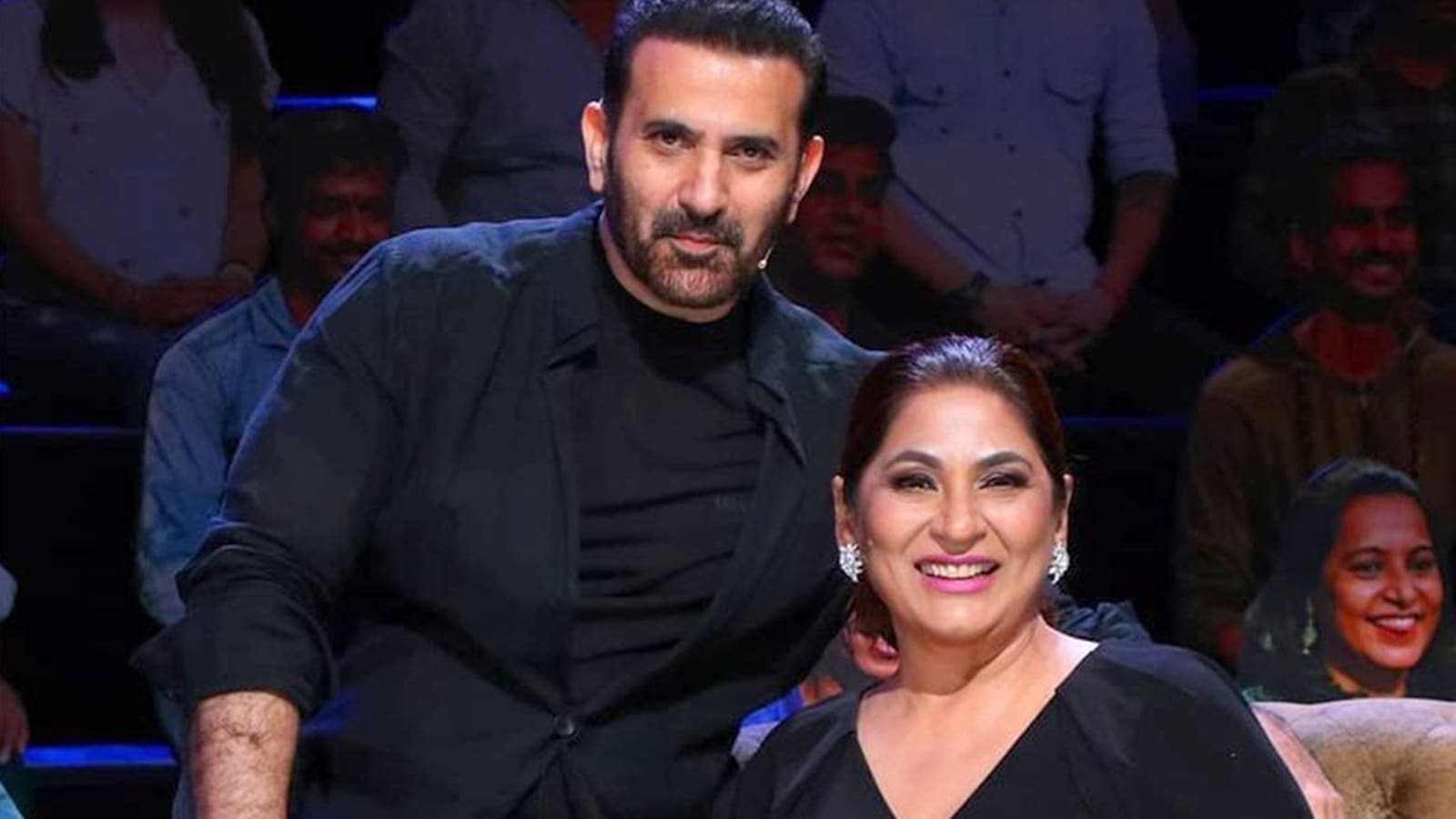
Parmeet Sethi and Archana Puran Singh are reliving their dating days and how their bond has only strengthened over the last 30 years on their YouTube channel. Recalling the unwavering support Archana offered him when his garment export business collapsed, Parmeet, 59, said, “Acceptance comes with time. Around 4 years into the marriage, I started an export garment business and got 1-2 good orders from Europe. I said, wow…I was setting up a factory in Bengaluru… supply was underway… and suddenly, all the orders were cancelled. All the companies. And they were all big brands. I felt the ground slipping under my feet…I thought I would be a successful garment exporter. I thought I was going to rule in money, travel the world…so many dreams; and I still remember, it was evening time, we didn’t have mobile phones. I called you from a STD booth. I still get the shivers. I called and cried.”
Archana, 63, described how she could hear him break down over the phone, something he did very rarely. “You called me up, and I remember…I asked you…I could feel and hear the tears, the sound of your tears. You don’t cry so easily. I have seen you break down very few times. You said everything is finished, and I don’t know what to do. I just wanted to save you, support you, hold you at that time.”

Parmeet expressed how the loss wasn’t just financial, and that the failure deeply affected him, and he was in a depressive state. “Nuksaan (loss) wasn’t just the money. The entire business broke down…and you said, just come back…we will see…that support that time..not many girls do.”
 Here’s how support matters (Photo: Freepik)
Archana reflected, “At that time, I thought about how to support you…how can I make him feel better immediately? I have always prayed to God that all my problems may be financial. You can come out of it…but how can you overcome a loss of a person….so…at that time, it’s a financial issue….at least we are together, and then you came back.”
Parmeet shared, “I came back, and then I was in total depression for a long time. Main bistar se uthatha hi nahi tha uss time par (I didn’t get up from the bed at all). You had shootings and all…that’s when I decided I will become an actor.”
Reflecting on their conversation, psychotherapist and life coach Delnna Rrajesh said that when Parmeet Sethi spoke about the collapse of his export business and the emotional free fall that followed, what stood out was not the financial loss butthe identity collapse that came with it. “When a person builds dreams around competence, success, and providing, and that structure crumbles overnight, the nervous system does not process it as a setback. It processes it as a threat to survival, worth, and masculinity,” she added.
According to Delnna, depression in these moments is not laziness. It is a freeze response. The body is overwhelmed and chooses stillness as a form of protection.
Story continues below this ad
What Archana Puran Singh described was not a grand sacrifice or dramatic reassurance. “It was something far rarer. Emotional containment. Emotional containment is the ability to stay steady when the other person is collapsing. Not fixing. Not panicking. Not judging. Just holding space without making the person feel smaller for breaking down. Saying, come back, we will see, is not a motivational line. It is a nervous system medicine. It tells the other person, you are still safe, you are still wanted, and this moment does not define your worth,” reflected Delnna.
In therapy, this is called “co-regulation”. “One regulated nervous system lending stability to another that is overwhelmed. Many partners believe support means advice, solutions, or optimism. In reality, support during collapse often means allowing grief without rushing it. Allowing silence without interpreting it as rejection. Allowing rest without labelling it as weakness. When a partner communicates, at least we are together, it anchors identity back to connection instead of performance,” said Delnna.
This is especially important in marriages where one partner’s public life continues while the other struggles privately. “Resentment can easily grow in such phases. But conscious couples understand that seasons of imbalance are not inequality.”
It is no coincidence that Parmeet’s next decision to become an actor came after this phase. “When safety is restored, creativity returns. When a person feels accepted at their lowest, they slowly regain the courage to imagine again. This story holds a crucial lesson for couples navigating financial loss, career collapse, health crises, or emotional burnout,” said Delnna.
Story continues below this ad
Practical reflections for couples facing similar phases:
*Do not equate productivity with worth during emotional collapse
*Allow the grieving partner to withdraw without abandoning them
*Avoid motivational pressure when the nervous system is shut down
*Offer reassurance that is unconditional, not outcome-based
*Remember that silence can be healing when it is not laced with judgment
