

4 min readNew DelhiUpdated: Feb 16, 2026 03:29 PM IST
Nangal municipal council case:Highlighting that the state, as a “constitutional employer“, can’t exploit its employees by keeping them on temporary rolls for decades, the Punjab and Haryana High Court recently ordered the state to regularise the services of several teachers and staff members who had been working on a contractual basis since 2009.
Justice Harpreet Singh Brar was dealing with a plea of several teachers and staff members of Model Senior Secondary School, managed by the municipal council of Nangal, seeking directions to the state to complete the process of regularisation of their services.

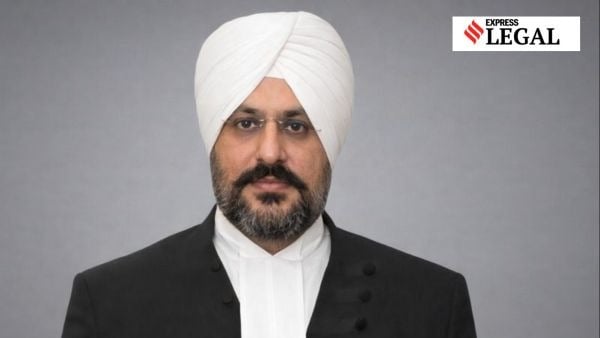 Justice Harpreet Singh Brar was dealing with a plea by staff members of Model Senior Secondary School, Nangal.
“The extended ad-hocism of keeping daily wage workers or contractual employees on temporary rolls for decades while extracting regular work is not only unconstitutional but also undermines equality and dignity,” the court said on February 13.
The order added that the state and its instrumentalities are a model employer that cannot perpetuate such exploitation and use excuses like financial constraints, non-availability of sanctioned posts, and lack of qualification.
Halt on regularisation
- The case involved petitioners working as Trained Graduate Teachers (TGT), Primary Teachers (PRT), lab attendants, and ayahs at Shivalik Model Senior Secondary School, managed by the municipal council of Nangal in Rupnagar district.
- Though appointed against regular posts through a selection process in 2009, their contracts were renewed annually for nearly a decade.
- In December 2016, following the notification of the Punjab Ad hoc, Contractual, Daily Wage, Temporary, Work Charged and Outsourced Employees’ Welfare Act, 2016, the municipal council approved the regularisation of these employees.
- However, this process was abruptly halted by the director of the Department of Local Government in April 2017, leading the petitioners to approach the high court.
Court’s observations
- The court has been constrained to observe a trend where long-term employees are engaged on an ad hoc basis, despite the perennial nature of the services rendered by them.
- The state, being a constitutional employer, cannot be allowed to exploit its temporary employees under the garb of lack of sanctioned posts or inability of the employees to meet educational qualifications for regular posts.
- Especially when they have been consistently serving their instrumentality for a significant period.
- Such an approach would be violative of the fundamental rights of the temporary employees enshrined in Articles 14 (Right to equality), 16 (Equality of opportunity in matters of public employment), and 21 (Protection of life and personal liberty) of the Constitution of India.
- Temporary employees cannot be forced to bear the brunt of lack of financial resources when the state has no qualms about continuously taking advantage of the services rendered concerning integral and recurring work of the concerned department.
- It also appears that the state tends to formulate policies to circumvent the implementation of judgments rendered by constitutional courts.
- More often than not, the claim for regularisation is neither accepted nor denied, and the applicant is kept in limbo unnecessarily.


© IE Online Media Services Pvt Ltd
