

6 min readFeb 18, 2026 12:42 PM IST
First published on: Feb 18, 2026 at 11:11 AM IST
Bangladesh offers a unique strategic environment for India. It is India’s largest trading partner in South Asia, a major transit corridor to the Northeast, and an important player in the maritime politics of the Bay of Bengal. Over the last 15 years, bilateral relations have deepened tremendously, spanning connectivity initiatives and border management to security collaboration and electricity trade. This significant progress largely stemmed from a political agreement between New Delhi and the Awami League (AL) leadership.
The caretaker government under Yunus saw New Delhi’s ties with Dhaka deteriorate rapidly. India’s special ties with AL and its alleged meddling in Bangladesh’s domestic politics were the primary reasons for this decline from Bangladesh’s standpoint. For India, the harsh treatment meted out to the minorities and a barrage of strategic provocations were particularly challenging. The Jamaat influence was clear. Nonetheless, India handled the situation in a balanced and calibrated manner, wisely distancing itself from the ongoing elections.

If the outcome is a newly cemented dispensation, India will prefer stability. From New Delhi’s perspective, the most concrete demand is renewed security cooperation, undermining insurgent sanctuaries and improving intelligence exchange, as well as a diminution of cross-border militancy. From road and rail links to inland waterways, connectivity projects join eastern India to Bangladesh in ways that recall pre-Partition geographies. These are all put on hold for now. A government dedicated to maintaining these deals would maintain practical cooperation in bilateral relations. If, however, the election ushers in a more assertive or politically contested leadership, bilateral dynamics could become more complex. Indo-Bangla relations have historically oscillated with changes in political authority in Dhaka. Issues such as the Teesta water-sharing agreement, border tensions, and trade asymmetries may resurface, as domestic political narratives in Bangladesh often instrumentalise relations with India during periods of transition.
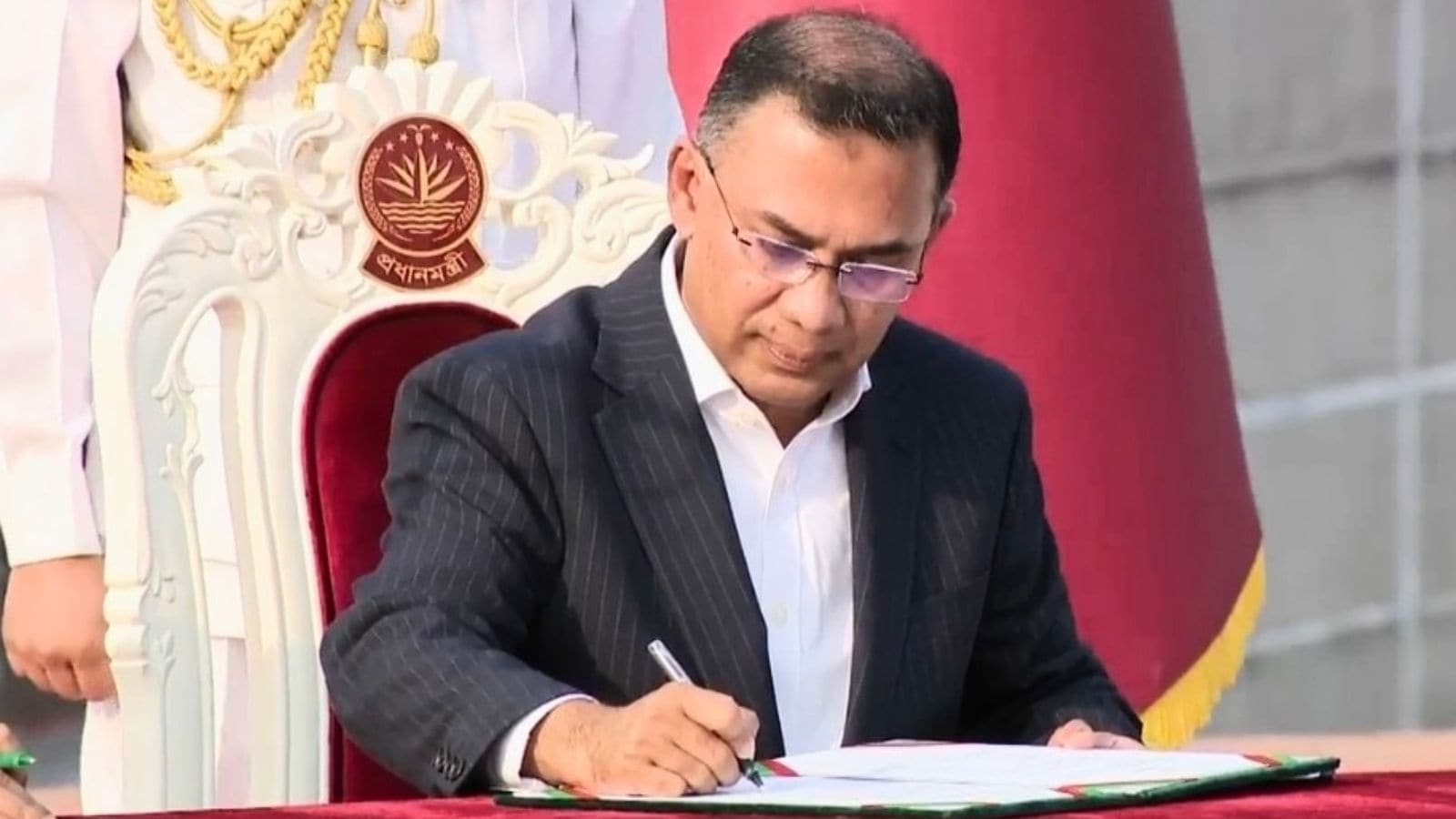
The contours of Bangladesh’s new leadership are critical. It is possible that the new government led by Tarique Rahman may adopt an aggressive stance in negotiations on water sharing, trade imbalances, and border management while pursuing a policy of balanced engagement (continuing to engage India on the one hand and strengthening ties with China, Japan, and Western countries on the other). Such a move may strengthen Dhaka’s status as an independent regional player. Domestic political needs, rather than a significant strategic shift, are primarily driving the symbolic language of foreign policy. This narrative focuses more on sovereignty, reciprocity, and mutual respect, even without changes to the fundamental basis of cooperation.
An important characteristic of modern Indo-Bangla relations has been India’s long-standing political chemistry with the Awami League. This confidence led to a level of trust rarely seen in the field of security cooperation and regional connectivity. New Delhi will today have to deal with a leadership that has domestic legitimacy based on quite different political narratives, those of even greater distance from India or an even more nationalist foreign policy stance. This tendency will also force India to transition from engaging individually with the party in power to a more wholesome state-to-state paradigm. For Bangladesh’s new rulers, there may be domestic political benefits in being seen as further removed from their India-Awami League proximity and in a position to entrench legitimacy at home. The sustainability of bilateral relations will depend on whether both parties can institutionalise their cooperation beyond personal understandings of politics.
Moreover, Jamaat’s parliamentary footprint, despite a relatively poor show, could shape the domestic political context of foreign policy. While hardly in a position to dictate government policy on its own, it could shape public discourse on identity, sovereignty, and relations with India, potentially slowing the pace of rapprochement or nudging leaders toward a more cautious engagement. Consequently, the dynamics of BNP’s relative electoral weight, Tareq’s tactical calculations, and Jamaat’s doctrinal compulsions will be important factors in determining the prospects for the Indo-Bangla relationship going forward.
Another dimension yet in the making concerns the interplay between Bangladeshi foreign policy and India’s internal citizenship debates. A new leadership in Dhaka may adopt a tougher line on cross-border population issues, defend the sovereign dignity of its nationals, or consider diplomatic assurances in the context of migration management. Such engagement may bring a new discursive overlay to bilateral relations, mirroring the thicker regional entanglement of identity politics, sovereignty, and minority rights in South Asia.
Outside the bilateral realm, the election will shape South Asia’s regional order. With SAARC paralysed, there is a newfound focus on sub-regional groupings such as BIMSTEC and BBIN. Bangladesh’s trajectory toward these frameworks will have an important bearing on the prospects of regionalism, specifically cooperation in and around the Bay of Bengal. A Dhaka aligned with India’s subregional connectivity vision will bolster new institutional arrangements. At the same time, strategic diversification, particularly deeper engagement with China or a restoration of ties to Pakistan, could revise regional alignments. China’s growing economic influence in Bangladesh complicates the situation. New Delhi needs to closely monitor Dhaka’s shift in foreign policy, as Beijing’s growing presence affects it through infrastructure investments and strategic alliances. At a time when the Bay of Bengal is gaining increasing prominence as a theatre of Indo-Pacific politics, Bangladesh’s strategic decisions will have repercussions that extend well beyond its borders.
The writer teaches at Jadavpur University, Kolkata, and was the Eugenio Lopez Visiting Chair at the Department of International Studies and Political Science at Virginia Military Institute, US
