

January 25, 2026 08:25 PM IST
First published on: Jan 25, 2026 at 06:58 AM IST
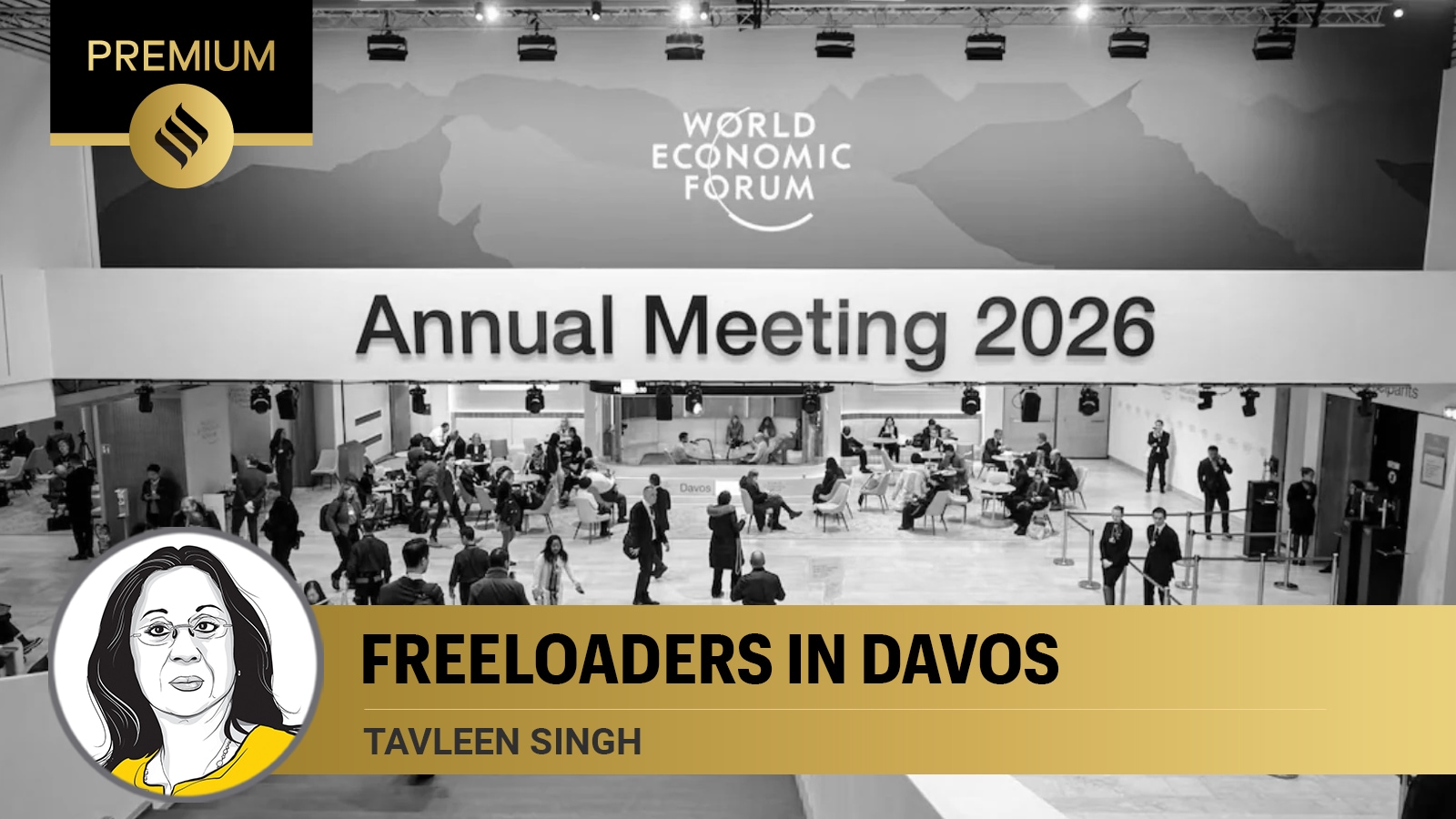
Some things are best said bluntly so blunt I shall be. There is no reason at all for Indian taxpayers to pay for chief ministers to go to Davos every year. As someone who has attended the World Economic Forum’s annual meeting more than thirty times, believe me when I say that all that our politicians do is waste our money on winter holidays that they should pay for with their own money. Actual members of WEF pay more than a quarter of a million dollars as membership fee and attending the forum’s annual meeting can cost a lot more. So, if we save the cumulative cost of sending chief ministers and their spouses to Davos, we could pay for many things that ordinary Indian citizens desperately need.
In Davos this time Gita Gopinath, a Harvard professor who was previously First Deputy Managing Director and Chief Economist at the International Monetary Fund, said that when we discussed ease of doing business in India, a factor that was not usually considered was pollution. She meant air pollution which makes the air in most of our cities and small towns dangerous to breathe. She is right but there are other things that deter both foreign investors and foreign tourists. For one, there is the horror of stumbling upon acres and acres of rotting garbage. Last week, a traveller on a Vande Bharat train posted a clip of what he saw from his window as the train pulled into Delhi. It was a terrifying wasteland of filth. I have seen such sights on the edge of most Indian towns and cities. Nobody seems to notice or care.

We could use the money spent on chief ministerial holidays in Davos to clean up our cities and improve the toxic air we are forced to breathe. We could use it to build low-cost housing so that migrant workers are not forced to live in squalid slums. There are hundreds of basic civic services that could be hugely improved with an injection of the cumulative cash politicians spend on holidays in Davos. Holidays that more than 90 per cent of Indian taxpayers cannot ever dream of.
As a taxpayer, it really angered me to hear the Chief Minister of Maharashtra boasting to a TV reporter that he had made a deal in Davos with the Tata group to build an ‘innovation city’ outside Mumbai. What the reporter should have asked him, but did not, was why he could not have signed this deal in Mumbai. Why did he need to go to Davos to do this? Why do any of these chief minsters need to travel to Davos to sign deals with Indian businessmen? These gentlemen travel not just with their spouses but with huge entourages. Why should you and I be paying for this?
As someone who remembers the WEF annual meeting from 30 years ago, trust me when I tell you that so few Indians came then that Rahul Bajaj, one of the first Indians to go to Davos, would have a small dinner for the Indian contingent on the day we arrived. There were rarely any politicians in attendance and those that did come were misfits and embarrassing. Meaningless, meandering speeches are not encouraged in Davos and rarely heard. But it was these that our chief ministers came armed with, clearly written by bureaucrats who never learned the word precis. It was truly mortifying to see them ramble on aimlessly.
The reason why the richest people in the world are happy to pay to attend the WEF annual meeting is because for that one week it is as if Davos becomes the centre of the world. Everything new that is happening in technology, urbanisation, governance and geopolitics is discussed. I remember sending my first email in Davos at a time when the world knew almost nothing about the Internet. Then when AI came along, it was in Davos that its implications were discussed by the world’s leading experts.
If our politicians attended these sessions where the most important issues of the day are discussed and came home with new ideas, it might be worth allowing them to go. They attend only the sessions in which they are participants because they think of themselves as too grand to listen to other people. There are exceptions who genuinely go to learn about the world’s changes and new developments, but I can count them on the fingers of one hand.
Chandrababu Naidu is one of them and was one of the first chief ministers to come to Davos and understand how he could benefit from attending. Most of the others come like Prime Minister Deve Gowda once did for a holiday with family and friends. I remember sitting in the lobby of one of the grandest hotels in Klosters and seeing a gaggle of women in Kanjeevaram saris accompanied by a small army of children and attendants.
It did not require investigative journalism to discover that these were all members of the Indian Prime Minister’s family. It was not a good look for India, and it is not a good look for India now when our chief ministers go to Davos mostly to meet other Indians. They have little choice because most of them speak incoherent English or none and most of them are uncomfortable with western manners and western food. They should stay home in future. It would be best.
