

The expiry of the New START Treaty, the last of the nuclear arms control pacts between the US and Russia, on Thursday (February 5) marks the end of more than five decades of bilateral agreements imposing mutual limits on the world’s two biggest nuclear arsenals.
On Wednesday, UN Secretary-General Antonio Guterres called it a “grave moment” for international peace and security. “For the first time in more than half a century, we face a world without any binding limits on the strategic nuclear arsenals” of the two countries, he said.
As Guterres’ statement indicates, the US and Russia have had a long history of mutual arms control pacts. But does the expiry of the New START pact increase the risk of a new arms race? We explain.
Cold War agreements
In the late 1960s, the height of the Cold War, reports emerged that the erstwhile Soviet Union had started building its arsenal of intercontinental ballistic missiles (ICBMs) to achieve parity with the US. In January 1967, then US President Lyndon B Johnson announced that the Soviets were developing an anti-ballistic missile (ABM) system around Moscow, which would allow them to launch a first strike against an adversary even as it shot down incoming enemy missiles to prevent retaliation measures.
In a bid to curtail the arms race during the Cold War, leaders of both countries embarked upon the Strategic Arms Limitation Talks (SALT) in November 1969. This yielded two agreements: While the Anti-Ballistic Missile Treaty limited the number of strategic missile defences each side could build to 200 (later revised to 100), the Interim SALT Agreement saw both sides pledge not to enhance their ICBM capabilities.
However, the US unilaterally withdrew from the ABM Treaty in June 2002, months after the terrorist attacks on September 11, 2011, saying it limited the country’s ability to defend itself against terrorist or “rogue-state” ballistic missile attacks.
Story continues below this ad
In November 1972, the two countries began negotiations on a second SALT agreement (SALT II), which was eventually signed in June 1979. SALT II required both sides to place various restrictions on the number of ICBMs, submarine-launched ballistic missiles, and strategic bomber-based nuclear forces to 2,250 delivery vehicles (platforms capable of launching missiles).
However, after the Soviet Union invaded Afghanistan in December 1979, then US President Jimmy Carter advised the Senate not to give consent to the agreement, which was then not ratified.
START I & II
Following the end of the Cold War, the US and Russia signed the Strategic Arms Reduction Treaty (START I) in 1991, which meant both countries had to reduce the number of deployed strategic arsenals (1,600) and the warheads they could carry (6,000).
The pact also required the destruction of excess delivery vehicles, which was verified using an intrusive verification regime that involved on-site inspections, regular exchange of information, and use of satellites. The collapse of the Soviet Union and prolonged efforts to denuclearise former Soviet bloc countries meant the reductions under START I were finally completed in December 2001, and the treaty expired at the end of 2009.
Story continues below this ad
START II, a follow-on accord that was signed in January 1993, required the two sides to reduce the number of strategic warheads to 3,000-3,500 by 2003. But the agreement never came into force owing to delays in ratification by the respective legislatures of both countries and after the US withdrew from the ABM Treaty in 2002, Russia formally stepped back from START II. As a result, a proposed START III agreement never took off.
In May 2002, the US and Russia put in place the Strategic Offensive Reductions Treaty (SORT), which entailed bringing down the number of warheads to 1,700-2,200. SORT was enforced in June 2003 following approval from the US Senate and the Russian Duma, and would be replaced by New START in 2011.
A new beginning
In 2010, then US President Barack Obama and Russian President Dmitry Medvedev signed the New Strategic Arms Reduction Treaty (New START), which came into force on February 5, 2011.
Story continues below this ad
Under this, both countries would limit their strategic nuclear warheads to 1,550 on up to 800 strategic nuclear delivery vehicles, both deployed and nondeployed. Compared with SORT, the targets for reduction in the number of warheads (30 per cent) and delivery vehicles (50 per cent) were significant. The treaty also allowed up to 18 inspections of strategic nuclear weapons sites annually by the other side to ensure checks on possible breaches of stipulated limits.
New START stated that the treaty could be extended once. In 2021, after Joe Biden took office as US President, it was extended for five more years until February 5, 2026, by mutual consent.
Trumpian turbulence
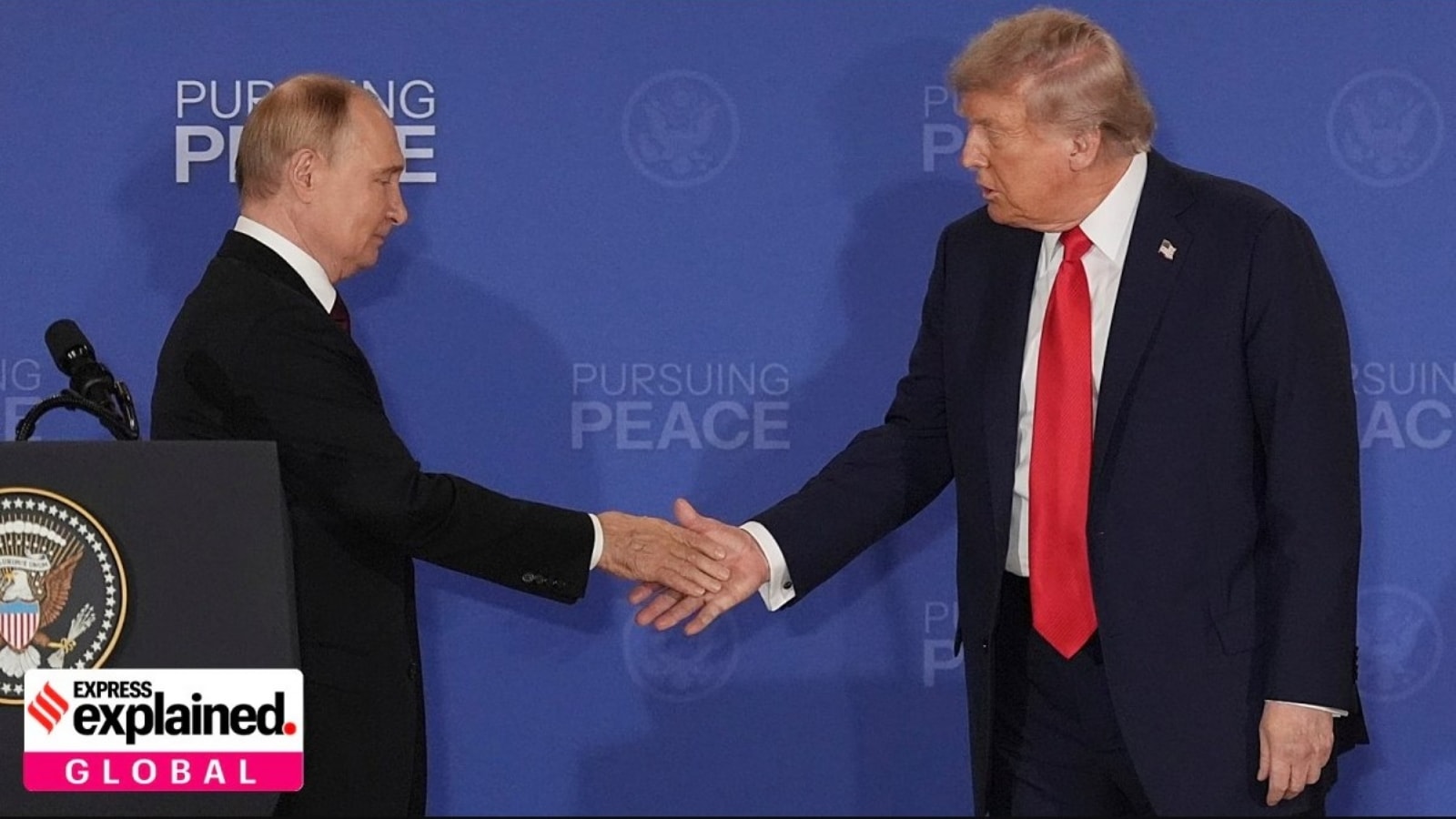
In his second term as US President, Donald Trump’s relationship with his Russian counterpart, Vladimir Putin, has witnessed a series of fluctuations. After the two met in Alaska (US) in August 2025, Putin said in September that he had offered to extend New START by a year to maintain the status quo, provided the US agreed. However, he told reporters in October that “no big deal” was forthcoming. Later that month, Trump ordered a ramping up of the US’ nuclear weapons programme citing threats from both Russia and China (currently a distant third with an estimated warhead inventory of 600).
In an interview with The New York Times in January 2026, Trump indicated his willingness to do away with the treaty, saying: “If it expires, it expires… We’ll just do a better agreement.”
What happens now?
Story continues below this ad
The treaty’s expiry would mean the legal limits on the number of warheads both countries could possess would no longer exist. According to 2025 estimates by the Federation of American Scientists, the US has about 5,277 warheads whereas Russia has approximately 5,449.
A 2022 paper in the Bulletin of the Atomic Scientists, titled ‘The long view: Strategic arms control after the New START Treaty’, noted the “growing risk of regional conflicts involving China or Russia” and said that the US’ priorities should be to minimise the risks of “inadvertent or accidental escalation” and to prevent the “loss of transparency regarding Russian strategic nuclear weapons”. It concluded that despite the limitations of traditional arms control tools, both countries would “continue to benefit from the force predictability if limits on launchers and warheads remained”.
Historically, nuclear deterrence has been viewed as a force enabling global stability and stopping nuclear powers from risking all-out conflict. Analyst Alex Kolbin pointed out in an article, titled Nuclear deterrence is dying. And hardly anyone notices, that framework is “eroding in plain sight” and is “no longer functioning as a decisive factor in global security”.
In a piece for the UK-based think-tank Chatham House, researcher Georgina Cole wrote that the implications of the treaty’s lapse would be felt elsewhere and weaken the argument for restraint, reinforcing the view that major powers were regressing towards open-ended competition.
Story continues below this ad
The timing is also significant, given that it comes ahead of the 2026 Review Conference of the Nuclear Non-Proliferation Treaty, where nuclear-weapons states are expected to demonstrate progress on disarmament and arms control.
While UN chief Guterres’ statement highlighted that the present moment provides an opportunity to reimagine arms control for a changing security environment, Cole’s piece offers a word of caution: amid the narrowing margin of error, “(p)reserving some form of mutual restraint – however limited – remains preferable to risking the dangerous instability of unconstrained nuclear competition”.
