

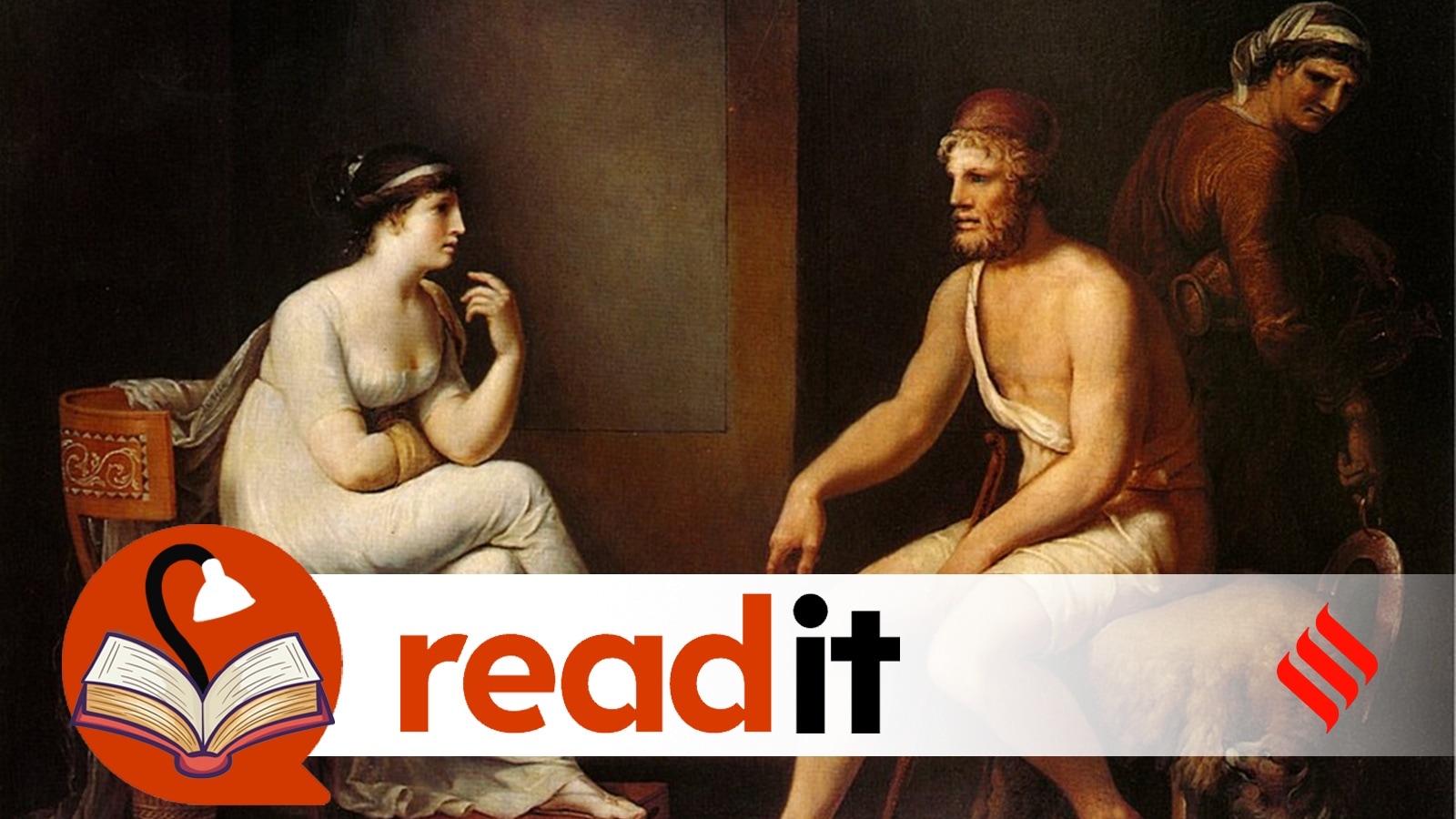
The Odyssey, one of the world’s oldest epic poems, has become the centre of attention once again, thanks to Christopher Nolan’s decision to make a film based on it. Nolan’s The Odyssey is expected in theatres on July 17, but the official trailer is already out and going viral on the internet.
An epic poem about a journey home by Homer
Composed more than two thousand years ago by the blind Greek poet Homer, The Odyssey is the story of Odysseus, the king of Ithaca, known for his wit and cleverness, and famed for coming up with the idea of the wooden horse to fool Troy. It covers his long journey home after the battle of Troy, which was the subject of another epic poem by Homer, The Iliad (and a 2004 film by Wolfgang Petersen, which received mixed reviews). Odysseus has to get past numerous dangers and temptations (some of which he gives in to) to return to Ithaca — a journey that takes him almost ten years.

But that is not the end of it. On his return, he has to deal with more than a hundred suitors who have been badgering his wife, Penelope, to marry one of them, as Odysseus has been gone for so long and is presumed dead. He has to prove his identity and fight his way through to reclaim both his wife and his life. Finally, after almost twenty years of war, trials and tribulations, he is home with his family.
It is a rattling good tale, spanning more than ten thousand lines of verse, complete with gods and goddesses, demons, and a number of mythical creatures such as the one-eyed Cyclops and the dangerously sweet-sounding Sirens. While the original Odyssey was composed in Greek, it has been translated into many languages and reinterpreted by numerous authors. So, if you wish to read The Odyssey, there are a number of options to choose from.
The Odyssey for those who think verse is better
The classic translations of The Odyssey have largely been in verse, with different poets attempting to retain the essence and flavour of the original poem. If you like your epics in poetic form, the most famous translation comes from Alexander Pope. His 1725 version is often accused by academics of being more in line with his own style than Homer’s, but it is written in rhyme and is a relatively easy read.
A more elegant translation comes from Robert Fitzgerald (1917), and if you want to read The Odyssey in verse but in slightly more contemporary language, with the rough edges retained, there is Emily Wilson’s 2017 translation. Wilson is the first woman to have translated The Odyssey and has retained exactly the same line count as Homer’s original, while subtly shifting the focus more towards the female characters (Penelope, Calypso, the slaves, and so on).
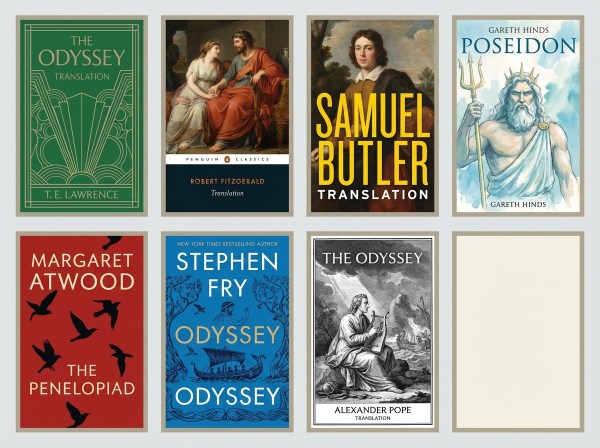 If you wish to read The Odyssey, there are a number of options to choose from. (Source: amazon.in, generated using AI)
The journey in prose, featuring Margaret “The Handmaid’s Tale” Atwood and Lawrence of Arabia
If reading thousands of lines of poetry feels like a little too much, there are a number of prose renditions of The Odyssey as well. The most entertaining of these is undoubtedly Stephen Fry’s retelling, released last year, which transforms the poem into an action-packed romp, with sex, violence and wit in ample measure. Fry’s irreverent approach to the gods (imagine Zeus portrayed as henpecked!) may annoy some traditionalists, but it definitely makes his Odyssey a free-flowing, easy read.
Story continues below this ad
Those wishing for a slightly more traditional and heroic prose version can try Samuel Butler’s classic translation, first published in 1900 and still preferred by many readers. A more brooding and introspective take comes from T. E. Lawrence (better known as Lawrence of Arabia), who gives Homer’s work an almost novel-like feel, at times seeming to reflect his own struggles in Arabia and his return to a relatively normal life. He wrote it between 1928 and 1932, well after his exploits in Arabia and while serving in the RAF under the name T. E. Shaw.
One of the most fascinating reinterpretations of The Odyssey comes from the author of the dystopian novel The Handmaid’s Tale. Margaret Atwood offers an entirely different perspective by retelling parts of the epic from the point of view of Odysseus’ wife, Penelope, in the aptly titled The Penelopiad. The novella traces Penelope’s life from childhood to her marriage to Odysseus, her relationship with him and his relatives, and how she copes with his long absence and the extremely unwelcome attentions of her suitors. Some readers may be shocked by the less-than-flattering portrait of Odysseus, usually depicted as a heroic figure, but this remains one of the most brilliant retellings of The Odyssey.
Tell it with pictures!
For those who lack the patience to deal with the vast canvas and multitude of characters in The Odyssey, the best option may be Gareth Hinds’ graphic novel adaptation of Homer’s epic. Published in 2010 and initially aimed at a younger audience, it has since gained a large following among older readers thanks to its accessibility and excellent illustrations. Along with Fry’s version, it is perhaps the best starting point for those wishing to get to grips with Homer’s epic before watching Nolan’s film in July.
