

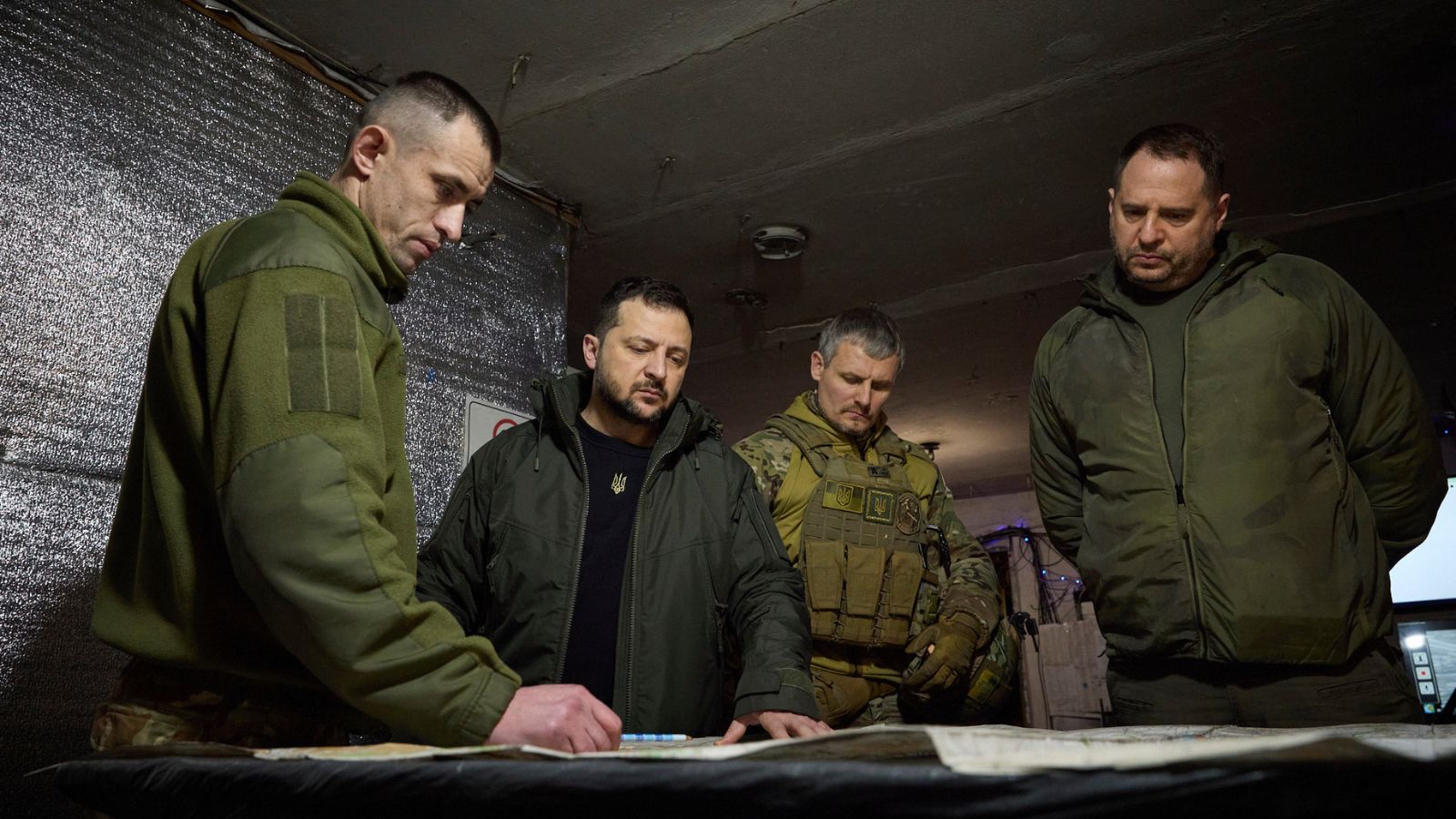
 Ukrainian President Volodymyr Zelenskyy reviews a battlefield map with frontline commanders during a visit to the 110th Mechanised Brigade in Avdiivka, Donetsk region, on 29 December 2023. Also pictured are Presidential Office head Andriy Yermak and deputy head Roman Mashovets. (Photo: Ukrainian Presidential Press Office via AP)
 With the war in Ukraine approaching its fourth year, US, Ukrainian, and European officials are attempting to finalise a revised peace framework. The talks, taking place in Geneva over the weekend, follow a controversial US-backed 28-point plan to end the conflict with Russia, which has faced criticism from Kyiv and several European capitals for being too favourable to Moscow.
The so-called E3 powers, the United Kingdom, France, and Germany, have submitted a modified version of the US-backed plan. According to Reuters, the European proposal adjusts several contentious elements, including capping Ukraine’s military at 800,000 personnel in peacetime rather than 600,000, and stating that territorial negotiations should begin from the current Line of Contact instead of areas predetermined under the US plan.

The revised framework, built on the original US draft, goes point by point, suggesting deletions or changes where necessary to better reflect Ukraine’s interests. The plan also aims to ensure that Kyiv’s sovereignty and defensive capabilities remain intact while addressing security concerns raised by the ongoing Russian threat.
What Rubio said about the plan
US Secretary of State Marco Rubio, who led the American delegation in Geneva, described the discussions as “very worthwhile” and said the first session was the most productive day in “a very long time” for broader efforts to end the war.
Rubio added, “I feel very optimistic that we can get something done,” while noting that talks would continue into Monday and potentially deeper into the week.
Ukrainian presidential chief of staff Andrii Yermak confirmed that the first session had concluded successfully and that a second meeting would soon take place. “We have made very good progress and are moving forward to a just and lasting peace,” he said. “Final decisions will be taken by our Presidents.”
Zelenskyy expresses gratitude, Trump urges action
The Geneva talks come amid continued tensions between the US and Ukraine over recent public statements. On Sunday, President Volodymyr Zelenskyy posted on Telegram, thanking the United States and President Trump for military support, including Javelin missiles that have helped save Ukrainian lives.
Trump, however, had earlier written on Truth Social that Kyiv’s leadership had shown “zero gratitude” for US efforts. He has set a Thursday deadline for Ukraine to respond to the peace plan, though he has indicated the deadline could shift if progress is made. “One way or the other, we have to get it ended,” Trump told reporters outside the White House on Saturday.
US 28-point peace plan
European leaders said on Saturday that a 28-point peace plan from the United States for ending the war in Ukraine is a starting point but still needs further development.
In a joint statement, G7 leaders and European partners said the proposal from the administration of US President Donald Trump, who is currently in office, “includes important elements” but is not yet complete.
In Washington, lawmakers and analysts have also questioned the plan. Senate Intelligence Committee member Mark Warner said it resembled “a series of Russian talking points” and warned that European allies felt sidelined.
Rubio, however, denied claims that the plan originated in Moscow and emphasised that both US and Ukrainian inputs shaped the framework.
Also Read: For Kyiv, a familiar betrayal dressed up as peace
Europeans have submitted a modified version of the peace plan sponsored by the United States, pushing back on proposed limits to Kyiv’s armed forces and territorial concessions. Rubio hailed the talks to finalise the proposal to end the Russia–Ukraine war and said discussions had made significant progress on Sunday, Reuters reported.
The modified proposal was reportedly drafted by the European E3 powers, the UK, France, and Germany. The updated version takes the US-backed plan as its basis, but reviews it point by point and suggests changes or deletions accordingly, Reuters reported.
What comes next
As negotiators continue discussions, Ukrainian leaders are considering a possible visit to Washington to discuss the plan with Trump directly.
Meanwhile, Turkish President Recep Tayyip Erdoğan announced a scheduled call with Russian President Vladimir Putin to revisit a previous grain corridor deal, which could influence broader negotiations and potential pathways to peace.
For Ukraine, the coming days will be critical as the country balances the need for international support, military security, and domestic sentiment during this phase of the war, which began in 2022.
