

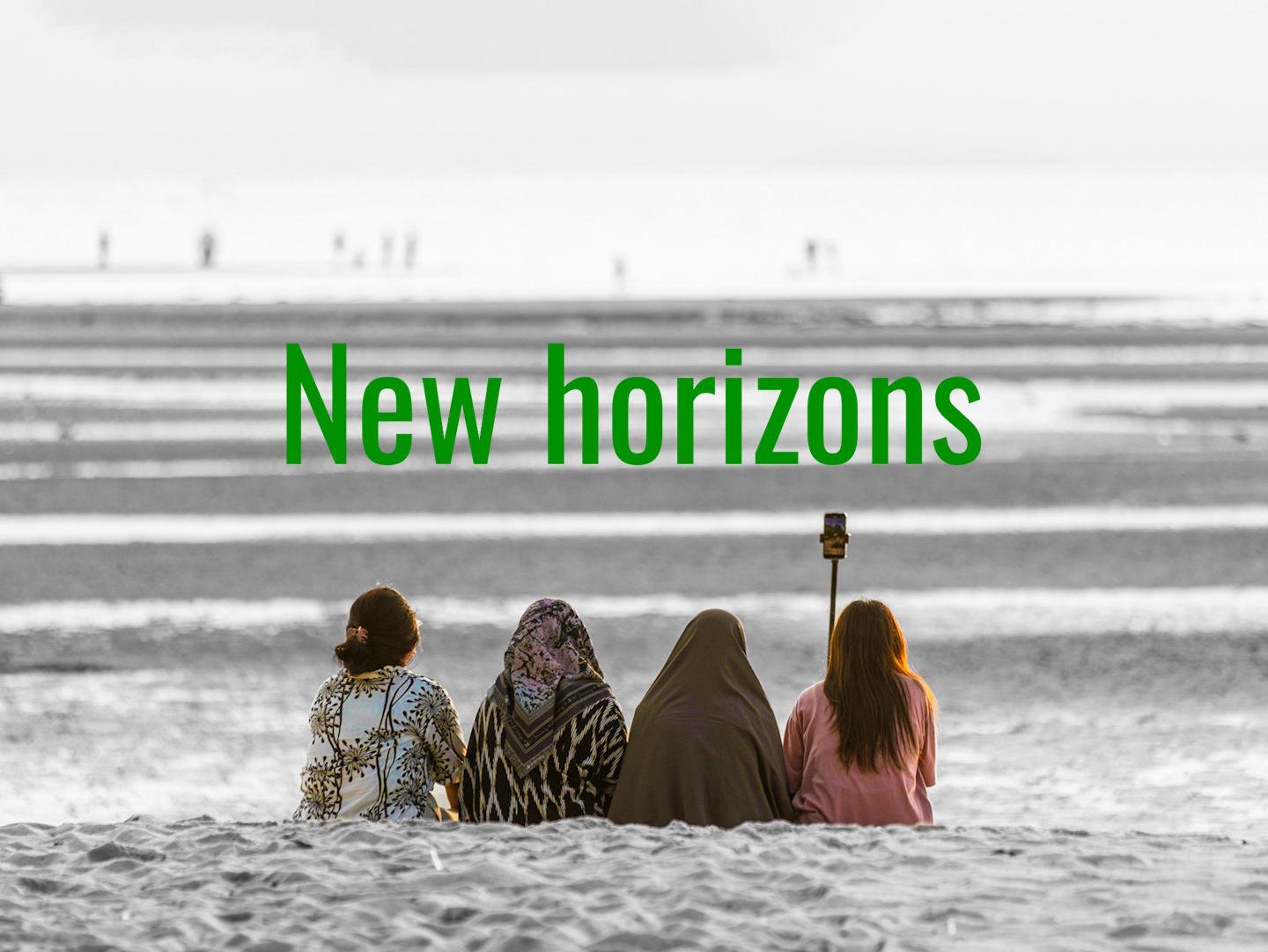
Travel is often about breaking free. In this spirit, according to Ahmed Abdel Fattah, Western destinations offer veiled Muslim women tourists a unique chance to explore who they are, challenge the norms of their own societies, and experience a refreshing sense of freedom.
Thanks to “Good Tourism” Insight Partner Tourism’s Horizon: Travel for the Millions for inviting Dr Abdel Fattah to write this “Good Tourism” Insight. (You can write one too.)
A world of freedom and choice
Imagine stepping into a place where the usual rules don’t apply. That’s what travelling to Western countries may feel like for veiled Muslim women tourists. It can be an opportunity to lift the weight of cultural expectations, even if just for a shorttime.
When these women travel, they may experiment with their outfits in ways they wouldn’t dare back home. It may not be just about trying on new clothes; it can be about the empowerment that comes from having freedom and choice.
Muslim women tourists in the West may feel liberated to express themselves without fear of judgment. Being in a new place may allow them to explore new styles, shed the constraints of their everyday lives, and feelalive.
This freedom may not be just a fleeting feeling; it can be a powerful declaration against the stereotypes that often surround Muslim women. By stepping outside their usual norms, they may be able to reclaim their identity and express themselves authentically.
The power of anonymity to resist norms
Anonymity can play an important role in this experience. In Western cities, where nobody knows them, veiled Muslim women tourists can shed the expectations tied to their hijabs.
The feeling of being unknown can be incredibly liberating. Muslim women tourists may be able to try new things without worrying about being judged.Their newfound sense of freedom can let them enjoy activities they might avoid back home; like late-night adventures or spontaneous dance parties. It’s a chance to feel adventurous and youthfulagain.
But it may not be just about different clothes and activities. It can also be about pushing back against the norms that often hold Muslim women back.Muslim women tourists may use their travel experiences to challenge societal expectations. This mix of freedom and resistance may highlight the different layers of identity theycarry.
Lingering challenges
Of course, it’s not easy. The freedom Muslim women may feel abroad may not erase the challenges they face at home. While Muslim women may embrace new styles and behaviours on vacation, they still deal with the weight of their cultural backgrounds.
Even in a foreign city, Muslim women tourists may worry about running into acquaintances from home who may judge them and critique their choices.Therefore, concerns about being judged by their communities can linger during their holiday, creating a tension that may dampen their holiday mood and spirit of freedom.
Journeys of self-discovery
Ultimately, travel & tourism may provide veiled Muslim women with a unique platform to explore who they are and challenge societal norms. It may allow them to express themselves more freely than they often can athome.
While Muslim women tourists may encounter pushback from their communities at home, nevertheless their experiences in Western destinations can empower them in ways that can lead to personal growth and social change.
But here are questions to ponder:
If Muslim women keep travelling to Western destinations, can they import into their daily lives at least some of the choices they made during their holidays?
When they go back home, will they be able to maintain at least some sense of the freedom and self-expression gained during their holiday, or will the weight of societal expectations pull themback?
So, the next time you see a veiled Muslim woman enjoying her vacation in your city, remember: she may be navigating a complex path of empowerment and self-discovery.
What do youthink?
Share your own thoughts in a comment below.
(SIGN INorREGISTERfirst. After signing in you will need to refresh this page to see the comments section.)
Orwrite a“GT” Insightor“GT” Insight Biteof your own.The “Good Tourism” Blogwelcomes diversity of opinion and perspective about travel & tourism, because travel & tourism is everyone’s business.
“GT” doesn’t judge. “GT” publishes.“GT” is where free thought travels.
If you think the tourism media landscape is better with “GT” in it, then please…
About the author
Ahmed Abdel Fattah is a lecturer at Macao University of Tourism (UTM), where he teaches qualitative research methods, tourism management, and heritage courses. Dr Abdel Fattah received his PhD from Lincoln University in Christchurch, New Zealand.
Ahmed provides training lectures on heritage and special interest tourism products for the UTM Global Centre for Tourism Education and Training, in collaboration with The World Tourism Organization (UNWTO).
Ahmed has practical experience in the hotel and tourism industry, as well as in heritage tourism, across Egypt, the United States, Australia, and New Zealand. He has also served as an overseas program coordinator for The Arab League Educational, Cultural and Scientific Organization (ALECSO) in Lebanon and France. Previously, he taught at various educational institutions in the United States and New Zealand.
Ahmed has a broad range of research interests, with a current focus on religious tourism, established and emerging qualitative research methods in tourism studies, cultural heritage interpretation, visitor management, and post-colonialism.
Featured image (top ofpost)
Image by Carl Tronders (CC0) via Unsplash. “GT” cropped it, tweaked colours, and added “New horizons”.
