

As the Israel-US vs Iran war entered day 24, all eyes are on Strait of Hormuz after US President Donald Trump warned to “hit and obliterated” Iran’s power plant if Hormuz doesn’t reopen withing 48 hours, which is by Monday evening, at 7:44 pm ET (Tuesday 5:14 am IST).
In response to Trump’s threat, Iran’s armed forces have threatened to close the Strait of Hormuz indefinitely if Trump carries out a threat to bomb Iran’s power plants.
UK calls emergency meeting on war’s economic impact: UK Prime Minister Keir Starmer is expected to lead an urgent meeting on Monday about the economic impact of the Iran war, with Chancellor Rachel Reeves and Bank of England Governor Andrew Bailey also taking part, according to the UK government, The Guardian reported.
Oil prices jump amid rising tensions: Oil prices increased on Monday after Iran’s warning, with Brent crude, the global benchmark, rising to $114.09 per barrel.
IEA warns of severe global energy crisis: The global economy is facing a serious energy crisis, according to Fatih Birol, head of the International Energy Agency, who said the situation is “very serious” and that the world economy is under a “major, major threat.”
He explained that the current crisis is worse than the oil shocks of 1973 and 1979, as well as the gas crisis caused by Russia’s invasion of Ukraine. He added that the conflict has led to a loss of 11 million barrels of oil per day, which is greater than the combined impact of the earlier oil crises.
He also noted that Asia is being hit the hardest because it depends heavily on the Strait of Hormuz, a crucial route that Iran has effectively shut down.
Story continues below this ad
Birol said discussions are underway with countries like Canada and Mexico to increase oil production and supply more to the global market.
IEA may release more oil: The IEA chief added that the agency may release more oil from its reserves if needed, after previously releasing 400 million barrels to help control rising prices.
“If necessary, we can supply more oil to the market, including both crude and refined products,” he said. “Releasing stockpiles will help calm markets, but it is not a permanent solution and will only reduce the economic impact temporarily.”
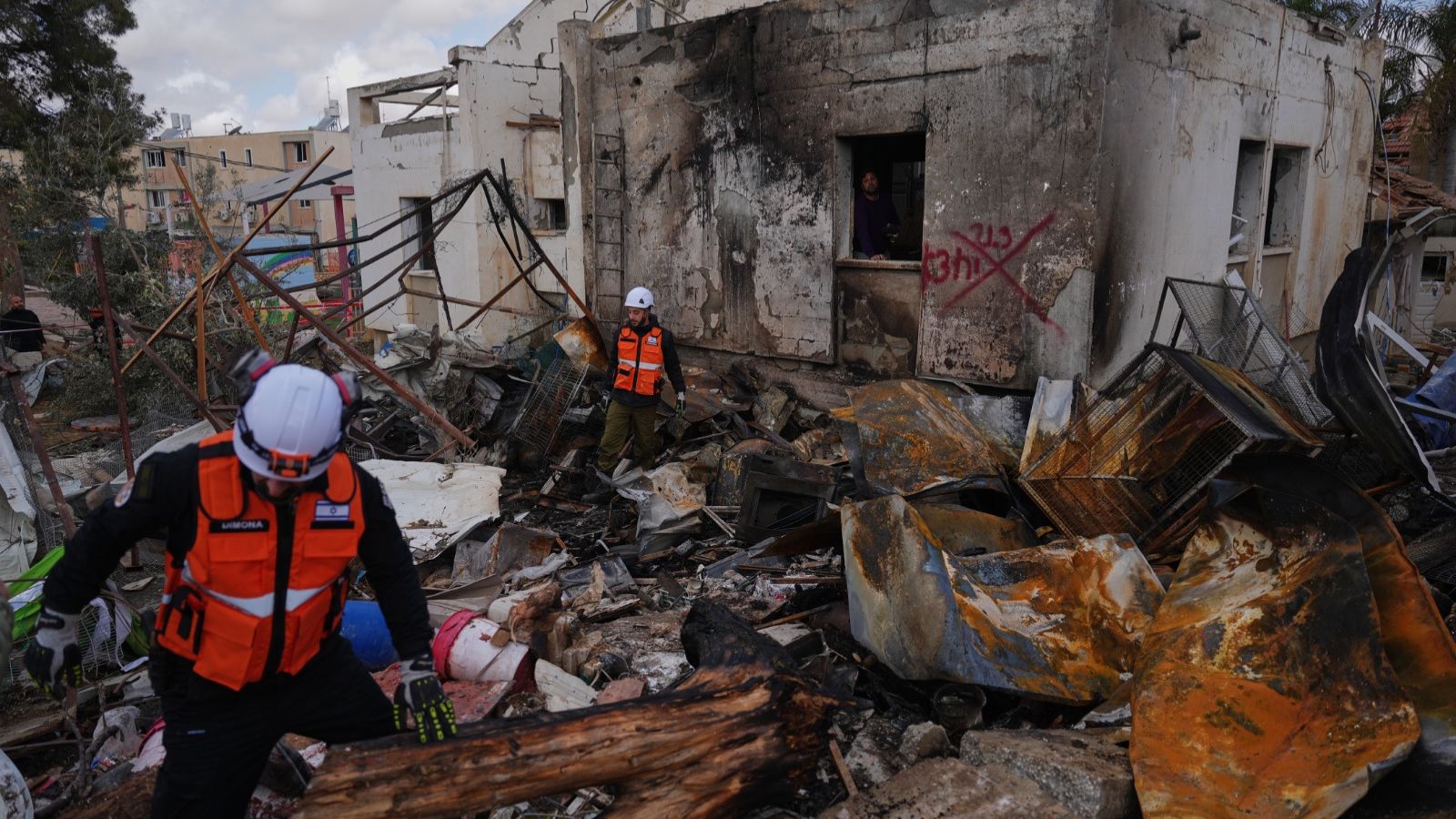
Israel launches wide-scale strikes on Tehran: Israel’s military reported that it carried out a large-scale airstrike early Monday targeting infrastructure across Iran’s capital, Tehran. At least one person was killed in southern Iran after an Israeli strike hit a broadcast station. Several civilians were also reported killed in Khorramabad in western Iran after another airstrike early Monday, including a child whose body was recovered from the rubble, according to Iranian state media cited by The Guardian. The Iranian Red Crescent said rescue teams are helping the injured after an airstrike struck a residential area in Urmia in northwestern Iran.
Story continues below this ad
Middle East crisis: One Indian national sustained minor injuries on Monday after debris fell in Abu Dhabi’s Al Shawamekh area following the interception of a ballistic missile, according to the government media office. The UAE’s defence ministry said it was responding to incoming missile and drone attacks launched by Iran.
Saudi Arabia’s defence ministry said it was responding to drone activity in the country’s eastern and northern border regions, adding that two ballistic missiles aimed at the capital, Riyadh, were successfully intercepted.
Kuwait’s armed forces also said their air defence systems were engaging “hostile missile and drone threats.”
Meanwhile, sirens were heard across Bahrain, according to the country’s interior ministry.
Story continues below this ad
Asian markets plunge: Asian stock market opened flat on Monday following threats from US and Iran. Japan’s benchmark Nikkei 225 index slid 3.5% as of 10:53 am local time, and South Korea’s Kospi plunged 4.9%. Hong Kong’s Hang Seng Index shed 2.7%, and Taiwan’s Taiex was down 2.2%.
Hezbollah carries out multiple attacks on Israel: Hezbollah said on its Telegram channel that it carried out 63 military operations on Sunday, using rockets, drones, and artillery against Israeli forces in Israel and southern Lebanon.
Starmer and Trump discuss reopening Hormuz: UK Prime Minister Keir Starmer and Donald Trump spoke on the phone on Sunday evening, according to a UK government statement, and discussed the Middle East situation, especially the importance of reopening the Strait of Hormuz to allow global shipping to continue.
Pope calls for immediate ceasefire: Pope Leo said that the deaths and suffering caused by the Middle East war are a “scandal for all humanity” and again called for an immediate ceasefire. “We cannot stay silent when so many people, especially innocent victims, are suffering. Their pain is the pain of all humanity,” he said on Sunday during his Angelus prayer in St Peter’s Square.
