

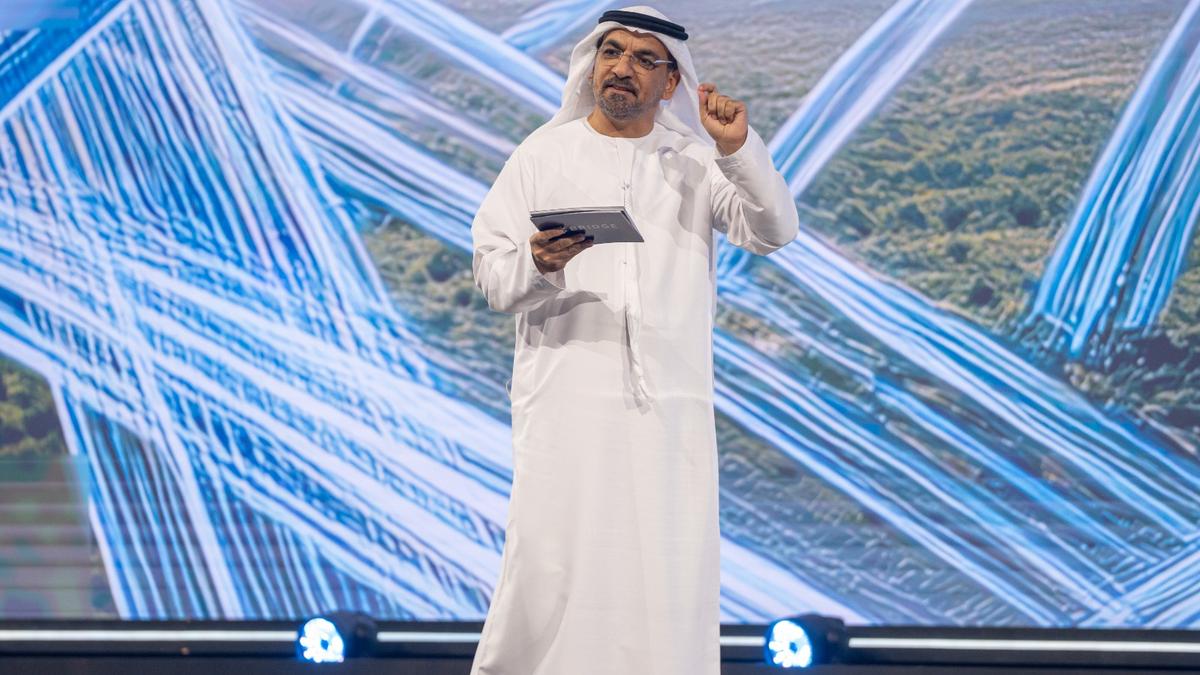
As the United Arab Emirates accelerates its diversification away from oil, media,cultureand technology areemergingas a strategic frontier. That ambition was on display earlier this month when Abu Dhabi hosted the BRIDGE Summit between December 8 and 10, positioning it as the “largest debut media event in the world”.
Held by the private BRIDGE Alliance, but under the aegis of theGovernment of the UAE, the three-day summit brought together voices from journalism, cinema, music,technologyand communications to deliberate on issues ranging from misinformation and trust deficits to the growing influence of artificial intelligence on global media ecosystems.

“Werealisedthere was no Davos for media,” saidH.E. Dr. Jamal Mohammed Obaid AlKaabi,Director-General, UAE National Media Office and Vice-Chairman, BRIDGE Alliance, speaking toThe Hinduon the sidelines of the event. “There are global platforms for economics, energy,defenceand technology, but media — despite facing similar challenges everywhere — did not have a space where the world could come together and talk.”
Dr. AlKaabisaid the idea for BRIDGEemergedfrom the growing fragmentation of media conversations even as the pressures confronting the sector have become increasingly shared. “Misinformation is disturbing societies, fact-checking has become a daily struggle, and people are unsure where the truth lies,” he said. “These are not problems of one country or one newsroom.”
What began as a summit, however, soon expanded in ambition. “Werealisedcontent today is not only journalism,” Dr. AlKaabisaid. “It is film, music, gaming, storytellingacross platforms. If you want to talk seriously about the future of media, you cannot limit that conversation to newsrooms alone.”
Thatrealisationled to the creation ofBRIDGEAllianceas a company rather than a government department. “From day one, we wereclearthis should not function as a government initiative,” he said. “It is a platform for the world’s media — a home for media. People should feel they can step in,participateand belong.”
Abu Dhabi will remain the permanent home of the annual summit, but BRIDGE will also host pop-up engagements across regions including the U.S., Europe,Asiaand Africa. The idea, Dr. AlKaabisaid, is to ensure continuity. “Challengesdon’tdisappear because you hosted a conference. The conversationhas tocontinue through the year.”
The governance of BRIDGE reflects this global ambition. Its board includesPrincess Lamia Al Saud (a member of the Saudi royal family and a UN ambassador focusing on women’s empowerment),Jessica Sibley (CEO,Time),Macky Sall (former President, Senegal)andRichard Attias (former Executive Producer, World Economic Forum). “Media today cannot be shaped by one profession or one geography,” Dr. AlKaabisaid. “We wanted people who understand culture, power, storytelling and global dialogue from different perspectives.”
Personalities from the film world such asIdris Elba and Priyanka Chopra,Reddit co-founder and spouse of tennis player Serena Williams, Alexis Ohanian,Time magazine’s Executive Editor Nikhil Kumar, and several executives from platforms such as Meta and LinkedInparticipatedat the event. Conspicuously absent, however, were global media brands such as theBBC,The New YorkTimes, The Hinduand Al Jazeera— the Qatar-based broadcaster that was at thecentreof past regional diplomatic tensions during the 2017 Gulf crisis, even though ties between the UAE and Qatar have since been restored.

Beyondconveningmedia professionals, BRIDGE also reflects a deeper ambition: reclaiming ownership over narratives and expanding the UAE’s cultural influence. For decades, West Asia has largely beena consumer of global media. Dr. AlKaabisaid, “We all grew up with the same superheroes and the same stories,” he said. “But every culture has its own heroes, its own narratives. The problem has never been a lack of stories — it has been a lack of systems that help those stories travel.”
By creating an ecosystem that links creators, financiers, technologists and platforms, BRIDGE aims to enable storytelling from the region — not merely as filming locations, but ascentresof narrative production. That, Dr. AlKaabiacknowledged, also feeds into the UAE’s soft-power strategy. “When people come here, interact, create and go back with experiences, that shapes how countries are perceived,” he said.
A recurring theme at the summit was the tension between global media flows and deeply rooted cultural identities, particularly in the age of artificial intelligence. Dr. AlKaabiemphasisedthe need to anchor technological change in ethics and values. “If values are deeply rooted, technology — however advanced — can be guided,” he said, adding that BRIDGE must also bridge generational divides as younger creators engage with technology in fundamentallydifferent ways.
Beyond culture, BRIDGE also aligns with the UAE’s economic recalibration. “Media is not just culture — it is an economy,” Dr. AlKaabisaid, noting that while the UAE ranks highly on global competitiveness indices, the media sectorremainsan area with room to grow. For him, the project is also personal. Trained as a physician and having worked extensively in health communication, he said the COVID-19 pandemic underscored the power of communication in shaping trust andbehaviour.
“Media connects societies,” he said. “BRIDGE is something we are building together — and history will decide what it becomes.”
(The writer was in Abu Dhabi at the invitation of BRIDGE Alliance)
Published – December 13, 2025 10:33 pm IST
