

5 min readChennaiUpdated: Feb 26, 2026 12:28 AM IST
Ahead of the T20 World Cup, Daren Sammy couldn’t resist recounting the 2016 triumph. He was the captain then; he is the coach now. But the backdrop and build-up were curiously similar. “The circumstances are probably still the same,” he said in Mumbai. “I remember coming into 2016, some of the names that my cricketers were called, some of the battles we had to fight. To this day, 10 years later, we’re still fighting it,” he added.
On one hand, it reflects the grinding stasis in Caribbean cricket; the myopic running of the game. On the other hand, it captures the stereotypes swirling about them; ridiculed as greedy mercenaries, all brawn and no brain by commentator Mark Nicholas, written off as pushovers, and their prized talents prematurely retired from international cricket after fallouts with the administrators. The makers of both sides are fascinatingly alike. The engine of the 2026 batch is of the 2016 vintage, a machine built on eye-popping power-hitting, guileful, T20-tempered bowlers and torn egos. The latter thread is a recurring theme in all their greatest hits, from the halcyon days of Clive Lloyd and his four horsemen of the apocalypse.

The power-hitters stole the headlines then; from Chris Gayle and Johnson Charles to Andre Russell and Carlos Brathwaite, muscle rippled from top to bottom. Polished hitters like Marlon Samuels, the man of the match in two T20 World Cup finals, the second of which is better remembered for Braithwaite’s last-over maximums, brandished equal but oft-forgotten influence. This edition, Shimron Hetmyer has reprised the Chris Gayle knock-the-daylights-out-of-bowlers role, albeit more consistently. The Jamaican cracked a hundred against England in the Super 10 game, but mustered only 13 more runs in his four other outings.
Hetmyer factor
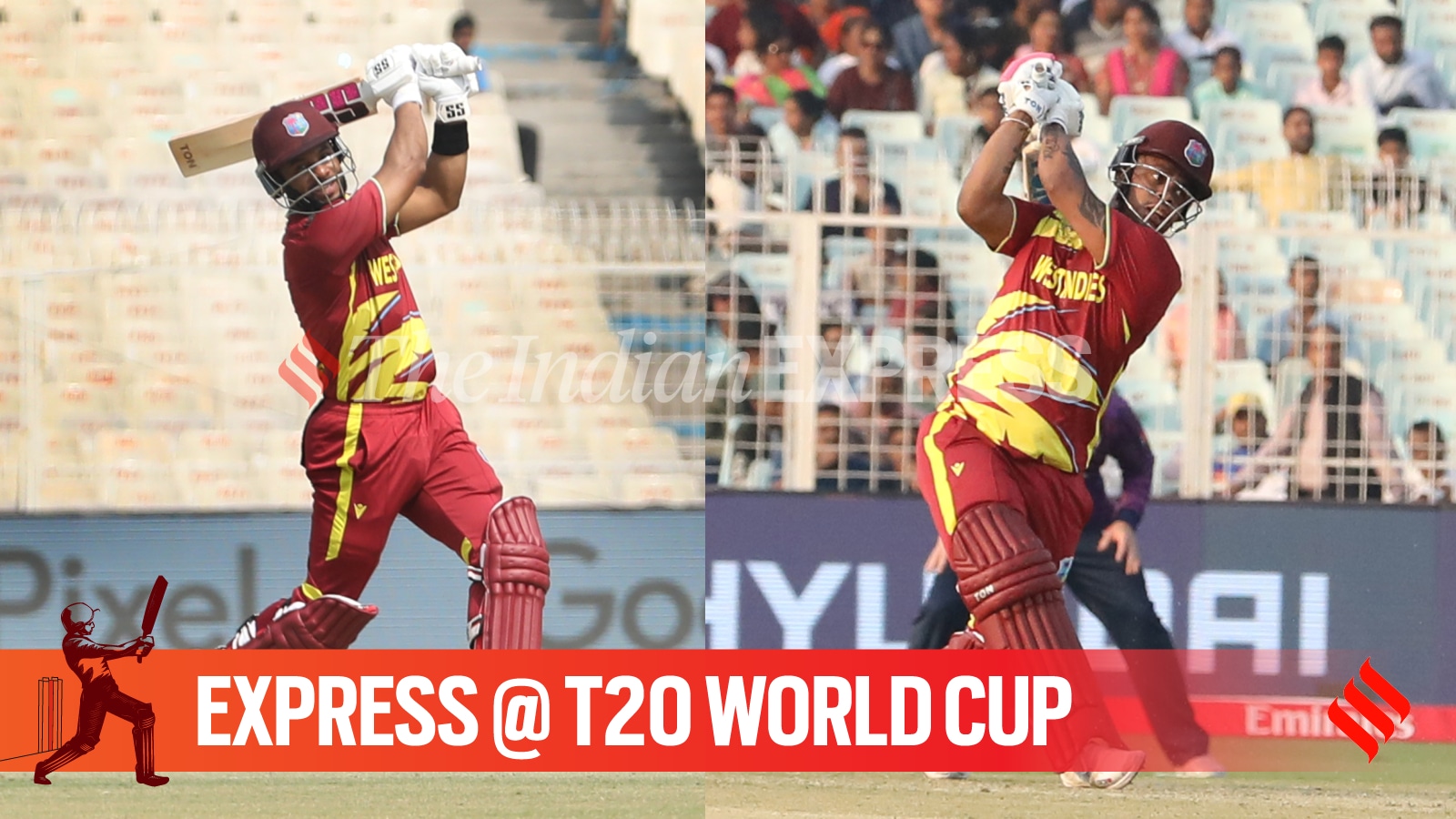
But Hetmyer has been in frightening touch. The Guyanese has smoked 219 runs at 54, with a strike rate of 185.59. Dizzy highs and fizzy lows have marked his career, but when the mood seizes him, the twinkling hands and fearsome hands begin to whirr; few bowlers and plans could chain him. In the grand Guyanese tradition, few possess as scything a cut as his. A tangle of chains dancing on his neck, he recreates the old chewing-gummed Caribbean swagger. He has pasted 17 sixes, one every seven balls, a chunk over the cow cordon, each a blend of power and precision.
Frighteningly, some of his colleagues possess a better strike rate than him in this tournament. Sherfane Rutherford has been the foremost among them. A left-hander again from Guyana, but more savage than Hetmyer, he has been the lower-order hangman, striking 157 runs at 189.15, carving a six every eight balls. Three others have hit seven sixes apiece in West Indies’s undefeated journey. Not merely unbeaten, but convincingly so – victories by 35, 30, 42 and 107 runs, besides a nine-wicket crushing of Nepal, plundering 9.8 runs a game apiece, easily the highest among all teams in a relatively low-scoring tournament
Six-hitting has been their fluid currency, as it was in 2016 and 2012. They have lashed 55 sixes this time, off the 572 in the tournament, which is one every ten balls, the best six-hitting frequency among all teams. Add the 68 fours, one in every five balls is a six or four. Offering them the licence to thrill has been the solidity of captain Shai Hope, whose 169 runs have come at a strike rate of 133.
🏏 West Indies: Tournament’s Six-Hitting Machine | T20 World Cup 2026
55 Sixes hit by West Indies in T20 World Cup 2026 Best six-hitting frequency in the tournament — one six every 10 balls
BY THE NUMBERS
572 Total Sixes in the entire tournament
~1 in 10 tournament sixes belong to West Indies
68 Fours WI boundaries — 4s + 6s
1in5 Balls goes to the boundary for West Indies
TOP SIX-HITTERS
Shimron Hetmyer 17 sixes — one every 7 balls 219 runs at SR 185.59
Sherfane Rutherford 6 every 8 balls — even more savage 157 runs at SR 189.15
Three Others 7 sixes each in the tournament WI’s depth of power-hitting runs deep
Shai Hope (C) 169 runs at SR 133 Anchor enabling the aerial assault
Adaptability factor
A few dot balls would not bluster them. In the Zimbabwe game, they did not score from 36 balls, the equivalent of six overs. Yet, they ransacked 254 runs. The sluggish nature of surfaces has not mattered; they have duly adjusted. The shorter straight boundaries of Ahmedabad will lighten up their eyes. The slower-ball proficiency of South Africa, especially Lungi Ngidi’s cutter corkers, would be an exacting test, but it’s the brand of bowling they are familiar with. After all, Ngidi himself mastered it with Dwayne Bravo, the king of cutters and scrambled seam serpents.
Their plan against slower balls has been simple and effective. They don’t commit, but would deliberately keep the weight on the back foot, so that they are not committing early into the slow ball.
The West Indies, thus, have re-emphasised the primacy of a six in the modern game. It is in its various aerial forms the most important shot in the format, the money shot, and the only shot that matters too. It is whipping up old and warm memories for Sammy, who was in both the victorious teams. And he would probably love to sign off from the tournament with a memorable quote in 2016: “Gods don’t love the ugly. We’re very wonderfully, beautifully made and that’s why we play exciting cricket.” The circumstances are the same; hopefully, West Indies will believe the eventual outcome would be too.
