

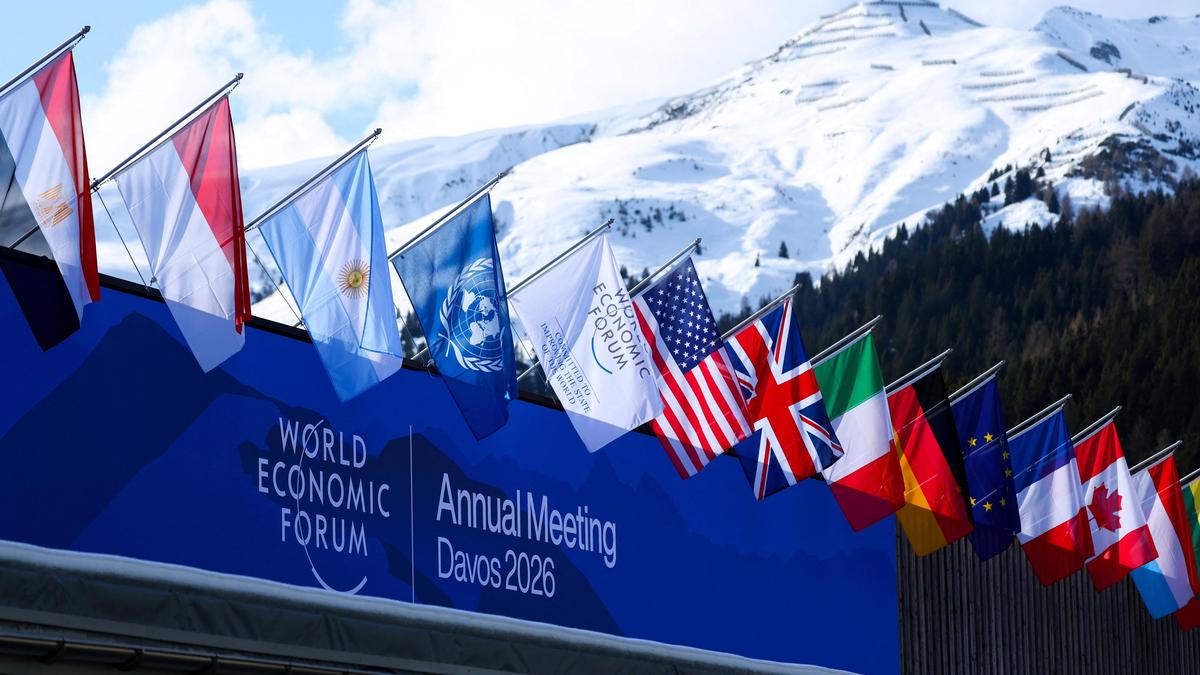
Little over a week back, the Davos Congress Hall in Switzerland welcomed a group of people, mostly dressed in black and white blazers, suit jackets, and slacks, carrying laptops and maintaining a steady countenance (yes yes, these people are rich and powerful). The occasion? It was the 56th annual meeting of the World Economic Forum (WEF).
A commitment
The WEF has a commitment to “improving the state of the world”. For this commitment to change into fruition, every year leaders from all spheres and all over the world gather in one place. For five days, socio-political groups – government, business, academia, art, etc. – merge as a single, active, and participatory audience at the forum. It is a televised, heavily publicised narration of a political economy where we get to examine the power of the total yet small group of elites.
At the annual meeting, old connections renew, new connections bloom, rampant dialogues ensue, and uncomfortable topics take the spotlight. Fruits of these will be an awareness to the depth of many issues, calling bold action and setting immediate priorities. As far as geopolitics and WEF are concerned, the relationship is a two-way street. During the years of political and economic turmoil, the WEF becomes a significant checkpoint for the future of international operations.
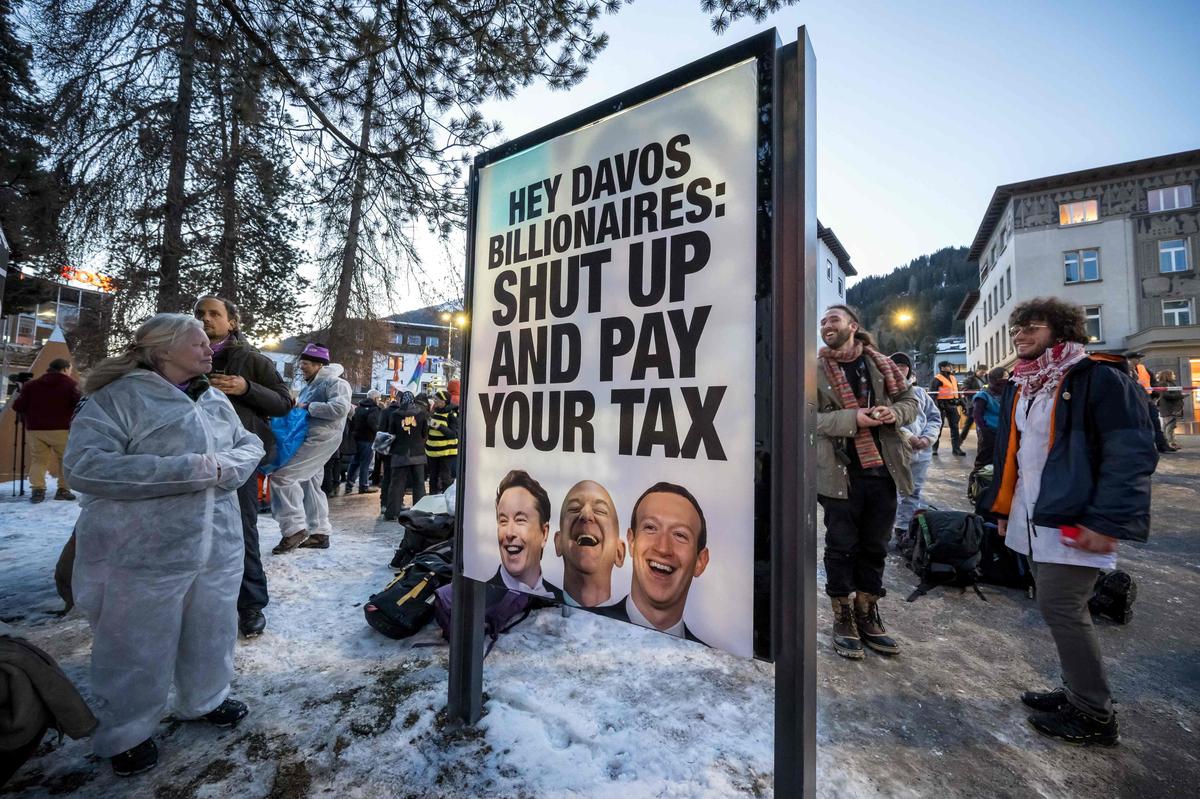
A demonstration against the World Economic Forum (WEF) on the eve of the WEF annual meeting in Davos on January 18, 2026.
| Photo Credit:
AFP
History of activities
The WEF was founded on 24 January 1971 as an international advocacy NGO (non-governmental organisation). While it is popular for the international meeting that takes place at the end of January every year, othertimes WEF also convenes regional conferences, writes many reports, and operates projects and collaborations among many stakeholders to improve the economy. The WEF is also a think tank and has led many researches.
A think tank is
a research institute, corporate, group, or a specialised organisation performing research and analysis.
The birth name of the WEF was European Management Forum. It changed to the current one in 1987. Initially it was a forum of just industrialists and businesspeople. In 1974, the annual meeting in January invited political leaders for the first time. Thus, social issues were added into discussion alongside management.
The Annual Meeting is in fact an invite-only event. No invite? No entry. Every year, around 3000 participants from all over the world attend the meeting. More than 400 sessions happen in the span of the five days where issues ranging from globalisation, capital markets, to climate change, poverty, and war are discussed.
Since it is a non-profit foundation, the WEF gets its money from member companies and member organisations. There are around 1000 of them where some of them are really the world’s biggest multinational companies, so there is at least more than five billion dollars in turnover.
Not all staid
While the subject at hand is all serious, it would be a lie to say there’s no fun at the WEF. This year, the opening day featured a grand concert by singer-songwriter Jon Batiste, violinist Renaud Capuçon and the Mahler Chamber Orchestra. Likewise there are sideline events; lavish parties often described as dinners or social gathering, exhibitions, bilateral talks, etc. The Forum though is not involved with any external sideline events and they are mostly organized by the companies, governments and so on who attend the annual meeting.
Memorable WEF
Davos Declaration, 1988. Conflict between Greece and Turkey which was at the brink of war, was resolved at the WEF by making the countries sign a ‘no-war’ agreement named Davos Declaration.
North and South Korea meets, 1989. The first ministerial meeting between North and South Korea took place at Davos. It was a diplomatic breakthrough.
Gaza-Jericho Agreement, 1994. Palestinian Liberation Organisation chairman Yāsir Arafāt and Israeli Prime Minister Shimon Peres attended the WEF which initiated the discussions that would lead to the peace treaty signed on 4 May, 1994.
Faith and the Global Agenda: Values for a Post-Crisis Economy (2010). A research report focusing on values in the socio-political system
Published – February 04, 2026 10:00 am IST
