

The Deendayal Antyodaya Yojana National Rural Livelihoods Mission (DAY NRLM), an understated program of the Ministry of Rural Development has unleashed a silent revolution in rural India. Around 10 crore households have been mobilised into 91 lakh Self-Help Groups (SHGs) which have been further federated into 5.35 lakh Village Organisations (VOs) and 33,558 Cluster-Level Federations (CLFs). These SHGs have mobilised credit of more than ₹11 lakh crore from banks with Non-Performing Assets (NPA) of around 1.7% only.
The number of Lakhpati didis (SHG members who earn more than ₹1 lakh per annum) has also crossed two crore.
On strengthening CLFs
Along with economic and social empowerment, this program has also led to the political empowerment of women. A majority of State governments, understanding their importance, are now focussing on unattached Direct Benefit Transfer (DBT) schemes such as the Ladli Laxmi Yojana in Madhya Pradesh, the Maiya Samman Yojana in Jharkhand, the Ladki Bahin Yojana in Maharashtra etc. In the latest such initiative, ₹10,000 each was transferred to more than one crore women in Bihar under the Mukhyamantri Mahila Rozgar Yojana.
These developments could boost livelihoods and entrepreneurship for women under the next phase of the DAY NRLM programme.
As per government directions, the DAY NRLM scheme is going to be appraised again for the next financial cycle, that is from 2026-27 to 2030-31. Therefore, this is an appropriate time to think about the strategy for the next five years of this critical program for women empowerment. One must begin with the lynchpin of the SHG ecosystem — the CLFs, which are sub-block level groups organised under the program. As it is a formally registered body, various activities of the program are anchored here. However, there have been concerns in various quarters that it has become subservient to government functionaries, and that leaders of these groups are not able to take independent decisions. Therefore, going forward, strengthening/revitalising the CLFs needs to be the main focus area, as per the original vision of the program. In fact, the CLFs need to become community owned institutes in the real sense, free from government interference. There are already successful models of CLFs, for example, the Kudumbashree in Kerala and Jeevika in Bihar, which could be emulated by other States.
The other cause of concern is the large amount of funds lying idle with the CLFs which are prone to misuse. Around ₹56.69 lakh crore have been given to community institutions as capitalisation support. Then there are other funds given to them by the Centre and the States along with the interest earned on them. These funds have to be accounted for by putting in place a robust institutional system of community monitoring through social audits along with statutory audits of CLFs.
Further, work needs to be done on saving and loan products by the CLFs. Considering the varied status of members and the activities proposed, a uniform rate and time period for all loans may not be a good idea. The community should be empowered to take a call on this. The ultimate aim has to be the judicious use of these funds, so that CLFs can ensure equitable development as well as earn a good amount of revenue to undertake various activities.
Moreover, a large amount of credit has been leveraged by the SHGs from the banks. However, it has been observed that many SHG members are not happy with the limited amount of loans made available through the SHG bank linkage program. As their enterprises stabilise, they would want to scale-up through higher dosages of credit. For this, they need to go for individual credit programmes; but the difficulty here is that SHG members don’t have individual credit history. Therefore, efforts need to be intensified to ensure CIBIL scores are generated for individual SHG members. Further, a model needs to be developed for the CLFs to play a proactive role in these bank loans and their repayments, as it does for the SHGs. This will give further confidence to the banks for extending individual loans.
The need for coordination
The Indian economy has diversified a lot in the last decade. The program needs then to move from debt financing to other models of innovative financing such as equity, venture capital, and blended financing. Partnerships with Small Industries Development Bank of India (SIDBI) and other financial institutions, including with Non-Banking Financial Companies (NBFCs) and neo- banks etc., need to be explored to ensure funding for individual entrepreneurs. In fact, customised financial products suited to rural women entrepreneurs need to be developed as their needs are different.
The DAY NRLM strives for enhancing the livelihoods of SHG members through its various sub-schemes but these usually work in silos with their impact being limited. Considering the rising aspirations of the members, these interventions now need to work in a synchronised manner, so as to reach every village and SHG member. For this, livelihood action plans need to be prepared every year for each State/Union Territory (UT). The data generated by the Village Prosperity and Resilience Plan (VPRP) can provide the basis for this ground-up comprehensive approach. In fact, to give impetus to livelihoods/entrepreneurship, CLFs need to be developed as business clinics/hubs where all services related to livelihoods/enterprise development are housed.
Moreover, a large number of departments are implementing various schemes related to livelihoods/entrepreneurship for rural beneficiaries. The involvement of the NRLM in the implementation of some schemes of the Departmentof Animal Husbandry and Dairying, Ministry of Food Processing Industries and the Department of Agriculture and Farmer’s Welfare has shown good results. However, such convergences are usually officer-based and are prone to disruption. The institutionalisation of the convergence through the creation of a ‘Convergence Cell’ at the NITI Aayog will not only ensure efficient utilisation of resources but will also avoid duplication of efforts.
Spreading the word
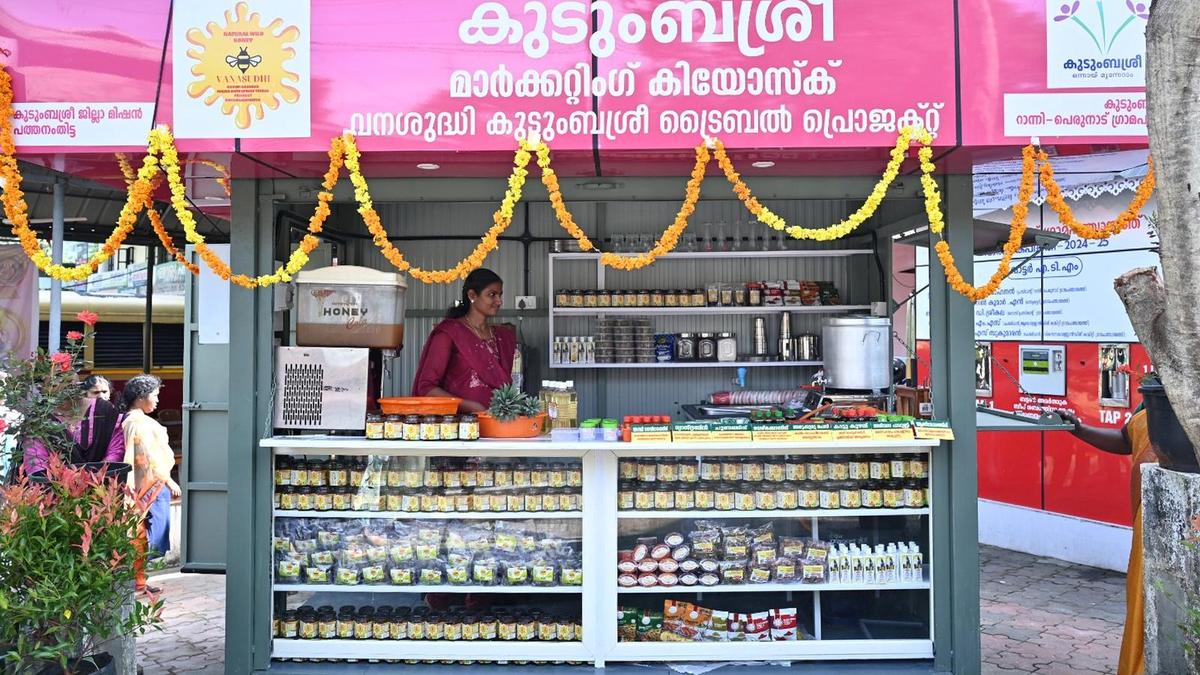
The biggest hurdle in boosting the livelihoods of SHG members is the lack of marketing of their products. This needs to be tackled head-on by creating a separate vertical, at the National Mission level, dedicated to only marketing in the program. The vertical should focus on proper packaging, branding, quality, designs, pricing and logistics etc. for various products. Select CLFs can become logistic hubs for specific products. Further, a professional market facing independent organisations needs to be put in place at the State/UT level for SHG products. This may help in direct interaction with private market entities.
As delineated above, there are huge expectations from community-based organisations. Accordingly, to guide and support them, sufficient professionals from various fields need to be placed with them. However, one should not forget that these organisations are at various stages of development, and have their own pace to move ahead. This should be respected.
With the above interventions, women empowerment at the rural level will definitely move to the next phase.
Charanjit Singh is a retd IFS officer.
Published – February 03, 2026 08:30 am IST
