


“People today are not necessarily suffering from a psychological disorder,” says Dr Pavitra Shankar, Associate Consultant – Psychiatry at Aakash Healthcare. “What we are seeing instead is emotional hunger—caused by stress, burnout, disconnection, and relationships that no longer feel emotionally safe.”
Her words spotlight a new social reality of platonic relationships — one driven by comfort, convenience, and emotional survival. As loneliness redefines how people live and connect, many are choosing not to sit alone with their isolation. Instead, they are seeking temporary warmth through structured and paid forms of companionship.
One such emerging practice is cuddle therapy—a service that promises emotional relief through non-sexual, platonic touch. Marketed as a way to ease stress, anxiety, and emotional burnout, it is gaining traction globally and, more cautiously, in urban India. At its core lies a simple premise: human beings need companionship, but not all of it has to be romantic or sexual.
How cuddle therapy works
Globally, platforms such as Cuddlist.com have formalised cuddle therapy into a structured, regulated service. Users create a client profile and choose from virtual sessions or in-person meetings, all governed by a detailed code of conduct that emphasises consent, safety, and boundaries.
Clients and practitioners must verify they are of legal age, remain free from mind-altering substances, and disclose any medical or psychological conditions. Sessions are strictly platonic — sexual arousal, intimate contact, or suggestive behaviour is prohibited. Clothing requirements are clearly defined, hygiene standards are enforced, confidentiality is prioritised, and either party can end a session at any time.
According to their official website, “The emphasis is not on intimacy but on emotional comfort through structured, consensual touch.” Indianexpress.com has reached out to the platform for inputs and is awaiting a response.
Meanwhile in India
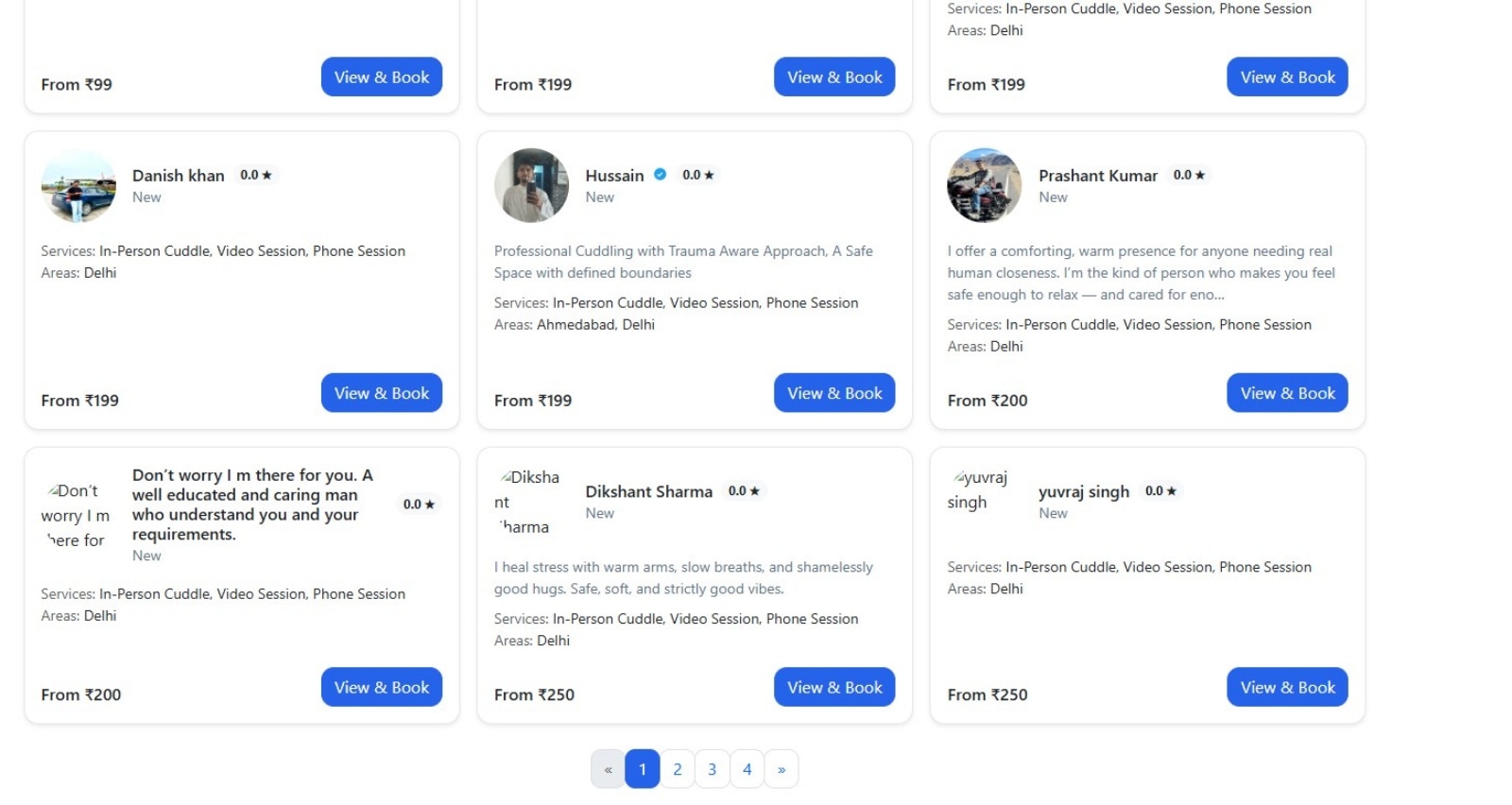 Screengrab of an Indian website offering professional cuddlers (Photo: Website/Cuddletherapy.co.in)
In India, however, the idea of professional platonic touch exists in a far more complex cultural space. “Every time we get inquiries, many people assume it is a dating service,” says Amit Sinha, founder of Ko-Partner, a six-month-old Indian platform offering professional companionship services. “We have to clearly state that this is not dating. It is professional companionship.”
Story continues below this ad
Ko-Partner does not currently offer cuddle therapy, but its rapid growth underscores a larger reality: urban India is lonely, overworked, and increasingly disconnected. Sinha, who comes from a real estate and government contracting background, says the idea emerged from observing how city life has reshaped relationships.
“People are extremely active on social media, but disconnected from relatives, neighbours, and even close friends,” he says. “When they need help — medical assistance, someone to shop with, or even just a movie companion—they often have no one to turn to.”
Inspired by practices in countries like Japan, where companionship services cater to ageing populations and single households, Sinha saw a similar gap emerging in Indian metros.
Launched as a bootstrapped venture, Ko-Partner offers services ranging from movie companions and shopping partners to medical assistance, travel companionship, and stress-relief conversations via voice or video calls. The platform reportedly sees around 2,000 sign-ups daily, primarily from tier-one and tier-two cities, with the dominant age group being 32–35.
Story continues below this ad
It positions itself firmly within professional boundaries. “Meetings are encouraged only in public spaces, privacy is prioritised, and interactions are structured through the platform. Ko-partners create profiles listing availability and services, while users choose whom to engage with. They are expected to pay a membership fee—₹500 for 6 months, ₹1,000 for 1 year, or ₹2,000 for lifetime access—and earn by offering their time. AI is used to match users based on location, interests, and preferences,” explains Sinha.
Comfort without commitment
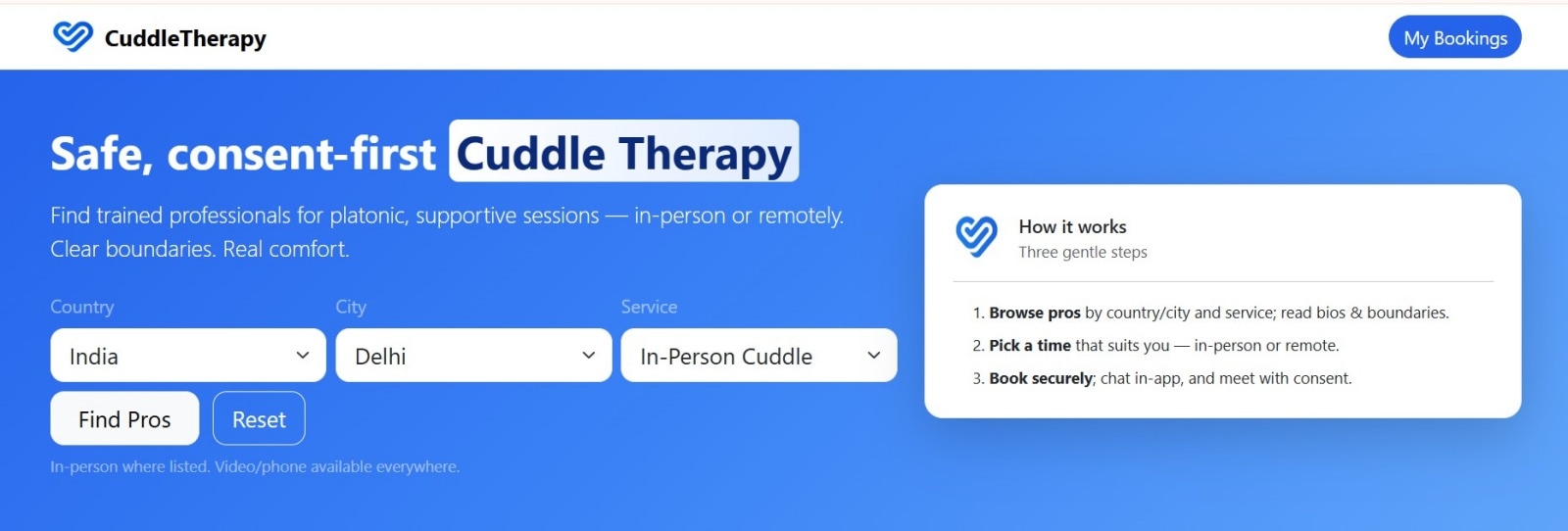 Screengrab of an Indian website offering professional cuddlers (Photo: Website/Cuddletherapy.co.in)
Dr Shankar argues that the popularity of such services signals a shift in how people experience relationships. “Many individuals today don’t feel heard or valued even within their existing relationships. They want emotional support without expectations, judgment, or long-term responsibility. Paid companionship offers that illusion of safety.”
But she cautions against mistaking short-term relief for long-term healing. “Cuddle therapy or paid touch may feel comforting temporarily,” she says, “but it becomes unhealthy when it turns into a habit. Real emotional needs cannot be fulfilled through transactional intimacy.”
Over time, she adds, such arrangements can increase emotional dependence and reduce the motivation to build meaningful relationships— ones that require patience, vulnerability, and sustained effort.
Story continues below this ad
The safety question
Safety remains the most pressing concern in India’s emerging cuddle-therapy ecosystem. A simple online search for “cuddle therapy” reveals several Indian and international websites offering services under loosely defined terms. Many lack visible safety protocols, transparent consent frameworks, or clear distinctions between platonic and sexual services. The presentation— often suggestive, poorly regulated, or vague—raises red flags.
“The risk is not just emotional, but physical,” warns Dr Shankar. “Without proper regulation, screening, and boundaries, such spaces can become unsafe very quickly—especially for women.”
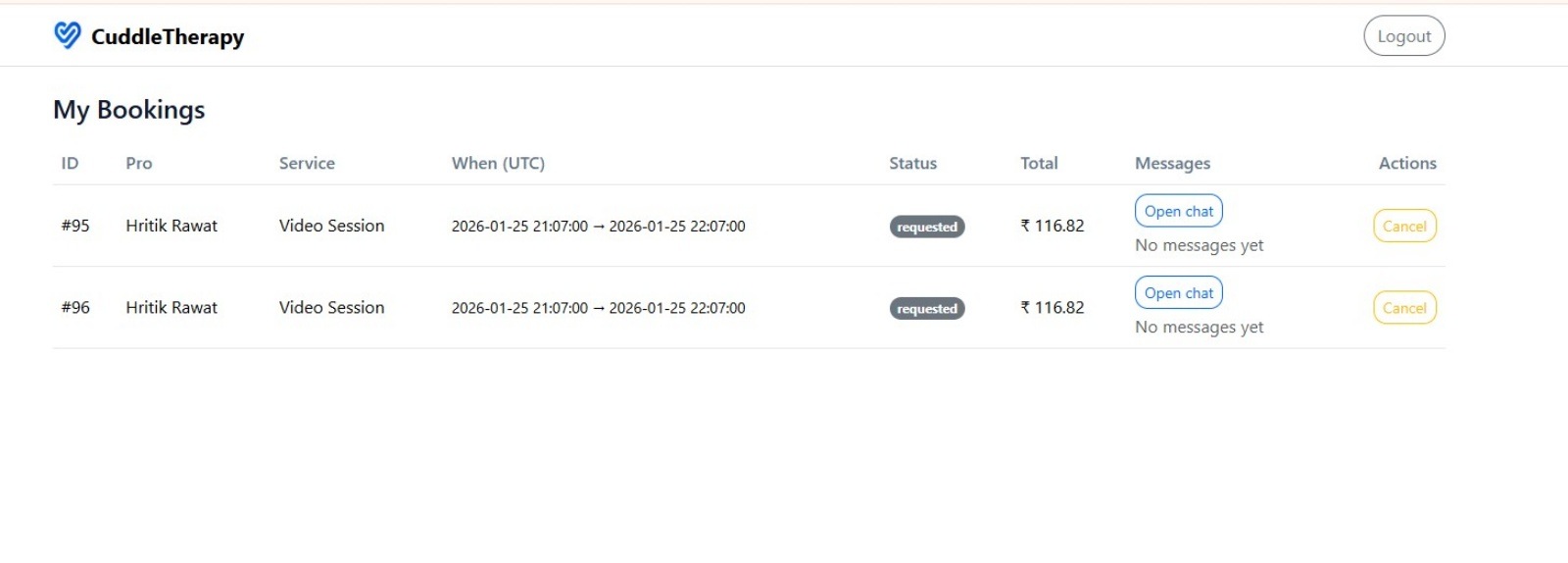 Screengrab of an Indian website offering professional cuddlers (Photo: Website/Cuddletherapy.co.in)
Why cuddle therapy remains controversial
While emotional burnout, isolation, and mental health conversations are becoming more mainstream, physical expressions of comfort outside romantic relationships remain taboo in India.
“There is still discomfort around touch,” says Dr Shankar. “Especially when it is detached from family or marriage. Yet people are desperate for relief.”
Story continues below this ad
The danger, she argues, lies in offering quick fixes for problems that require deeper social and emotional repair. “Emotional needs are met gradually,” she says. “Through honest relationships, boundaries, and time—not shortcuts.”
As India’s cities grow denser and lives grow more fragmented, services centred on paid companionship, emotional availability, and platonic connection are quietly expanding.
Sinha believes such platforms are responding to a structural gap rather than creating one. “Life is becoming more digital. Social circles are shrinking. People need reliable platforms for support,” he says.
Dr Shankar agrees, but with a caveat. “In a country where seeking mental health support is still taboo,” she says, “even speaking openly to one trusted person can be a powerful starting point.”
Story continues below this ad
She stresses alternatives to paid intimacy: maintaining routines, sharing meals, reconnecting with friends or family, joining community spaces, and seeking professional help when needed.
