

January 18, 2026 07:20 PM IST
First published on: Jan 18, 2026 at 05:35 PM IST
Written by Sabine Ameer
The attempt to equate global calls for a “Free Palestine” with demands for a “Free Iran” amid Iran’s ongoing anti-government protests reflects a fundamental misunderstanding of political context, international law and the purpose of political slogans themselves. While both situations involve human suffering and political violence, collapsing them into a single moral or analytical frame is not only misleading but analytically incoherent.
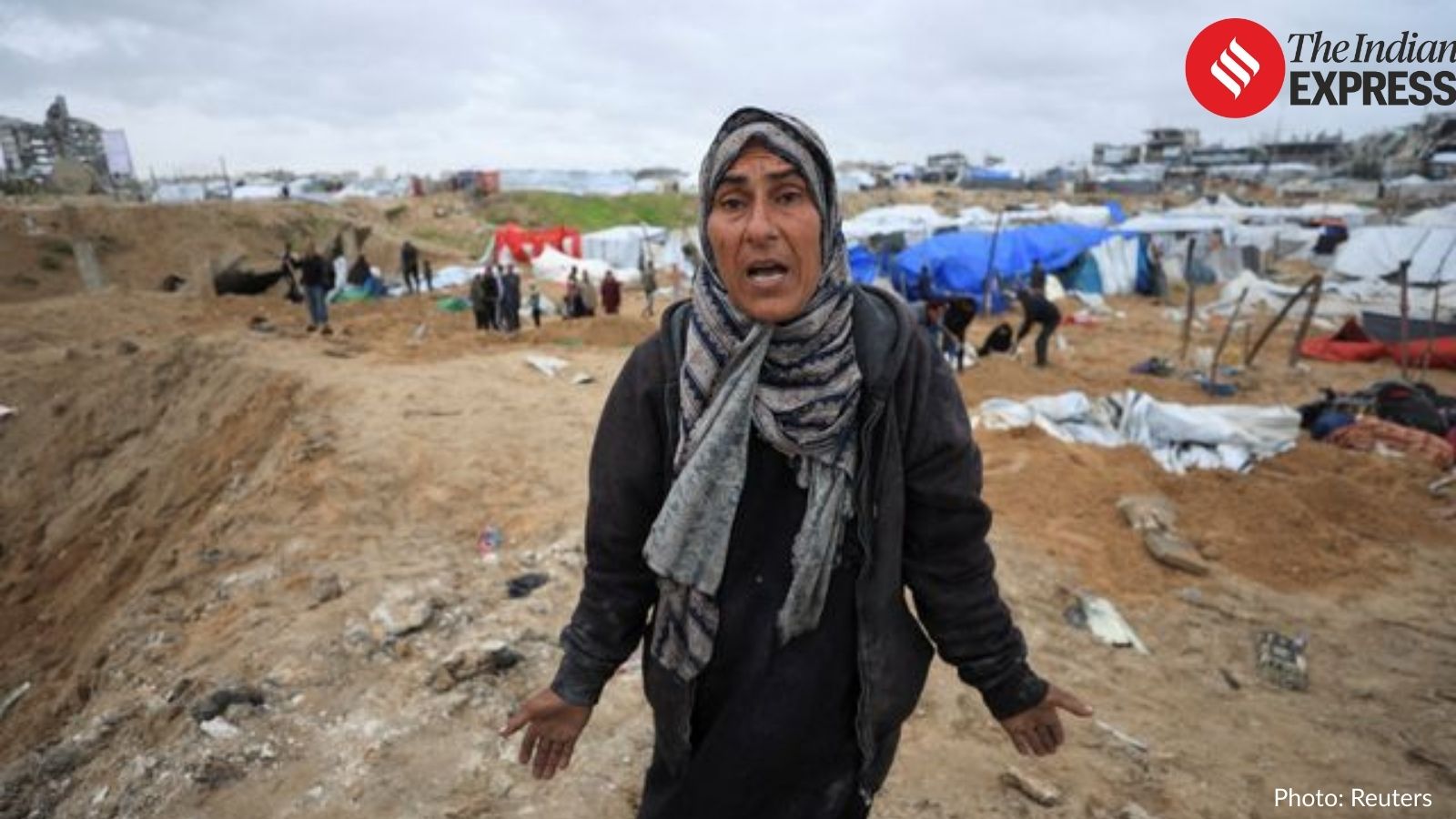
The most critical distinction lies in the nature of the political authority involved. Palestine, particularly Gaza and the West Bank, exists under conditions of prolonged military occupation. Israel exercises effective control over borders, airspace, movement, and most decisively, the use of force against a population that is not part of its citizenry. Under international law, this places Israel in the position of an occupying power, with corresponding legal obligations that are widely argued to have been violated.

Iran, by contrast, is a sovereign state exercising authority, however repressive, over its own population. This distinction is foundational in political theory and international relations. Max Weber’s well-known definition of the modern state emphasises its monopoly over the legitimate use of force within a given territory. While this monopoly can be abused (and frequently is), it remains categorically different from the use of force by a foreign power over an occupied population.
This does not justify Iran’s repression of anti-regime protesters in any way. However, it explains why Israel’s actions in Gaza are treated as an international crime implicating war crimes, crimes against humanity and potentially genocide, while Iran’s actions fall within the realm of internal repression and human rights violations, both legally and conceptually.
Political slogans emerge from specific material conditions. “Free Palestine” is not a call for reform within an existing political system; it is a demand for decolonisation, self-determination to bring an end to foreign domination. The slogan speaks to Palestinians who have been denied sovereignty altogether for decades. On the other hand, “Free Iran,” as deployed by critics of pro-Palestine movements, is fundamentally different as it implies regime change within an already sovereign state.
While Iranians protesting inflation, authoritarianism, and clerical rule have legitimate grievances, their struggle is directed at their own government and not towards an external occupying force, unlike Palestine. Conflating the “Free Palestine” call with the “Free Iran” demand thus erases the difference between liberation from colonial oppression and dissent within a nation-state.
Another reason the comparison fails is the degree of international entanglement: Israel’s military actions are backed by powerful Western states. The United States and several European governments provide weapons, political cover, and veto power in international institutions. This international complicity is precisely why global protests, boycotts, and sanctions campaigns such as BDS have emerged (and been quite successful, too).
Iran’s protests, by contrast, are not sustained by an external military occupation nor enabled by an international alliance committing large-scale violence on Iranian soil. While foreign powers may seek to exploit instability, that does not transform Iran’s internal unrest into an equivalent case of international aggression, and, therefore, this can’t be compared with the case of Palestine.
Critics often accuse the political Left of hypocrisy for being vocal about Gaza while remaining comparatively muted on Iran, but this accusation misunderstands how political movements prioritise struggles. Solidarity is not distributed evenly across all injustices; it is shaped by structure, scale and political (ir)responsibility. Historically, protests in countries such as Bangladesh, Nepal, or Sri Lanka have also been treated primarily as domestic political crises rather than global anti-colonial struggles. Demanding equal rhetorical treatment for fundamentally unequal situations is not neutrality; it is false equivalence.
Finally, the sudden invocation of Iran by right-wing commentators and pro-Israel voices often functions less as genuine concern for Iranian lives and more as a rhetorical diversion. “Why don’t you speak about Iran?” becomes a tactic to delegitimise outrage over Gaza rather than an appeal for safeguarding universal human rights. If concern for Iranian protesters were genuine, it would not be raised selectively or primarily in response to criticism of Israel.
The comparison between “Free Palestine” and “Free Iran” collapses under scrutiny. While one concerns a stateless people subjected to prolonged foreign occupation and systematic violence, the other concerns citizens resisting authoritarian governance within a sovereign state. Both involve suffering, and both deserve global attention, but they are not morally, legally or politically interchangeable. Treating them as such is a false equivalence that does not advance justice but rather obscures it.
The writer is an Edinburgh-based researcher and teaches Politics and International relations
