

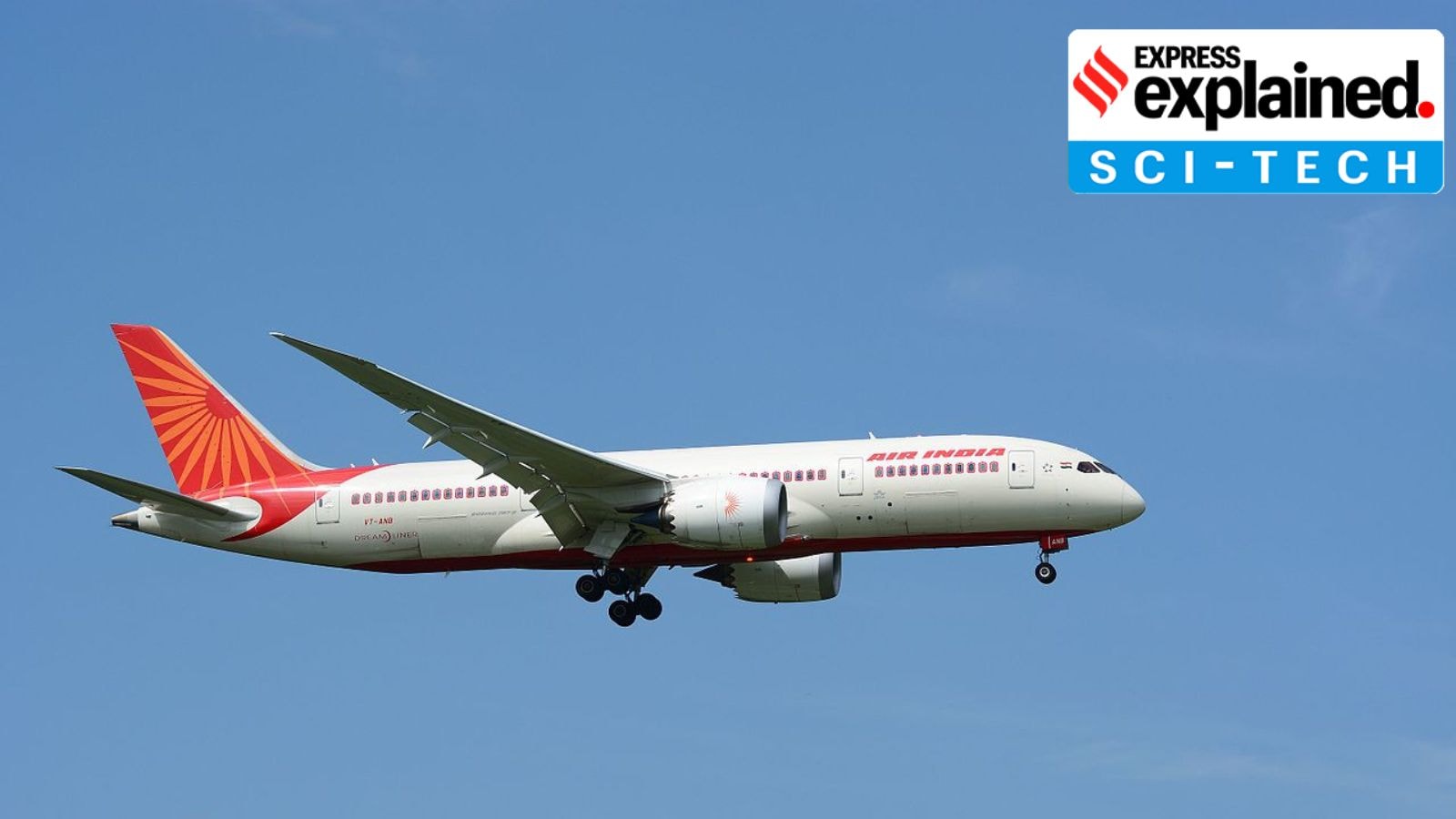
There appeared to be nothing out of the ordinary with Air India flight AI-117 on Saturday, flying from Amritsar to Birmingham in the UK, until it descended to an altitude of just 400 feet on its final approach into the Birmingham airport. Then, strangely, the ram air turbine (RAT)—a last-resort emergency power system—of the Boeing 787-8 aircraft deployed on its own, even as all electrical and hydraulic parameters were found to be normal and the pilots did not spot any abnormality with the plane. The aircraft landed safely and was grounded in Birmingham for checks, but nothing unusual was reported.
This extremely unusual incident, in which the RAT was deployed without an explicit command, has raised concerns about Boeing 787 aircraft. It comes less than four months after the catastrophic crash of an Air India Boeing 787 in Ahmedabad on June 12, which killed 260 people.
In modern aircraft, the RAT deploys automatically during grave emergencies involving total electrical failure, a debilitating hydraulic failure, or a dual engine failure, considered to be the rarest of rare scenarios. Pilots may also deploy it manually. Thus, an accidental automatic RAT deployment in the absence of an emergency is an extremely unusual occurrence and unheard of.
Story continues below this ad
India’s aviation safety regulator, the Directorate General of Civil Aviation (DGCA), will be investigating this bizarre incident. Meanwhile, the Federation of Indian Pilots (FIP) urged the DGCA to inspect the electrical systems of all Boeing 787 aircraft operating in India, arguing that the RAT deployment points at electrical system issues with the Boeing 787s and that the incident serves as a pointer to the Ahmedabad crash.
Last-resort power: how the RAT works on aircraft
The RAT, a critical system, is essentially a wind turbine stowed in a compartment on the underside of the Boeing 787’s fuselage, just behind the aircraft’s wing. It deploys into the airstream to generate power only when primary and secondary power sources fail. Although aircraft are equipped with auxiliary power units (APUs) to provide the required power to critical aircraft systems in the event of a total engine failure, the RAT offers an additional layer of safety, making it the plane’s last-ditch emergency power system when everything else fails.
The RAT generates power from the airstream by injecting ram pressure, which is created by the forward motion of the aircraft, and depends on the plane’s speed at the time. In the event of total power failure, the RAT helps power vital systems, including flight controls, flight-critical instrumentation, navigation, and communication equipment. During the brief period between the aircraft’s loss of power and the deployment of the RAT, the plane’s batteries ensure the bare minimum essential instrumentation continues to work.
The RAT is particularly useful at high or cruising altitudes and high aircraft speeds, allowing the pilots enough time and supportive power for the aircraft’s essential systems and controls, while helping them try and glide it to the closest available airfield. The RAT, however, is not a substitute for engine power.
Story continues below this ad
This last-resort emergency power system has been credited with helping to avert a few major aviation disasters. According to Collins Aerospace, which is among RAT manufacturers, these turbines “are responsible for saving more than 2,400 lives over the past five decades”.
What exactly happened in Birmingham?
As the Boeing 787 — registered as VT-ANO — operating Air India flight AI117 to Birmingham from Ahmedabad was landing at the destination airport, the pilots were notified that the RAT had been unlocked and deployed, even though they had not observed any related abnormality with the aircraft, it is learnt. The RAT was deployed when theplane was at an altitude of just 400 feet, well into its landing trajectory. It landed safely at Birmingham, where it was grounded for checks.
All checks and Boeing-recommended maintenance actions for uncommanded RAT deployment were carried out, and no discrepancy was observed, according to DGCA officials. Boeing confirmed the aircraft was structurally and functionally acceptable for continued operation. Thereafter, the aircraft was released for service and is now back to operating flights, according to flight tracking data.
Given the highly unusual nature of the incident, the DGCA has decided to conduct a detailed investigation and has already tasked one of its officers with the probe. According to some experts and pilots, the uncommanded deployment of the RAT could be due to a snag in the aircraft’s systems, and only a thorough investigation would reveal the exact cause.
Story continues below this ad
Fresh concerns over Boeing 787 systems
The Birmingham incident has again raised concerns about the safety of the Boeing 787 aircraft in certain quarters, coming barely four months after the Ahmedabad disaster. The RAT had been a major point of focus in the days following the tragic crash. The doomed aircraft’s RAT was deployed moments after liftoff, as the engine fuel control switches transitioned from ‘RUN’ to ‘CUTOFF’, which shut down both the engines, as per the preliminary probe report. The detailed technical investigation into the crash is underway, with the final investigation report expected in a few months.
FIP, which has around 5,500 pilots as members, said on Sunday that an electrical fault could have led to the deployment of the RAT on VT-ANO, and demanded a DGCA check of electrical systems on all Boeing 787s. It added that this incident could also be a pointer to the Ahmedabad crash, suggesting that an electrical fault or failure might have contributed to the disaster. It noted that while the DGCA did check the fuel control switches of all Boeing 787s in the country after the preliminary probe report was released, electrical system checks were not mandated.
“After the Air India-171 crash, the FIP has been constantly insisting on thorough check up of the electrical system of B-787 a/c (aircraft) in the country…Since the time B-787 has been flying there have been numerous incidents on B-787 a/c. We have strongly taken up with MOCA (Ministry of Civil Aviation) and AAIB (Aircraft Accident Investigation Bureau) to thoroughly check the electrical system of all B-787 a/c in the country,” the FIP said.
“It is pertinent to note that incident in another pointer towards the AI crash of B-787 a/c. Thus, in the interest of Air Safety FIP insists that DGCA must thoroughly check and investigate the electrical system of B-787 a/c in the country,” the pilot association added. The regulator has so far not ordered any related checks on other Boeing 787s being operated by Indian airlines.
Story continues below this ad
In its decade and a half of operations, the Boeing 787 has faced a few technical issues from time to time, but maintained a spotless safety record until the Ahmedabad air crash. The June 12 accident was the first fatal crash and hull loss of the Boeing 787 anywhere in the world.
