

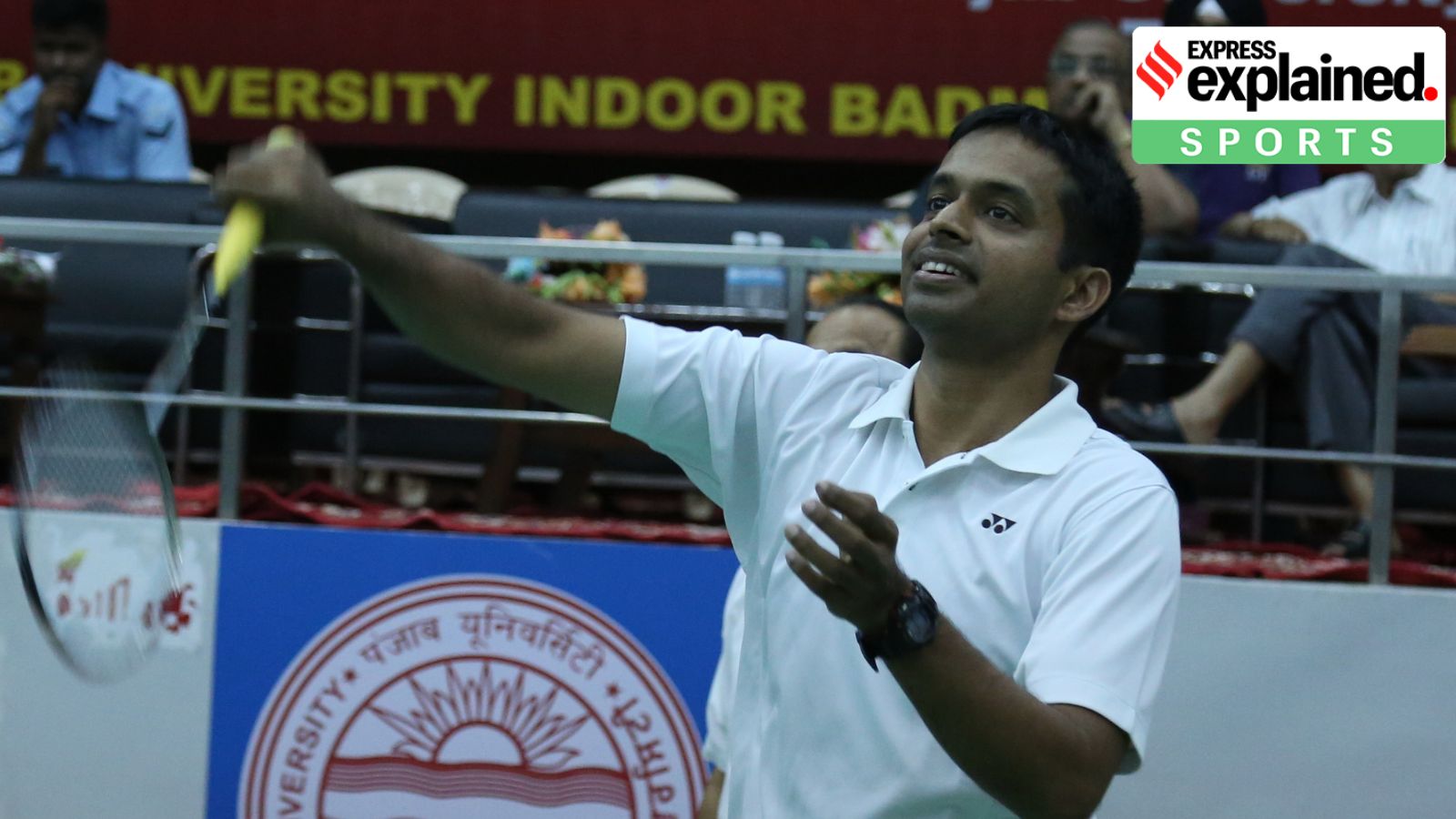
There is a pragmatic acceptance of the new proposed scoring system for international badminton in Pullela Gopichand’s slightly resigned tone. “I think I’m OK with it,” the national coach would say of the proposed change from 21-point, three sets (21×3), to 15-point three sets (15×3), a reduction of roughly a quarter of points contested.
The Badminton World Federation (BWF) first expanded the five annual five-day Majors (Super 1000 tournaments) to 11 days over two weekends. It then announced wider, encompassing TV broadcast of matches, and later dropped the anticipated bombshell: Badminton, which has witnessed a fair number of Classics in the 21×3 format, will now be shortened to 15×3.

The proposal would be put to a vote at the April 25 General Meeting of BWF at Horsens, Denmark. But given how shorter matches have already been factored into the broadcast expansion, it will be hugely surprising if the vote in favour of the 15×3 doesn’t go through.
In an interview with The Indian Express, Gopichand, who has had to endure these whimsical changes in badminton more than most, explains why he isn’t opposed to the change, in part because it could’ve been far worse. Excerpts:
One would think you wouldn’t be too fond of this scoring change.
No, I’m kind of OK with it. The sport has gotten too physical, and too many players are down with too many injuries, playing the 21 points. Somewhere, it needed to be shortened for their well-being, if we are to be realistic.
Is it a cop-out to commercial considerations, and couldn’t the BWF have reduced the number of tournaments?
Story continues below this ad
Yes, I would’ve preferred reducing the number of tournaments. But what will you take out of the calendar? They are trying to make the sport much bigger than it currently is (East and South Asia and pockets of Europe). Badminton needs tournaments in the US and Australia if it has to keep growing. And it needed a format that fits into this vision.
Badminton is far more challenging than tennis to get this right. Tennis has the Slams, ATP/WTA primarily, and singles is prioritised. Badminton can’t dump doubles; it’s equally important. Tennis can have long matches, because the players can rest and play on alternate days. The badminton calendar was getting too much in this format for players – World Championships/Olympics, Super 1000s, Super 750s, Thomas Uber and Sudirman Cup, Asian Championships, plus Asian Games in some years. Players were collapsing.
The assumption is 15-pointer will shorten match lengths. But won’t players adapt, and like the 21-pointer, isn’t it possible that 15×3 also reaches the hour-mark?
Right now, it’s reaching an hour and a half. 15×3 will keep it to 60 minutes, hopefully. Of course, players will adapt and possibly stretch out 15×3 too – there are pluses and minuses. But I’m just happy they aren’t getting the mad 11×5 experiment in, which was my fear. That would be a nightmare. I’d rather players play 60 minutes than 90.
Will 15×3 suit a certain style of play?
Story continues below this ad
The game has already gotten aggressive. While top players will adapt, you have to be spot-on from the beginning. It will help those who can absorb pressure. Let’s say you go from 13-9 to 13-11, it’ll mean there’s a lot more crucial, high-pressure points to soak that pressure. If there’s a break at 8, then you need to start well, and after a few points, the decisive ones will arrive immediately. In a 21×3, players could open up and play/try 4 different strokes in a rally. Now you will see a safe sort of game. The level of skill won’t be tested much, which is a huge drawback of 15×3. Players will stick to pet shots and safe play. Comeback drama won’t be frequent.
But as a sport, is it healthy if the scoring system keeps changing every few years? Football and tennis never messed with their formats and remain popular…
I was probably the worst affected by these changes. I won the All England in a 15-point rally system (in 2001). And within a few months, it was changed to 7×5, which was a disaster. Just when I was managing my injuries and getting used to that style and strategy, they made it 15×3. (It was 21×3 a few years later.) It was thoughtless. Now it’s just shortened by 1/4th, maybe.
Will it favour those close to retirement in prolonging careers?
Story continues below this ad
It’s a little easier for those closer to retirement or dealing with injuries. Senior Indians are anyway struggling, here they at least have a fighting chance at 9-10th point. What I’m worried about are doubles and mixed – I don’t know where that’ll end up. Earlier, you could keep lifting. Doubles gets tricky because serves become more crucial. Nobody will experiment.
Badminton swings from one player to the other depending on the court side, due to a draught in A/C conditions. How will that affect 15×3?
Standardisation of events becomes extremely important in a sport where drift and speed of the shuttle are major challenges to adjust to. Usually, the first rounds are scratchy, with everyone trying to understand the court conditions. But in a 15×3, in drifty arenas, there’s a risk of a game gone here and game gone there, and suddenly it’s all over. If drift dictates wins, your real ability is not being tested. In 21×3, there was time to cover ground. In 15, it’s none, so you need to reduce the advantages from one side (so as to avoid lottery results). So you need to standardise this change – perhaps equal practice courts available to everyone before the event.
Is there a chance the 15×3 might not get enough votes?
Story continues below this ad
I think just the way BWF has gone about it, it will go through 100 per cent this time. Last time, they were just a little casual, and many from the African continent weren’t even clear about what the change being proposed was. This time, they will push it through. I’m just happy that the terrible 11×5 with 55 points idea is not on the table. This is OK, you just have to play well.
