

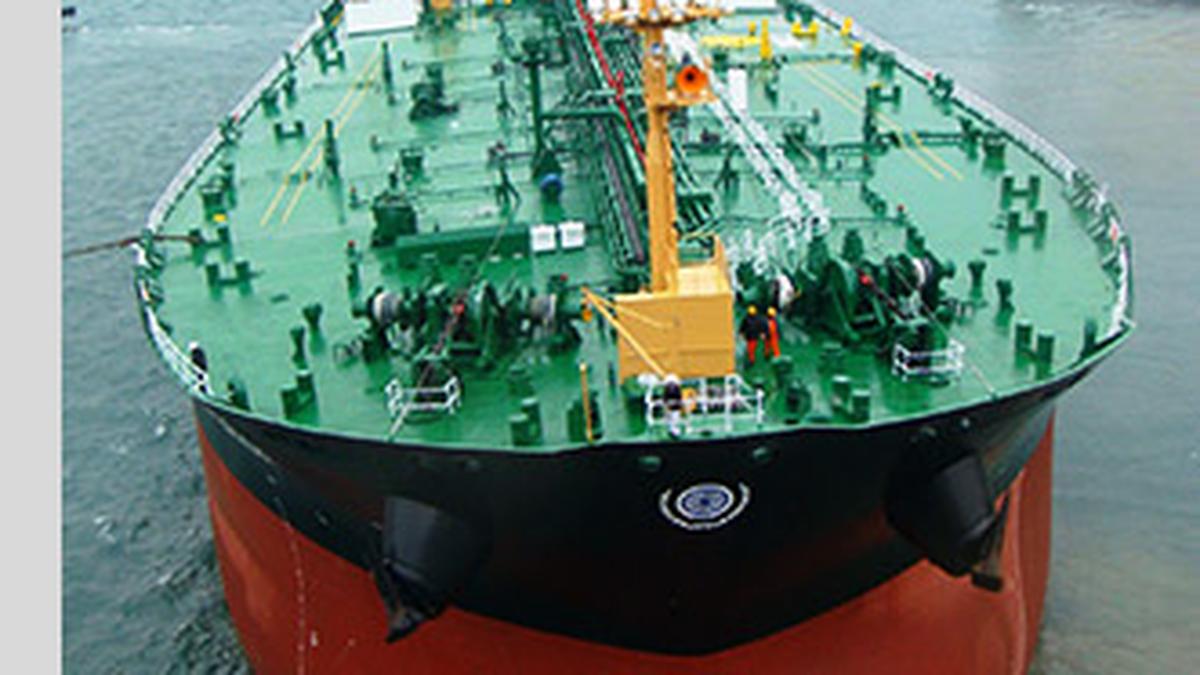
At the recent India Maritime Week, the government announced that the state-owned Shipping Corporation (SCI) would buy more than 200 merchant ships of practically all types through joint ventures with respective stakeholders, mostly State-owned. This marks a remarkable turnaround in the fortunes of this mini-ratna that once truly occupied the commanding heights or rather the depths of Indian shipping but had fallen into prolonged decay and was on the verge of privatisation for some five years.
The recent geopolitical changes that have taken place in the world have clearly illustrated the importance of having national shipping services, says Anil Devli, CEO of Indian National Shipowners Association. “This has led to a clear change of mind in the country about the emerging importance of merchant navy for the economic security of India,” he adds.
India’s pride
With a fleet of more than 120 ships, SCI was among the biggest ship owners in the world. It boasted of an entire range of merchant crafts – liners, oil tankers, gas carriers, chemical tankers, passenger vessels, offshore vessels. It had even made tentative forays into container shipping just as general cargo movement was becoming fully containerized across the world.
Cabotage rules favoured SCI. Further, the national merchant carrier had the first rights to India’s oil needs and, therefore, tankers dominated its fleet.
A high point was SCI buying exactly the same number of new-built tankers as there were Param Veer Chakra awardees in one go from Korea and naming each ship after one brave fauji. Lt. Arun Khetarpal PVC was a product carrier bringing in naphtha and petrol from Gulf. Havildar Abdul Hamid PVC brought in crude oil. Not just military personnel, SCI ships honoured India’s saints too – Kabirdas, Ramdas and Ravidas transited the Suez Canal to call on Venice, Antwerp and Rotterdam.
SCI ships often featured the latest. If an engine maker in Germany introduced a new engine, it would be introduced on an SCI ship soon. The company bought, through a joint venture, India’s first ever Liquified Natural Gas ship that carried gas in liquid form below -160 degrees C. Stored in aluminium tanks and piped through stainless steel tubes, if the ultra sub-zero LNG ever came in contact with the steel with which the ship was made, then the whole structure could crumble like papad because of a phenomenon called cold corrosion. One small leak could poke a hole into the hull.
As a government firm, SCI often served national needs overriding commercial interests. It carried itinerant workers from the mainland to Andamans at discounted rates. It would order new ships to be built in Indian yards despite the cost overruns and delays.
SCI could be trusted to bring in goods for the armed forces without a charter party. During the Iran-Iraq war, the black hull of SCI oil tankers carried the word, INDIA, in bold white so the warring parties didn’t rain missiles on a friendly Hindi ship.
With its corporate office in Nariman Point, SCI was home to and training ground for thousands of seafaring engineers, navigating officers and ratings who would often move on to lucrative careers in foreign vessels and bring in billions of dollars of foreign exchange. Its sprawling training institute in the heart of Mumbai, Powai, would keep them skilled.
Liberalisation, privatisation, gobalisation
As liberalisation-privatisation-globalisation triad took hold across nations in the 1990s, SCI’s downfall began. Under the World Trade Organization’s General Agreement and Trade and Services, India had to commit to principles such as Most Favoured Nation applying to national maritime carriers in foreign trade for exim cargo though cabotage rules that apply to domestic cargo were not required to be relaxed.
A series of deliberate government policies let SCI slip, starting with the erasure of its right of refusal over India’s oil needs. New ships were not ordered. Before the recent purchase of second-hand gas carriers, SCI had ordered two vessels in the last 10 years with one being an offshore vessel.
SCI’s tanker fleet dwindled drastically. Today, the company’s total fleet strength has halved. And the average age of an SCI ship stands at 18 years – merchant ships are candidates for scrapping when they cross 20. “In the past, Indian ships including SCI vessels carried up to 27% of all India’s exim cargo and this came down to 7%,” says Amitabh Kumar, retired Director General of Shipping.
In 2019, SCI privatisation seemed like a sure shot although Covid put off those plans. At the same time, the pandemic showed why a big Indian shipowner was vital to India’s interests.
Strategic value
Mr. Kumar explains how the pandemic disrupted global shipping. Container freight rates skyrocketed, with peaks that were 10 times pre-pandemic levels, as port delays mounted and voyage durations increased. Indian exports such as shrimp or rice to African countries that were typically high-volume, low-margin, were affected since exporters couldn’t afford the high prices. At the same time, Europeans nations and the U.S. were able to afford those rates. Container ships started skipping third world ports.
Mr. Kumar adds that imports too were affected similarly. He takes the case of rubber imports from Vietnam that was key raw material for tyres and hence of the auto industry. Exporters of high-margin, low-volume cargo were able to afford the prices, in contrast.
India had little or container ships of its own that the government could ensure called on ports that mattered for Indian trade. Whatever container shipping capacity that India had left the country earlier when cabotage rules were removed. Cabotage ensures that domestic cargo is reserved for domestic shippers. When the rules were removed, Indian container companies such as Shreyas Shipping lost their business, says Mr. Kumar.
Worldwide trend
Post-pandemic, the “so-called free trade regime” sought to be ushered in by GATS went out of vogue across the world, says Sukumar Muralidharan, an independent researcher and writer who has written extensively on global trade, investment and political economy. Covid exposed the shortcomings of the practices and there has been an increase in State-driven initiatives in business across the world, he says, adding that in the U.S., this started with the Biden administration driving major investments in semiconductor industry due to its strategic value.
Expanding that, the business-friendly second Trump administration has not only raised tariff walls throwing the concept of Most Favoured Nation to the winds but so far spent nearly $10 billion buying stakes in companies that it considers has strategic value. While in the past, U.S. government support to companies would typically come from grants and aid driving technology direction and occasionally legislation on curbing foreign ownership, the present administration has taken stakes in companies.
The U.S. government, which has historically kept away from having direct stakes in business and intervened only during crisis such as in the auto industry following the 2008 crash, is today the major shareholder in Intel. It has acquired what is termed a “golden” stake in the 120-year-old U.S. Steel that would give it powers to intervene in business decisions made by its Japanese owner, Nippon Steel. Rare earth companies have seen much interest from the U.S. government since they are crucial for supplying critical components to a range of futuristic deep tech businesses.
In India, the SCI has become the object of attention of the government. Thousands of crores from the Maritime Development Fund are being allocated to join ventures between SCI and other PSU stakeholders to purchase ships.
In the past, Indian shipowners had complained that PSU entities like the Container Corporation of India or the oil majors did not give them long-term contracts that would help them raise capital and purchase new ships. Short-term contracts in the open market meant purchasing second hand or becoming third owners of ships with short lifespans.
But the SCI joint ventures with these PSUs will ensure long-term backing although how many of these purchases would be newbuilds from Indian shipyards is still a gray area. For instance, Bharat Shipping Line, a JV between SCI and CCI, will purchase 20 container ships, adding precious container tonnage to India. “The build up of Indian tonnage will happen gradually. In any case, ship prices are at record high levels because of the prolonged bull run in global shipping after the pandemic disruption. Now is not a really good time for massive fleet expansion,” adds Mr. Kumar.
Mr. Devli of INSA adds a caveat that measures to increase merchant ship cargo carrying capacity of India should be extended to private players as well. “It is important is to make the business of merchant shipping competitive so that it will attract investment and lead to growth not just of SCI but of the entire Indian flag tonnage,” he adds.
