
Close Menu
  • Home
  • Education
  • Health
  • National News
  • Politics
  • Relationship & Wellness
  • World News
What's Hot

Expert Explains: How Iran’s power pyramid came to be, with Supreme Leader at the top

March 3, 2026

Pakistan Strike Afghanistan: Afghanistan's Bagram airbase damaged by 'multiple strikes' from Pakistan; see satellite images – The Times of India

March 3, 2026

As Canada limits student intake, India discusses hybrid campuses during Carney visit

March 3, 2026
Facebook X (Twitter) Instagram
Global News Bulletin
SUBSCRIBE
  • Home
  • Education
  • Health
  • National News
  • Politics
  • Relationship & Wellness
  • World News
Global News Bulletin
Home»Business»Why is volcanic ash a safety concern for flights? | Explained
Business

Why is volcanic ash a safety concern for flights? | Explained

editorialBy editorialDecember 4, 2025No Comments3 Mins Read
Facebook Twitter Pinterest LinkedIn Tumblr Email Telegram Copy Link
Why is volcanic ash a safety concern for flights? | Explained
Share
Facebook Twitter LinkedIn Pinterest Email Copy Link

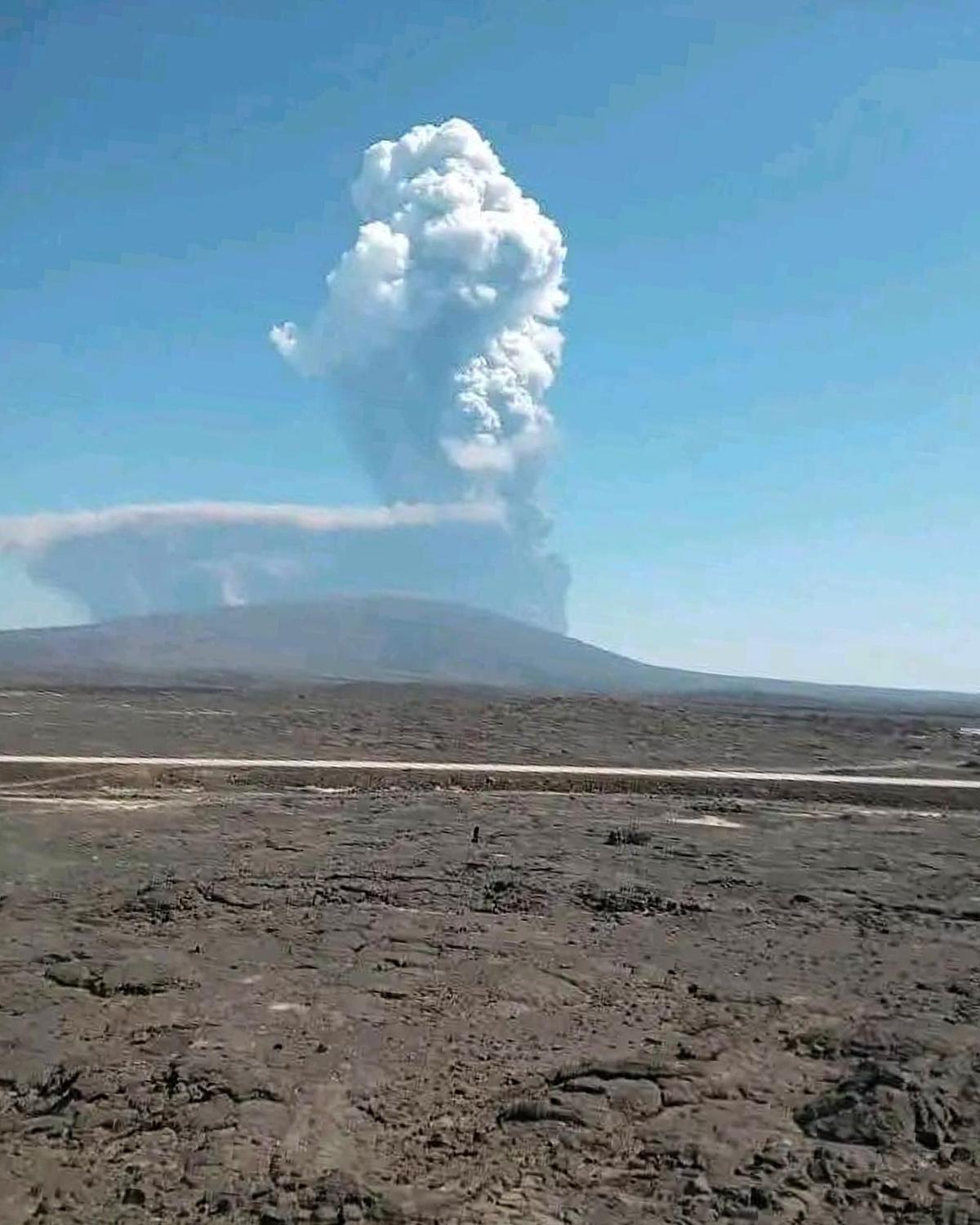
Ash billows from the eruption of the long-dormant Hayli Gubbi Volcano in Ethiopia’s Afar region, on November 23.
| Photo Credit: AP

The story so far: Last week, the Director General of Civil Aviation (DGCA), India’s aviation regulator, ordered airlines to brace for the impact of volcanic ash travelling from Ethiopia after volcano Hayli Gubbi erupted for the first time in 12,000 years.

How did it travel?

Hayli Gubbi volcano in northern Ethiopia erupted on November 23 for the first time in nearly 12,000 years, sending thick plumes of ash up to 14 km into the sky, and across the Red Sea towards Yemen and Oman. It even drifted towards Iran. The volcanic ash reached India’s western border on November 24 at 5.50pm and moved out of the country’s airspace by 10.30pm on November 25. Moving at around 100-120 km/hour at an altitude of 15,000 to 25,000 feet the plume carried volcanic ash, sulphur dioxide and tiny particles of glass and rock, travelling over Rajasthan, parts of Gujarat, Delhi-NCR, Punjab and Uttar Pradesh before crossing over to China.

How does it impact aircraft?

A jet engine works by sucking in air, squeezing it, mixing it with fuel, burning it, and pushing hot gases out the back to produce thrust.

The engine runs extremely hot at temperatures of 1,600 degrees Celsius while turning very fast, with air racing through it at 600 mph. When volcanic ash gets into this environment, the silicate components melt and re-solidify at high temperatures creating a glassy deposit on hot parts, which blocks tiny cooling holes choking off flow within the engine. This can lead to engines losing power or shutting down.

What did the DCGA order state?

The DGCA issued an advisory urging airlines to steer clear of affected altitudes and regions to ensure safety. Airlines were also advised to report any suspected impact of ash on engine performance or cabin smoke or odour. Airports were ordered to inspect runways for contamination and suspend or restrict flight operations, if need be.

Air India cancelled at least nine flights on November 24 and 25, including those originating from Dubai, Doha and Dammam and said it was carrying out precautionary checks on aircraft.

Akasa also cancelled flights to and from Jeddah, Kuwait and Abu Dhabi.

How have flights been affected?

In 1982, a British Airways Boeing 747 flying at 37,000 ft enroute from London to Auckland flew through a volcanic ash cloud from Mount Galunggung near Jakarta. All four engines failed one after another due to the ash. As engines control the pressurisation system, the oxygen levels in the passenger cabin started to drop and passenger oxygen masks were deployed. With mountains blocking the way to the emergency airport, it seemed like the plane would have to ditch in the Indian Ocean. Luckily, after descending more than 25,000 feet, the pilots managed to restart one engine and then the other three, although one engine had to be shut down again. With enough power to reach the airport safely, the crew still faced the difficult task of landing with windscreens clouded almost completely by volcanic ash.

In 1989, a KLM Boeing 747-400 flying to Anchorage, Alaska, hit ash from the nearby Mount Redoubt eruption. All four engines shut down suddenly at 24,000 ft. The crew descended 14,000 ft and had to perform the engine restart procedure a number of times before it was able to successfully land the plane safely. But the engines worth $80 million were severely damaged and had to be scrapped.

Published – December 04, 2025 08:30 am IST

Follow on Google News Follow on Flipboard
Share. Facebook Twitter Pinterest LinkedIn Tumblr Email
Previous ArticleRape case: SIT files closure report against Gowda grandson, court rejects it | India News – The Times of India
Next Article How 5 owl eggs were saved and a ‘miracle’ hatched at a Telangana quarry
editorial
  • Website

Related Posts

Pakistan Strike Afghanistan: Afghanistan's Bagram airbase damaged by 'multiple strikes' from Pakistan; see satellite images – The Times of India

March 3, 2026

India vs China oil reserves: Who is most vulnerable to prolonged Middle East crisis & crude supply shock? – The Times of India

March 3, 2026

Middle East crisis: Should you invest in gold ETFs or silver ETFs? Here's what experts suggest – The Times of India

March 3, 2026

AFC Women's Asian Cup: From COVID-19 heartbreak, India back on merit against the continent's best | Football News – The Times of India

March 3, 2026

Qatar Lng Production Halt: India reduces gas supplies to industries as Qatar halts production; buyers look for alternatives, tanker rates double to $200,000 – The Times of India

March 3, 2026

Sachin Tendulkar, Virat Kohli lead Holi wishes as cricket fraternity spreads festive cheer | Off the field News – The Times of India

March 3, 2026
Add A Comment
Leave A Reply Cancel Reply

Economy News

Expert Explains: How Iran’s power pyramid came to be, with Supreme Leader at the top

By editorialMarch 3, 2026

The assassination of Ayatollah Ali Khamenei, 86, the Supreme Leader of the Islamic Republic of…

Pakistan Strike Afghanistan: Afghanistan's Bagram airbase damaged by 'multiple strikes' from Pakistan; see satellite images – The Times of India

March 3, 2026

As Canada limits student intake, India discusses hybrid campuses during Carney visit

March 3, 2026
Top Trending

Expert Explains: How Iran’s power pyramid came to be, with Supreme Leader at the top

By editorialMarch 3, 2026

The assassination of Ayatollah Ali Khamenei, 86, the Supreme Leader of the…

Pakistan Strike Afghanistan: Afghanistan's Bagram airbase damaged by 'multiple strikes' from Pakistan; see satellite images – The Times of India

By editorialMarch 3, 2026

Bagram Airbase in Afghanistan (AP photo) Pakistan carried out airstrikes on Bagram…

As Canada limits student intake, India discusses hybrid campuses during Carney visit

By editorialMarch 3, 2026

4 min readNew DelhiUpdated: Mar 3, 2026 06:19 PM IST Canadian Prime…

Subscribe to News

Get the latest sports news from NewsSite about world, sports and politics.

Facebook X (Twitter) Pinterest Vimeo WhatsApp TikTok Instagram

News

  • Education
  • Health
  • National News
  • Relationship & Wellness
  • World News
  • Politics

Company

  • Information
  • Advertising
  • Classified Ads
  • Contact Info
  • Do Not Sell Data
  • GDPR Policy
  • Media Kits

Services

  • Subscriptions
  • Customer Support
  • Bulk Packages
  • Newsletters
  • Sponsored News
  • Work With Us

Subscribe to Updates

Get the latest creative news from FooBar about art, design and business.

© Copyright Global News Bulletin.
  • Privacy Policy
  • Terms
  • Accessibility
  • Website Developed by Digital Strikers

Type above and press Enter to search. Press Esc to cancel.