

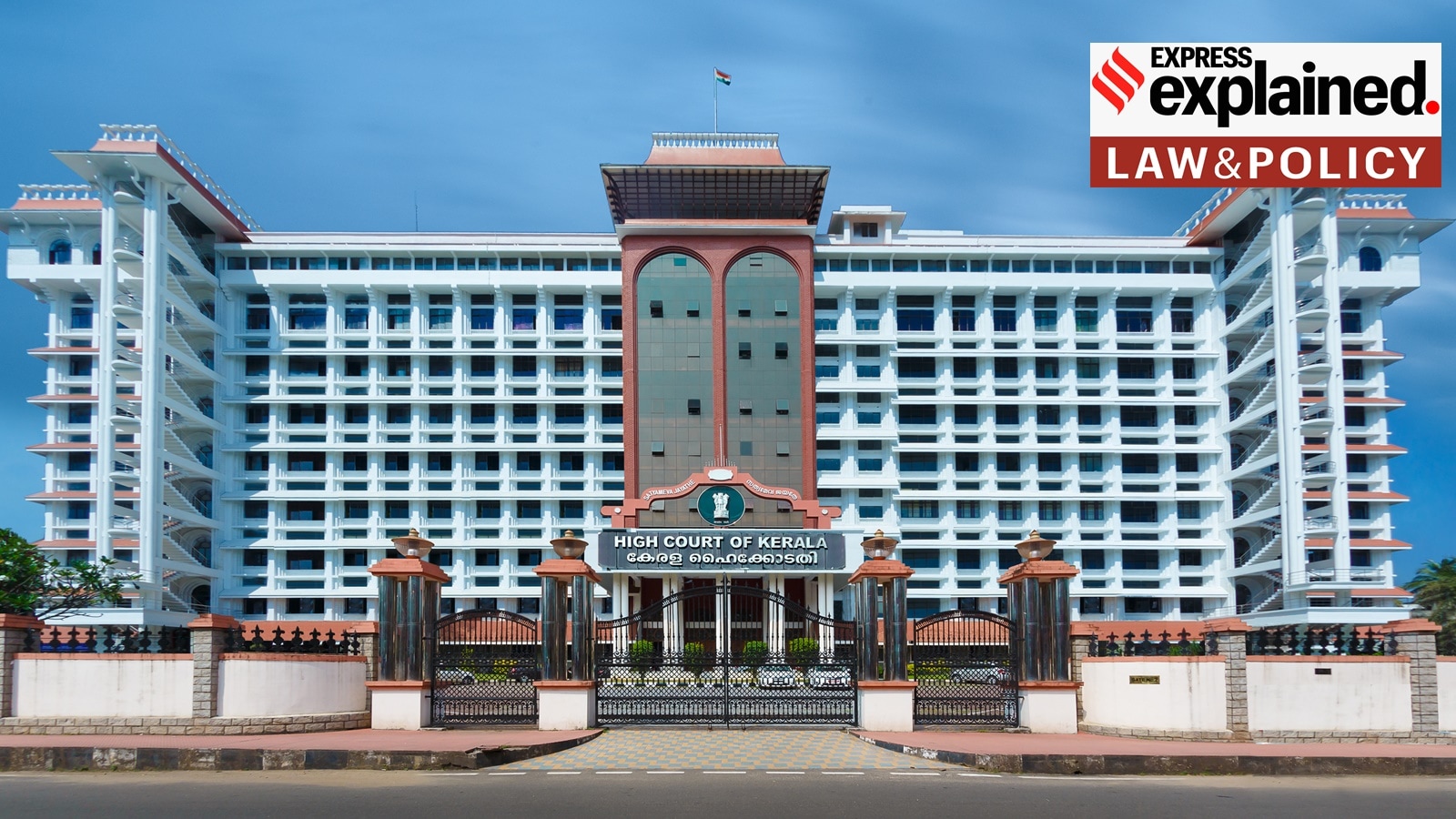
The Kerala High Court on Wednesday (October 22) ruled that the appointment of a temple priest is a secular activity that must align with the constitutional principles of equality and non-discrimination.
It dismissed a petition by the Akhila Kerala Thanthri Samajam, a registered society of traditional Brahmin temple priests, challenging rules that the Kerala government introduced in 2022 for appointing priests (‘Shanthi’) in temples managed by the Travancore Devaswom Board (TDB).

By upholding rules that favour institutional certification over traditional tutelage, the court effectively delinked priesthood from caste or lineage.
What was the case about?
The dispute centred on a shift in how priests are appointed for temples under the TDB. Traditionally, an aspiring priest would learn rituals under a senior Thanthri or chief priest — a certificate from this guru was the primary qualification. This system often meant that the priesthood was passed down within specific families and communities.
The TDB, however, introduced new rules requiring candidates to have a certificate from a ‘Thanthra Vidyalayam’, that is, an institution teaching temple rituals, accredited by the state’s Devaswom Recruitment Board (KDRB).
The Thanthri Samajam, whose members are exclusively from the Brahmin community, challenged the rules. Their plea sought to preserve a traditional system where lineage and community played a significant role in certifying priests. They argued that the KDRB, a state body, lacked the religious authority to accredit institutions imparting sacred knowledge. This new system, they contended, undermined the spiritual authority of the Thanthris and was an interference in an “essential religious practice” protected by the Constitution.
What did the Kerala government argue?
The state government framed the issue as one of social reform and constitutional morality. It argued that while a priest’s duties are religious, the process of their appointment is a secular, administrative function that the state can and must regulate. It contended that the new rules create a transparent, uniform system ensuring all candidates are judged on merit, rather than their background.
Story continues below this ad
It also claimed the rules were aimed at eliminating “hereditary priesthood” and “caste-based discrimination”. The petitioners, it stated, sought to perpetuate a “caste oligarchy” and restrict appointments to “upper-caste communities”, which directly contravened the Constitution.
By opening the doors to the priesthood to all qualified individuals, the 2022 rules ensured that candidates from all communities, including Scheduled Castes and Tribes, had an equal opportunity to serve as priests.
What did the High Court rule?
A Division Bench of Justices Raja Vijayaraghavan V and KV Jayakumar dismissed the petition, upholding the new rules. The court’s reasoning was based on the conclusion that qualifications, not caste or pedigree, are the only valid criterion for appointing a priest.
The Bench found that the recruitment process, including setting qualifications, was validly enacted through delegated legislation, and the rules were not inconsistent with the parent statutes. It also referred to earlier Supreme Court judgments, which have established the legal position that appointing a Shanthi was essentially a secular activity. The state or the Devaswom Board can thus regulate it.
Story continues below this ad
Referring to more recent Supreme Court precedent, the Bench held that the petitioner did not constitute a separate religious denomination so as to claim a denominational right to control over their religious affairs. This is because a “religious denomination” requires a common faith and organisation and a distinctive name. In this case, the connecting cord among members of the petitioner society was their caste, rather than distinct religious tenets apart from those common to Hinduism.
The court also dismissed the contention that the practice of certification exclusively by Thanthris was ‘essential’ to the Hindu religion. The test for this, laid down by the Supreme Court, is to determine if a practice is so fundamental that the religion would be altered without it.
Further, the court held that the essential requirement is proficiency in rituals, mantras, and scriptures. As long as a person is properly trained, their caste is irrelevant to their ability to perform religious duties. The Bench stated, “to insist that a person must belong to a particular caste or lineage to be eligible for appointment cannot… be construed as an insistence upon an essential religious practice.”
The High Court reinforced a crucial legal principle — no custom or tradition, no matter how old, could violate the fundamental rights guaranteed by the Constitution. It noted that any custom that contravenes fundamental rights such as the right to equality, the prohibition of discrimination and the abolition of untouchability — all part of the fundamental rights under the Constitution — is legally void and cannot be upheld by courts.
Story continues below this ad
The ruling is also significant because it reinforces the state’s role in bringing reform and standardisation to the secular aspects of religious administration. It prioritises constitutional principles of equality, merit and non-discrimination over traditional or hereditary claims.
