

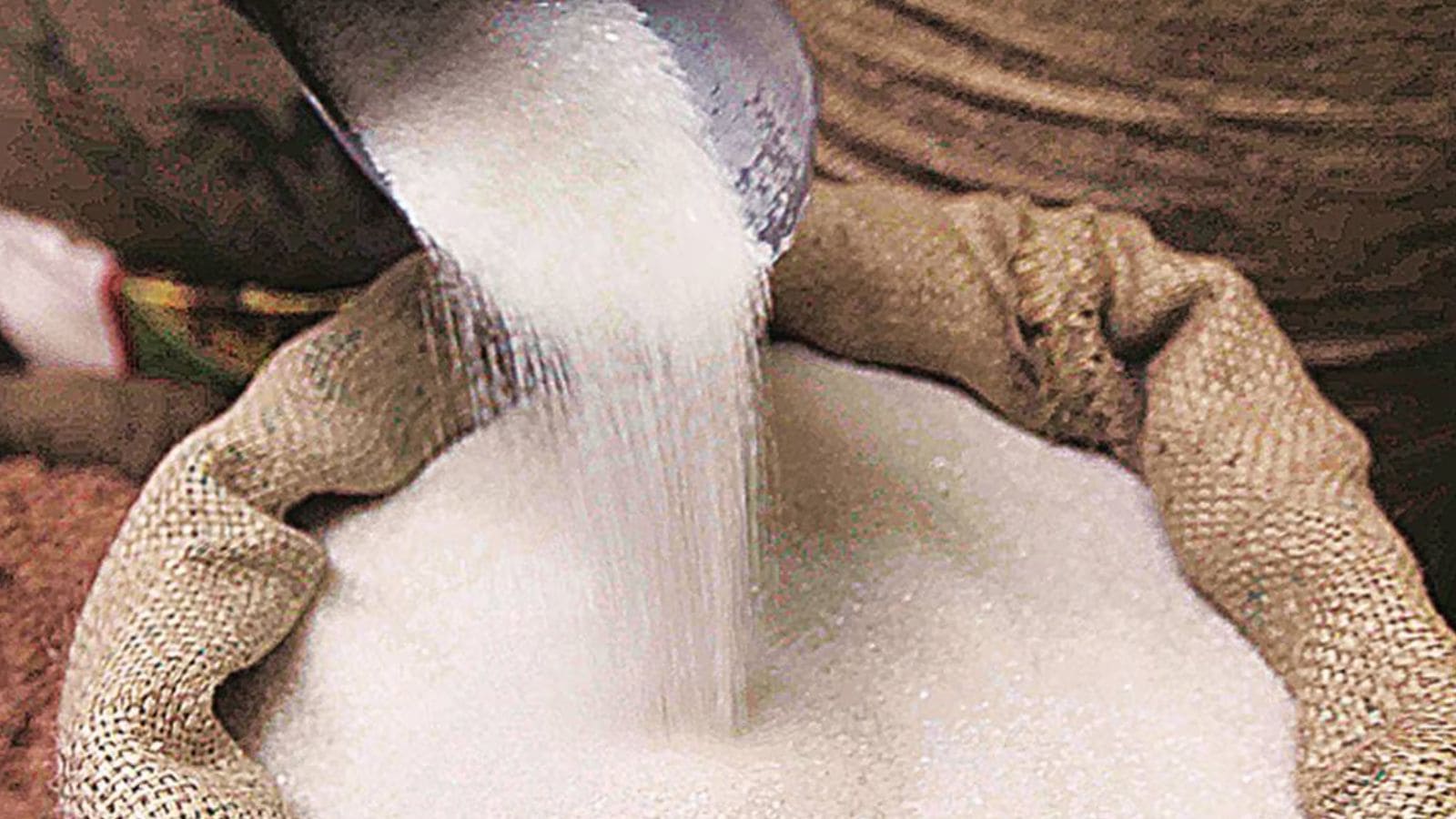
Even as sugar output has increased in Maharashtra this season, the state’s Sugar Industry is facing multiple pressures. SHUBHANGI KHAPRE explains the reasons for the unrest in Maharashtra’s sugar sector which is facing issues including early closures of mills, domestic pricing constraints and climate risks.
Despite higher production, sugar mills are concerned as a majority had to close operations by mid March. The cane crushing tenure has shortened to around 100 days from the normal 160 days.
The reduced crushing period has meant that mills could not utilise their existing capacity and infrastructure to the optimum.
Several reasons are cited for the shorter duration. The ongoing West Asia conflict has adversely affected sugar exports to Gulf countries. In addition, unseasonal rain in November December destroyed a large parcel of standing sugarcane. With limited cane availability, the crushing season could not be extended till the end of March or early April.
How does this season compare with previous years?
According to data furnished by the state sugar cooperative department, in 2025 26, 1042.88 lakh metric tonnes of cane was crushed, resulting in sugar production of 988.38 lakh quintals.
In 2024 25, total sugar production stood at 791.15 lakh quintals from 853.96 lakh metric tonnes of cane crushed. This was a sharp decline from the 2023 24 season, when 1101.7 lakh quintals of sugar was produced from 1076.18 lakh metric tonnes of cane.
What are the concerns for 2026 27?
What has further compounded concerns for the sugar industry is the possibility of a drought in the coming kharif season, which could impact sugarcane cultivation.
Story continues below this ad
While presenting the state budget for 2026 27, Chief Minister Devendra Fadnavis said weather forecasts have indicated the possibility of a drought like situation due to the potential effect of El Nino on monsoon rains.
From that perspective, he said, measures will be taken for water reservation, proper planning through the Jalyukta Shivar Abhiyan, and water conservation schemes along with fodder development.
Sources in the agriculture and cooperation sector said that if El Nino leads to drought in Maharashtra, the government may have to take a decision to dissuade sugarcane cultivation as it is a water intensive crop. Agriculture universities are being roped in to help farmers adopt crop diversification, with emphasis on millets and pulses.
The state agriculture department has been directed to begin pre monsoon planning in advance, especially in 14 distressed districts in Vidarbha and Marathwada.
What are the demands made by the sugar sector?
Story continues below this ad
At a recent meeting with the Chief Minister, the National Sugar Federation submitted a draft proposal listing issues faced by cane cultivators and sugar mill operators.
Among the demands is a subsidy of Rs 500 per tonne of sugar. The industry has cited examples of higher subsidies in states like Punjab and Karnataka.
Another key demand is restructuring loans worth Rs 8000 crore, with a two year moratorium and a repayment period of 10 to 12 years.
The industry has also sought an increase in the quota for sugar based ethanol, which is currently capped at 30 per cent.
What is the issue with ethanol production?
Story continues below this ad
Industry representatives say that while investments have been made in sugar based ethanol infrastructure, utilisation remains low due to quota restrictions.
Against an installed capacity of 424 crore litres, sugar mills have been allocated only 116 crore litres, resulting in utilisation of around 27 per cent.
They also point out that ethanol prices from sugar have remained stagnant at Rs 67 to 71 per litre depending on the category, while maize based ethanol prices have increased to Rs 71.86 per litre.
Why is MSP a key concern?
The sugar industry has also raised concerns over the mismatch between rising costs and stagnant prices.
Story continues below this ad
While the Fair Remunerative Price FRP for sugarcane has increased by 26 per cent from Rs 2750 per tonne in 2018 19 to Rs 3550 per tonne in 2025 26, the Minimum Selling Price MSP of sugar has remained unchanged at Rs 31 per kg.
The industry has demanded that MSP be increased to Rs 41 per kg to help mills cope with financial stress.
How serious is the situation?
According to sector estimates, early closure of mills has led to losses of around Rs 3300 crore. At the same time, FRP payments worth Rs 4315 crore to farmers are still pending.
The sugar sector supports around 50 lakh farmers in Maharashtra, besides 1.5 lakh cane labourers and over two lakh workers employed in sugar mills. With a turnover of Rs 55000 to Rs 60000 crore, the sector contributes around Rs 8000 crore in revenue to the government.
