

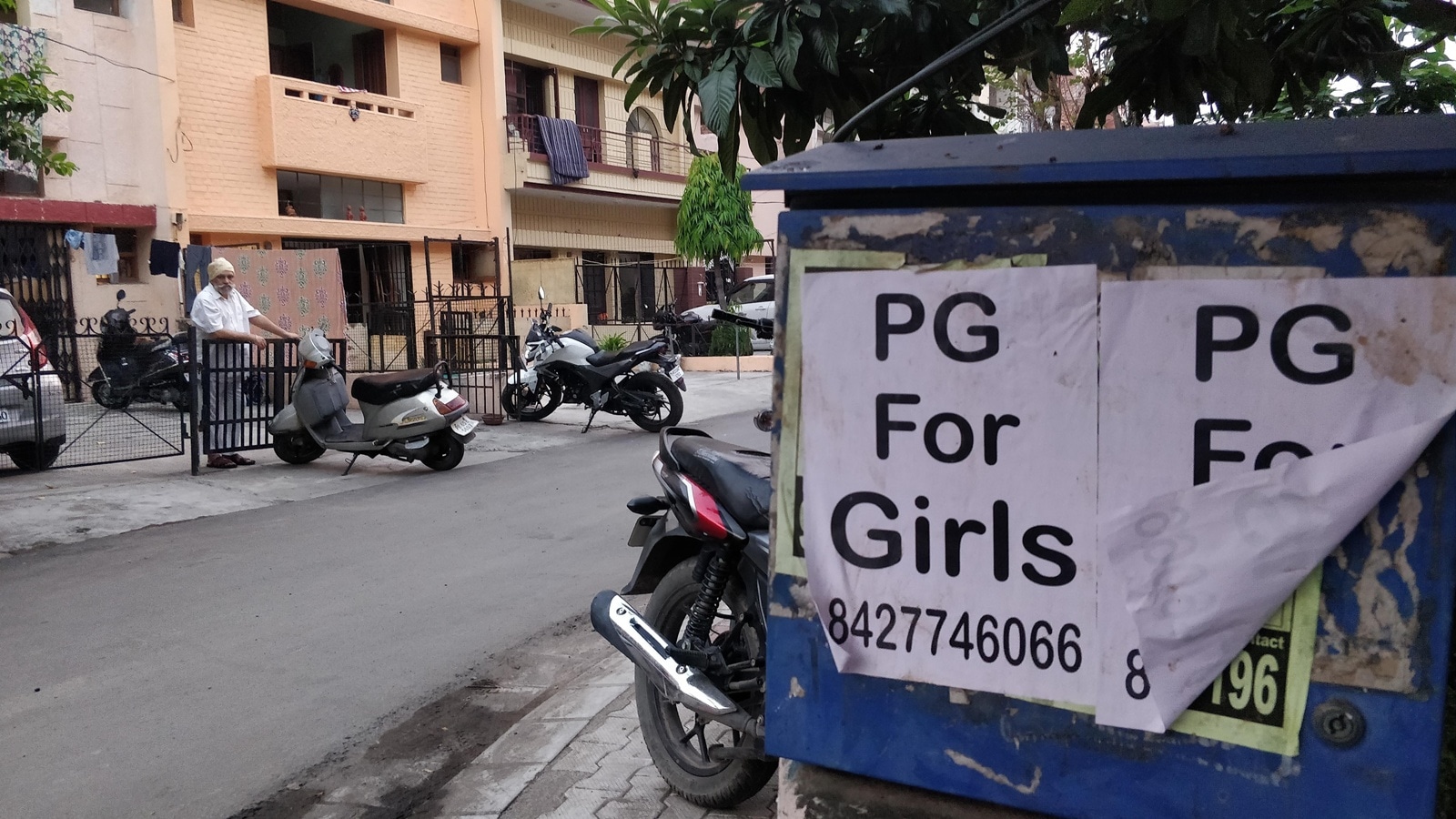
In Pune, often celebrated as a vibrant student hub, life beyond classrooms tells a quieter, more complex story. For many students enrolled in the various higher education institutes in the city, there is an unspoken curriculum: learning how to survive within strict financial limits.
From long commutes and shared accommodations to skipped meals and careful budgeting, students across Pune are constantly negotiating aspirations and affordability.
Samiksha Goilkar, a postgraduate student in Mathematics at Savitribai Phule Pune University (SPPU), used to stay at the university girls’ hostel, close to campus and deeply connected to student life. But rising costs forced her to move to a government girls’ hostel for economically weaker sections in Moshi, 19 km away.
“Leaving the university hostel was difficult,” she admits. “It felt like I was part of campus life there, but it was getting expensive.” With free food and a stipend of Rs 1,600, she has found financial relief, but the distance comes at a cost. “I travel every day by bus. It’s tiring, but I keep telling myself, this is saving me money.”
Social life is carefully planned. “If my friends make a plan, I think, can I afford it? Sometimes, I say no. Sometimes I ask my family, but I don’t go beyond Rs 1,500. I don’t want to depend too much,” she says.
Shekhar Gangurde, an English student at SPPU who hails from Nashik, can relate. He lives in the boys’ hostel on campus, paying just Rs 3,500 annually. Yet his monthly allowance of Rs 2,500 leaves little room for flexibility. “Rs 2,500 is honestly nothing now,” he says. “But I have trained myself to manage within it.”
Story continues below this ad
Gangurde has a disciplined routine: Rs 2,000 goes into food, and Rs 500 into travel and other needs. “I write down every expense. I try to spend less than the previous month, it becomes like a personal target,” he says, adding that the free khichdi on campus often helps. “On some days, that’s what supports me.”
Managing friendships within this budget is not easy, he says. “I don’t like cancelling plans at the last moment, it feels bad. So either I say no in the beginning, or I start saving in advance. You learn to plan even your social life,” he explains.
‘I miss home food’
Saheli Kundu, who is pursuing her Master’s in English at Fergusson College, lives in Gharkul PG in Sakar Sankul, Shivaji Nagar, in a three-sharing room that costs Rs 5,000. Her monthly expenses range between Rs 5,000 and Rs 6,000. From West Bengal, Kundu says food is a constant adjustment. “Mess food is very difficult for me,” she says. “I miss home food a lot.”
She sometimes orders from a Bengali catering service. “But that’s not possible every day, I have to stay within budget,” she says. For travel, she prefers buses, occasionally autos. Her love for cinema often pushes her to make sacrifices. “I really love movies, but theatres are expensive. So sometimes I skip dinner to watch a film. That’s how I balance things,” she reveals.
Story continues below this ad
Lakshmi Rathod, a Master’s student in Nutrition at SNDT College, also changed her accommodation to meet her expenses. She now pays Rs 10,000 as rent and manages with the Rs 5,000 sent from home. “I knew I had to change my lifestyle completely,” she says.
Cooking has become essential. “I cook all my meals and buy groceries wholesale; the last time I bought them was six months ago,” she says, adding that she uses a Scooty to manage travel costs.
Budget constraints have reshaped her social life too. “I have cancelled many plans because I simply could not afford them. Earlier, I used to feel bad. Now I have accepted it,” she says, pointing out how even small desires require compromises. “I saw a white shirt in a mall and really liked it, but I could not buy it. So I got a cheaper version from somewhere else,” she says.
A major chunk of Dipanwnita Mitra’s expenses go towards her paying guest accommodation, Rs 12,500. The MA Psychology student at DES Pune University says her total monthly expenditure is capped at Rs 10,000, with Rs 5,000 going toward food and travel. “I walk instead of taking autos,” she says. “Even if I am tired, I think, this is saving me money.”
Story continues below this ad
Mitra, too, admits to skipping meals to manage expenses. Social compromises are also inevitable. “I feel bad cancelling plans, but I remind myself I am still dependent on my family. If I had my own income and still faced this, it would feel worse,” she says, adding that she is cautious spender. “I always compare prices before buying anything, even small differences matter.”
Across these lives, budgeting is not just a habit; it is a survival skill. In a city known for opportunity, these students are learning lessons far beyond their degrees. As Shekhar says, “We are not just studying, we are learning how to live with less.”
Rimil Patra is an intern with The Indian Express.
