

As this remains a developing story with implications for national security, it is prudent to acknowledge that some assessments may shift even while these lines are in print. What must not shift is the clarity with which we examine India’s long and complex contest with terrorism.
For 14 years, India’s major cities have enjoyed a rare calm. Since the September 2011 bombing outside the Delhi High Court, Delhi has remained largely untouched by major acts of terrorism — a tribute to the professionalism and synergy of our intelligence agencies and police forces. Pune saw the German Bakery blast in 2010. Some later incidents — at Pathankot, Pulwama and Pahalgam — did remind us that India’s proxy war has not vanished, only been contained to J&K where it has simmered since 1989. The Mumbai attacks of November 26, 2008, meanwhile, became the watershed that transformed India’s urban counter-terror readiness.

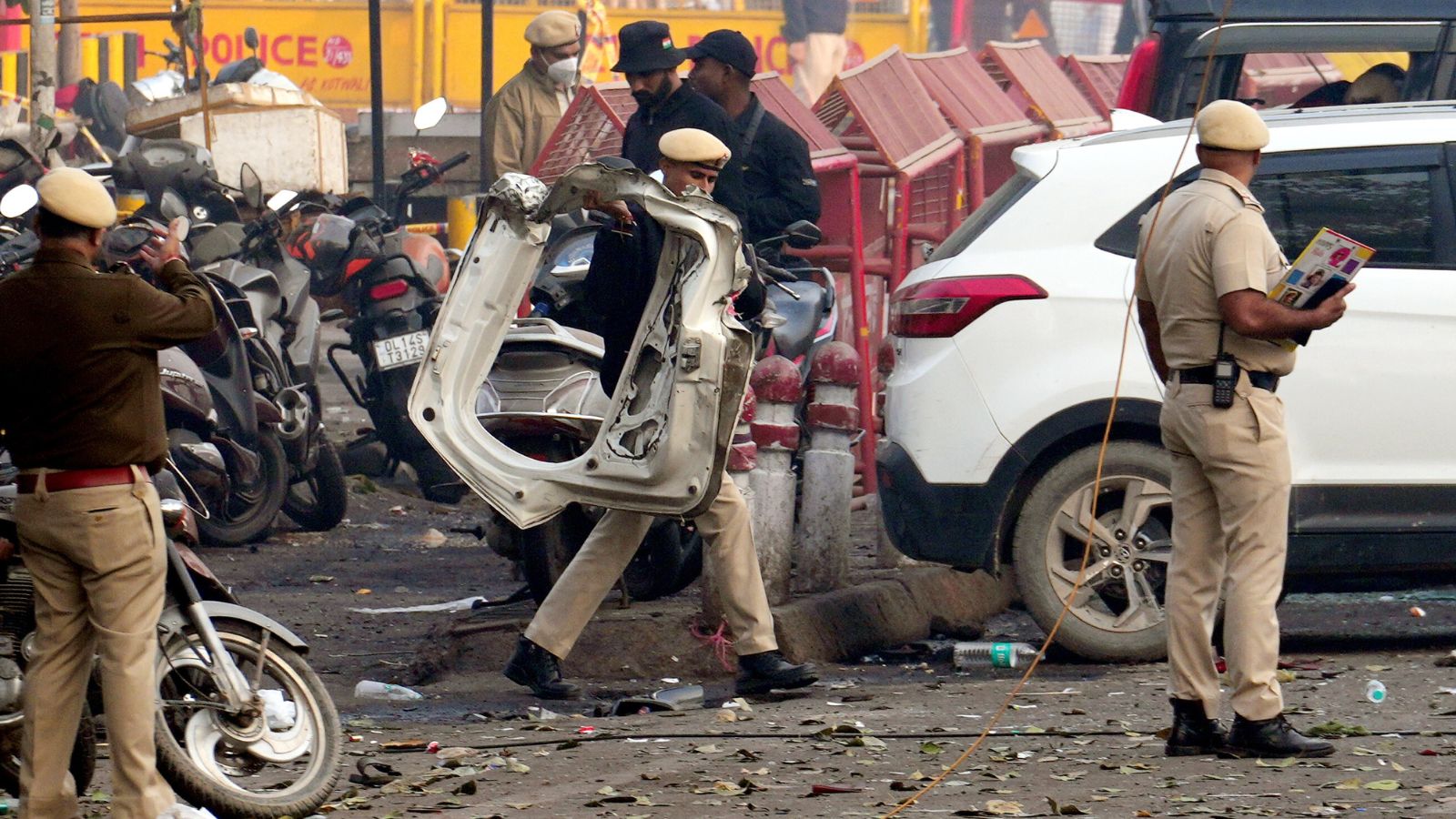
The explosion outside Red Fort Metro Station at 6:52 pm on November 10 has caused unease across the nation. Occurring during evening rush hour, it killed 13 and injured many more. Though forensic evidence has yet to confirm the use of a bomb — no crater or shrapnel has been found — the timing and location are unsettling. Only days earlier, a joint operation by Jammu and Kashmir Police, Haryana Police and Delhi Police exposed a terror module of Kashmiri-origin doctors, seizing nearly 2,900 kg of ammonium nitrate and detonators linked from Anantnag to Faridabad. Whether the Red Fort blast connects to that network is unclear, but the coincidence appears improbable.
Whether or not the two incidents are linked, the underlying reality remains that terrorism never truly disappears — it mutates, lies low, waits, and re-emerges through its ecosystems. Over the years, India has successfully reduced active terrorist footprint in Jammu and Kashmir from an estimated 4,500 to just over 100 today. But neutralising the support networks — the financiers, ideologues, logisticians, radicalisers and cyber recruiters — is an entirely different battle. These networks thrive on hate, misinformation and narcotics-driven funding chains that flow through porous channels. The involvement of educated individuals like doctors in Faridabad reflects how radical ideologies have penetrated unlikely spaces.
Terrorism’s physical footprint may have shrunk, but its intellectual and financial ecosystem is resilient. From Pahalgam to Pulwama, from Anantnag to Faridabad, the linkages that sustain terror are alive. Pakistan’s Inter-Services Intelligence continues to serve as the conduit that fuels these embers, keeping networks on life support through financial incentives, narcotics trade and cyber propaganda. The global terror landscape may have receded — the Middle East is quieter today, ISIS is diminished, and even Al-Qaeda has faded from the spotlight — but in Pakistan’s badlands the infrastructure of jihad endures, restless for relevance.
For India, this poses both a national-security and developmental challenge. A progressive state that aspires to “Viksit Bharat” — a developed, confident nation by 2047 — cannot afford the re-entry of terror into its cities. Each incident, even a minor one, chips away at the collective sense of safety that fuels economic growth and investor confidence. Urban terrorism is designed precisely for that psychological effect: To create doubt where there was optimism. Our adversaries understand that — and will aim to puncture India’s confidence, not just its security.
In response, India’s counter-terror architecture must constantly evolve. The intelligence agencies, which have so far done a remarkable job in maintaining vigilance, need enhanced technological tools — predictive analytics, integrated databases, and AI-assisted threat mapping — to stay ahead of networked adversaries. Equally vital is the human factor: Citizen participation. Intelligence gathering thrives on public cooperation. Every vigilant commuter, shopkeeper or neighbour is an essential node in the national-security grid. A terror network can be overwhelmed only when the source network — the information ecosystem of alert, aware citizens — stays motivated and expansive.
India must also deepen its partnerships across the Islamic world. For too long, Pakistan has hidden behind religious sentiment while nurturing extremist proxies. A concerted diplomatic effort, calling out its duplicity before the broader Muslim community, will erode the moral legitimacy it claims. The government’s overtures to the Afghan Taliban too are in the right direction. Many Islamic nations have themselves suffered from the cancer of terror and understand the futility of using ideology as a weapon. A coalition of such nations with India can isolate Pakistan’s export model of jihad more effectively than isolated bilateral condemnation ever can.
At the political level, the Prime Minister and the Home Minister have displayed great maturity and restraint. Their refusal to sensationalise or rush to conclusions is reassuring. It sends a message that India will neither be provoked into reactive aggression nor lulled into complacency. Terrorists thrive on knee-jerk responses — whether in the form of communal polarisation or reckless retaliation. A measured firmness that combines intelligence, law enforcement, and calibrated strategic options is far more lethal to their cause.
The larger lesson from the Red Fort episode — whatever its eventual classification — is that the war against terror is unending and multi-dimensional. It cannot be fought by the security establishment alone. It demands the integration of technology, diplomacy, public awareness, and constant refinement of city-level preparedness, a “whole-of-nation approach”. India’s metropolises, symbolic of its democratic vitality, must never again become playgrounds for transnational terrorism.
The calm that has prevailed since 2011 must not lull us into comfort. Peace is a product of vigilance — not chance. The enemy, though diminished, is never gone. Delhi’s night of fear should therefore remind us that in the complex chessboard of proxy wars, complacency is the first checkmate.
The writer is a former corps commander of the Srinagar-based 15 Corps and member of NDMA. Views are personal
