

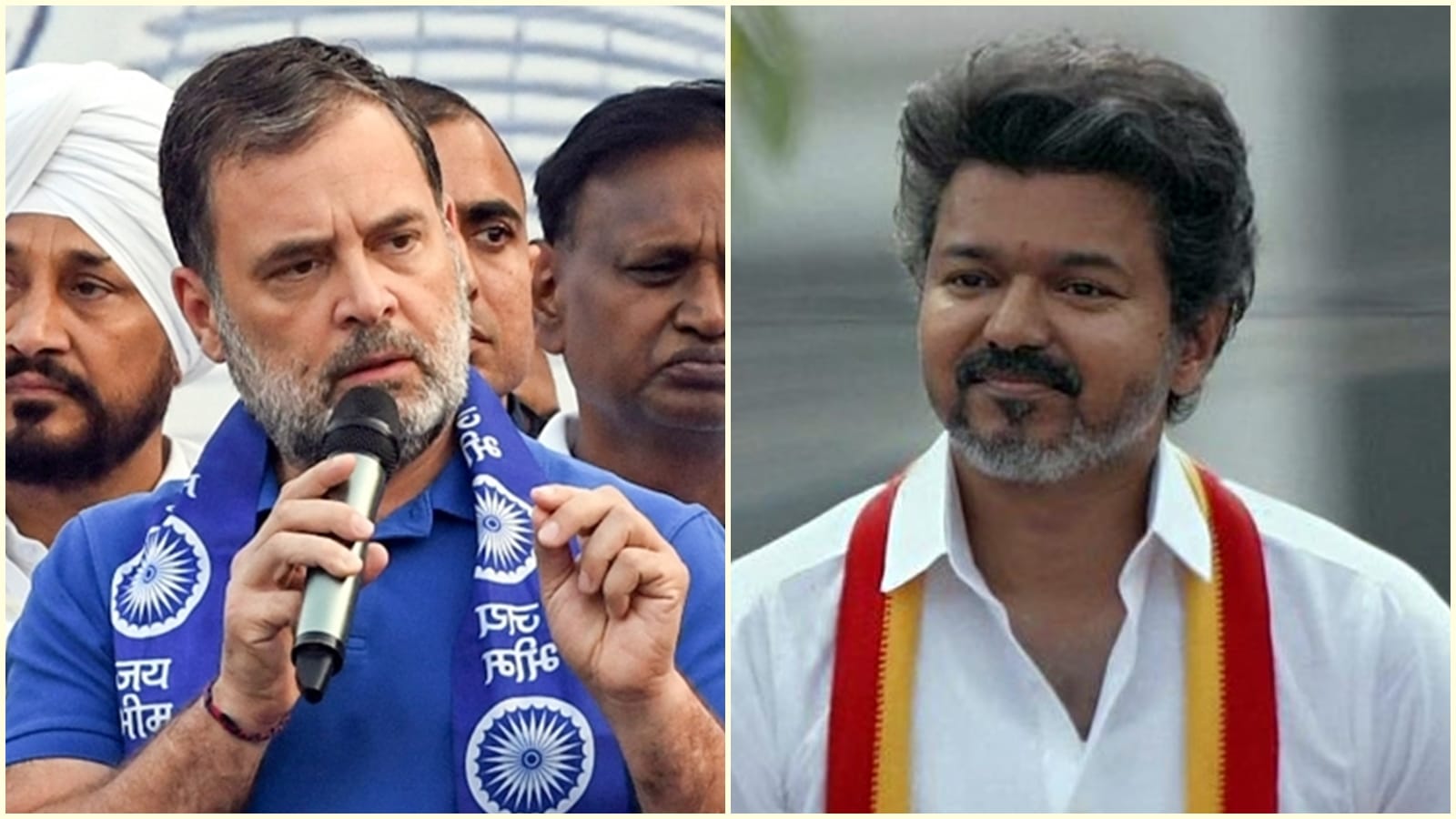
With barely a week left for campaigning to end on April 21, Congress leaders in Tamil Nadu say their requests to the party high command for campaign dates have, for now, gone quiet. The absence has been conspicuous and, they admit privately, increasingly difficult to explain, especially as other parties intensify their ground operations across the state.
“There were queries, there were follow-ups until last week. Now even the questions have stopped,” says a senior Congress functionary, describing the “lukewarm response” from Delhi at a crucial stage of the election.

The contrast is sharp. The BJP, with four MLAs and contesting 27 seats as part of the AIADMK-led alliance, has deployed significant logistical muscle: hiring two helicopters and a special aircraft for its campaign. Union Minister Piyush Goyal is using the aircraft, while leaders such as Khushbu Sundar, former Tamil Nadu BJP chief K Annamalai and state chief Nainar Nagendran have been using choppers to move rapidly between constituencies.
National leaders have also made appearances during nomination filings, reinforcing the sense of a campaign backed by resources and urgency. The absence of Prime Minister Narendra Modi and Union Home Minister Amit Shah till now is likely to be compensated, with two major rallies scheduled in the coming days.
The Congress, in comparison, has seen only limited central engagement. The only high-profile leader to campaign so far has been Karnataka Deputy Chief Minister D K Shivakumar, who has visited the state to support Tamil Nadu Congress chief K Selvaperunthagai. It is a trip that party insiders say was driven more by personal rapport than organisational planning. According to a senior Congress leader, Leader of Opposition Rahul Gandhi is likely to participate in a DMK roadshow in Chennai on April 20, a day before campaigning ends.
For many in the Congress, the current situation is difficult to reconcile. Campaigning in Kerala and Puducherry concluded on April 7 and leaders from Tamil Nadu expected central leaders to arrive from April 8 onwards. Nearly a week later, there is still no visible plan. A senior Congress functionary says leaders such as party president Mallikarjun Kharge, Wayanad MP Priyanka Gandhi, Telangana CM Revanth Reddy, and Karnataka CM Siddaramaiah should have been in the state by now.
The absence is particularly striking given the stakes. The Congress has been allotted 28 seats in alliance with the DMK — one more than the BJP has secured in its alliance — and currently has 18 MLAs, compared to the BJP’s four. Yet, the scale of its campaign does not reflect that weight, party leaders said.
“This is not about helping the DMK,” says a Congress leader. “Rahul Gandhi need not come to make a DMK candidate win. They have their own campaign machinery. This is about whether the Congress wants to fight seriously for its own space. It is upsetting that Rahul hasn’t visited partymen in the state after the 2024 poll victory.”
The unease has also prompted questions: if the party was dissatisfied with seat-sharing or strategy, why remain in the alliance? And if it intends to stay, why not campaign with full force?
Rahul Gandhi’s absence, in particular, has become a point of discussion in the state unit. His limited visits to Tamil Nadu since 2021, including a brief appearance during the 2024 campaign, are now being revisited by party workers who say sustained engagement could have strengthened organisational morale.
The Vijay parallel
A senior Congress leader draws parallels with actor-politician Vijay, whose party TVK is also facing questions about campaign visibility. Despite launching his party as an alternative to both Dravidian majors and the BJP, Vijay’s campaign has been sparse, with large parts of the state remaining untouched even in the final stretch.
District-level leaders point to gaps that are difficult to ignore. In Tenkasi, which has five Assembly seats, Vijay has not visited in two years since he launched the TVK. There are several districts like that. In Virudhunagar (seven seats), Ramanathapuram (four), Pudukkottai (six), Theni (four), and the Nilgiris (three), there has been little or no direct engagement. In Dindigul, he travelled recently, but for a film shoot, not to meet party workers, says a TVK district leader.
Even now, his campaign schedule appears limited. Permissions have been obtained for rallies in Dharmapuri and Tiruppur on Tuesday, with additional meetings planned in Tiruvallur in the coming days. But according to a senior TVK leader, Vijay is expected to campaign for “at least four days” in the remaining week, a much slower pace compared to his rivals.
Others set the pace
At the same time, AIADMK leader Edappadi K Palaniswami is maintaining a high tempo, covering five to six constituencies daily, usually across two districts, with back-to-back public meetings, temple visits, and cadre interactions designed to maximise ground presence.
Chief Minister M K Stalin is also running a high-frequency campaign, typically moving across two districts a day, stitching together large public meetings with smaller roadside interactions, morning walks that include door-to-door visits, often covering eight to 10 constituencies in a tightly scheduled circuit. His son and Deputy CM Udhayanidhi Stalin is operating in parallel, focusing on dense clusters of constituencies, sometimes addressing as many as 10 seats in a day, particularly targeting youth-heavy and urban pockets, say party insiders
In contrast, the relative absence of both Rahul Gandhi and Vijay has created what one former AIADMK minister described as “a vacuum of expectation”, particularly among younger voters who might otherwise have been drawn to their campaigns.
For the BJP, the campaign has unfolded differently. While its second-level national leaders have been active in the state and seniormost faces were expected to make only limited appearances — Modi and Shah are likely to address rallies in Coimbatore and Kanyakumari — the party has aligned itself with the AIADMK’s state-led strategy.
Former state president K Annamalai, who was opposed to an alliance with the AIADMK, remains a key draw on the ground, with even AIADMK candidates lobbying for his presence at rallies. “Where Vijay is not going, and where the Congress is not seen, the AIADMK is filling that space,” says a TVK district leader in Coimbatore.
With just days left, the question for both the Congress and the TVK is no longer about strategy but about presence and whether, in an election defined by pace and perception, absence itself becomes a message.
