

5 min readApr 21, 2026 03:51 PM IST
First published on: Apr 21, 2026 at 06:20 AM IST
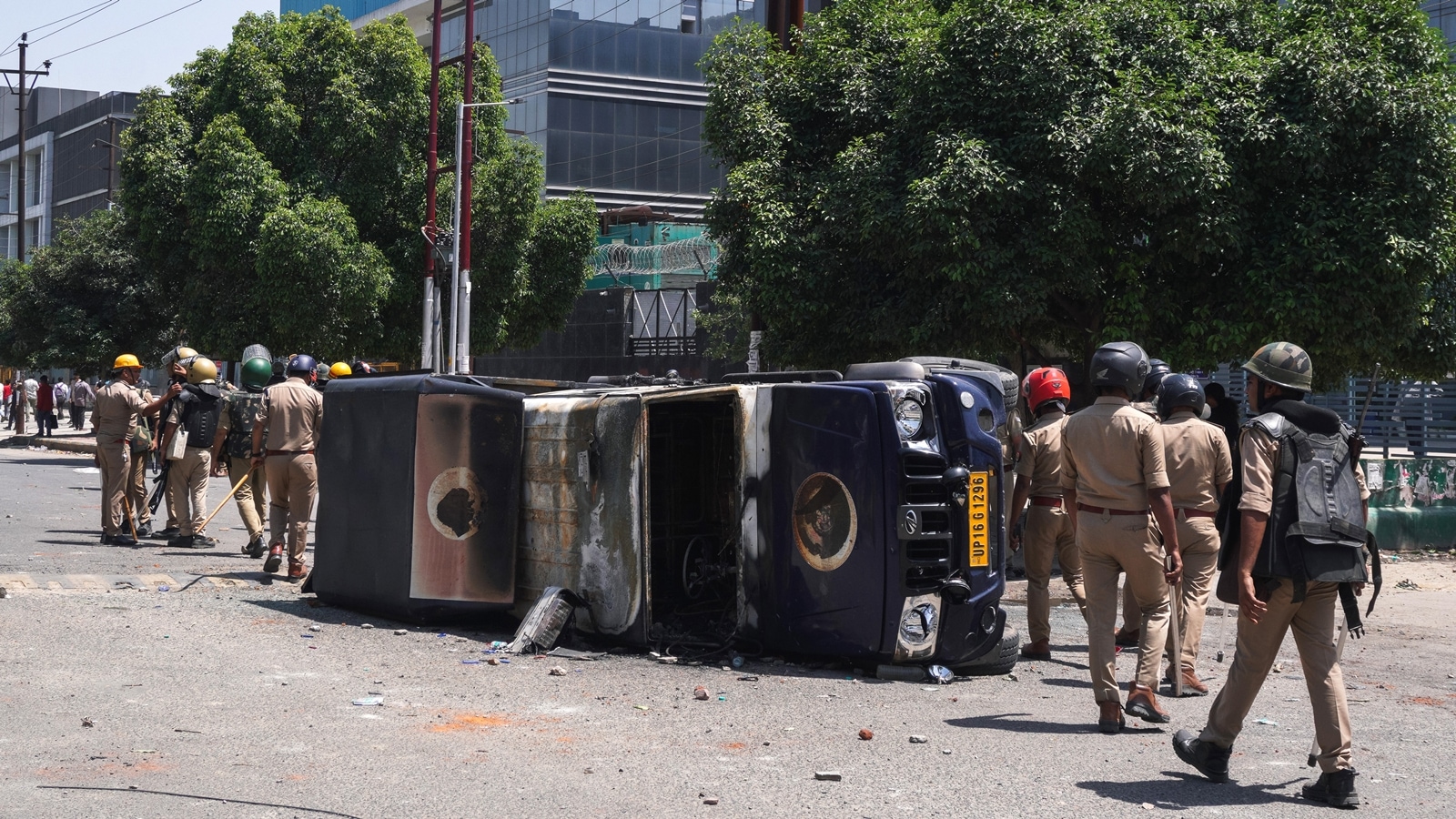
One of the major demands of workers in the recent protests across states has been to raise the minimum wage. Most workers complained of their inability to meet the basic cost of living from the wages they earn. This was despite many of them working overtime, when inflation was 1 per cent or less throughout the second half of last year. Since January, inflation has been climbing rapidly, with food inflation moving faster. While the trigger for the workers’ anger may have been the rise in cooking-gas prices, the situation has been worsening for a period of time.
At the heart of the matter is the inability of wages and earnings in a majority of the sectors and across categories of workers to meet the latter’s basic needs. But none of this should have been surprising. Data from different sources have been showing evidence of declining or at best stagnant real wages, with the recent spell having been the longest in India’s independent history. Data from the Labour Bureau on rural wages suggest a near-stagnation in agricultural wages, while non-agricultural wages are actually declining. But the biggest fall has been in regular wages, which have seen a steady decline since 2011-12. Data on regular wages are available from the Periodic Labour Force Surveys (PLFS) and the Employment-Unemployment Surveys (EUS) of the National Statistical Office (NSO). Regular wages in urban areas declined by 1.2 per cent per annum between 2011-12 and 2022-23 with a corresponding decline in rural areas of 0.6 per cent per annum during the same period. Compare that with an increase of 4 per cent in urban areas and 3 per cent in rural areas between 2004-05 and 2011-12. The NSO shifted to reporting the PLFS with calendar year references from 2022 and these suggest a marginal recovery in real regular earnings with regular wages increasing at 1.2 per cent per annum between 2022 and 2025, the last year for which the information is available. But even with this recovery, real regular wages are lower than the level in 2011-12. The same Periodic Labour Force Surveys also suggest a decline in real terms for casual workers, with the earnings of rural male casual workers declining by 3 per cent per annum between 2022 and 2025 and those of their urban counterparts declining by 0.2 per cent per annum.

The situation among the self-employed is no better and their earnings have also shown a real decline since the PLFS started reporting them from 2017-18. Even estimates based on national accounts for farmers’ income suggest a decline in real earnings at 0.6 per cent per annum between 2016-17 and 2023-24. The situation of unorganised-sector workers is also worrying. More than 310 million workers are registered on the E-shram portal. Among these, 94 per cent report earning less than Rs 10,000 per month. Even the latest Annual Survey of Unorganised Sector Enterprises (ASUSE) for 2025 reports a monthly average remuneration of Rs 10,376 in rural areas and Rs 13,012 for urban workers in these enterprises. All of these are less than the inflation-adjusted minimum wages applicable for unskilled workers. Perhaps the biggest evidence of distress in the economy is the demand for work under VB-G RAM G, which has remained high despite the fact that the wages it offers are almost two-thirds of the market wages in many states. Almost one-third of households in rural areas have worked under this scheme despite the low wages.
The cost-of-living crisis is partly a crisis of inflation making it difficult for an average worker to spend on essentials. It is largely a crisis of stagnant earnings across a spectrum of workers. This has affected regular workers in the organised sector as well as millions of informal workers in the unorganised sector. The same goes for those self-employed in tiny enterprises in the unorganised sector. None of this is surprising. This situation has persisted for almost a decade. Even the hope of a revival after the pandemic is belied by the data available after 2022. This was also acknowledged by the Economic Survey, which highlighted the declining incomes of regular and self-employed workers.
Unfortunately, the situation is likely to become worse given the trend of rising inflation in recent months. While some of this is a result of the geopolitical uncertainty and the consequent rise in energy prices, it is likely to spill over to other areas affected by the global uncertainty. The India Meteorological Department predicts a deficient monsoon this year, and if this is accompanied by declining agricultural production, there is likely to be even more pressure on food prices.
The distress in the economy has wider implications. The low earnings among the majority of workers are also responsible for the low demand in the economy, which has impacted private investment. While the government may be in a position to regulate and control prices in the short run, a long-term solution for the crisis requires interventions to raise workers’ incomes, which have stagnated for a long time. It may also require the government to intervene and regulate working conditions. It is necessary to raise incomes not just to protect millions of workers from falling into poverty but also for the economy’s revival through demand generation. It is for the government to decide the way to do it. But it is clear that the cost-of-living crisis can no longer be ignored.
The writer is associate professor, Centre for Economic Studies and Planning, Jawaharlal Nehru University, New Delhi
