

4 min readNew DelhiUpdated: Apr 15, 2026 05:53 PM IST
In the first 24 hours of US’ naval restriction in the Strait of Hormuz, no ships made it past the blockade and six merchant vessels were sent back to an Iranian port, US Central Command (Centcom) said on Wednesday.
Centcom said that US forces are supporting freedom of navigation for vessels transiting the Strait to and from non-Iranian ports.

After the announcement, news agency Reuters reported that a US Navy destroyer intercepted two oil tankers attempting to leave Iran. The vessels had reportedly departed from Chabahar port in the Gulf of Oman before being instructed by radio to sail back.
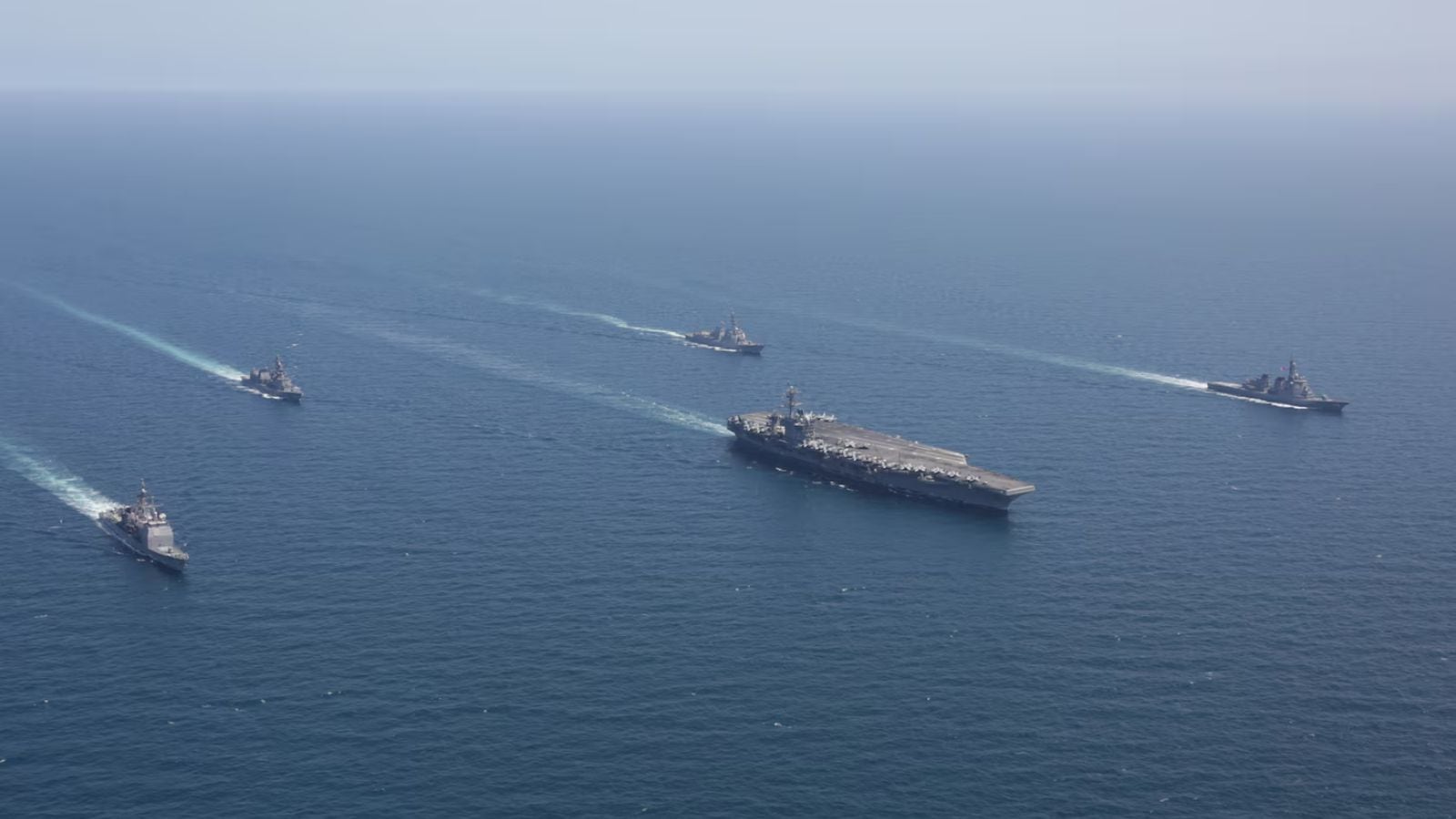
“More than 10,000 U.S. Sailors, Marines, and Airmen along with over a dozen warships and dozens of aircraft are executing the mission to blockade ships entering and departing Iranian ports. During the first 24 hours, no ships made it past the U.S. blockade and 6 merchant vessels complied with direction from U.S. forces to turn around to re-enter an Iranian port on the Gulf of Oman,” Centcom said.
“The blockade is being enforced impartially against vessels of all nations entering or departing Iranian ports and coastal areas, including all Iranian ports on the Arabian Gulf and Gulf of Oman. U.S. forces are supporting freedom of navigation for vessels transiting the Strait of Hormuz to and from non-Iranian ports,” it added.
More than 10,000 U.S. Sailors, Marines, and Airmen along with over a dozen warships and dozens of aircraft are executing the mission to blockade ships entering and departing Iranian ports. During the first 24 hours, no ships made it past the U.S. blockade and 6 merchant vessels… pic.twitter.com/dpWAAknzQp
— U.S. Central Command (@CENTCOM) April 14, 2026
The blockade, which came into effect on Monday 7.30 pm (IST), applies to all ships transiting the crucial maritime route to access Iranian ports and shores.
“A blockade of Iranian ports has been fully implemented as U.S. forces maintain maritime superiority in the Middle East. An estimated 90% of Iran’s economy is fueled by international trade by sea. In less than 36 hours since the blockade was implemented, U.S. forces have completely halted economic trade going into and out of Iran by sea,” Centcom commander Brad Cooper said.
Tehran had reportedly been charging a toll of $2 million for each vessel transiting the Strait as maritime traffic was being diverting to it’s Larak Island owing to Iranian mines being placed in the original transit routes, a map issued by Iran’s National Security Commission and shared by Lloyd’s List showed.
Story continues below this ad
While announcing the blockade, President Donald Trump said the US Navy will engage in mine clearing operations in the waterway and will “interdict every vessel in International Waters that has paid a toll to Iran”. He added that the move is to eventually restore movement for every country across the Strait. “No one who pays an illegal toll will have safe passage on the high seas,” he said.
Did Iran-linked ships cross Hormuz?
On Tuesday, The Telegraph had reported that a US-sanctioned Chinese vessel and two other ships crossed the Strait in the first 24 hours.
Although the Chinese medium-range tanker had been sanctioned owing to links with Iran, for this particular transit, it loaded from United Arab Emirates’ Hamriyah, ship tracking data showed. The Murlikishan, a Madagacar-flagged tanker, is scheduled to load fuel oil at Iraq on April 16. A Panama-flagged medium-range tanker is heading to Hamriyah port, UAE.
Trump announced the blockade after a deadlock in talks with Iran to end the war in West Asia. Trump wrote on Truth Social that while most points had been agreed upon, the nuclear issue had not.
Story continues below this ad
Speaking to reporters after placing the blockade, US President Donald Trump said, “they’d like to make a deal, very badly,” referring to Iran. “Iran will not have a nuclear weapon,” he reiterated the key sticking point between the two sides.
