

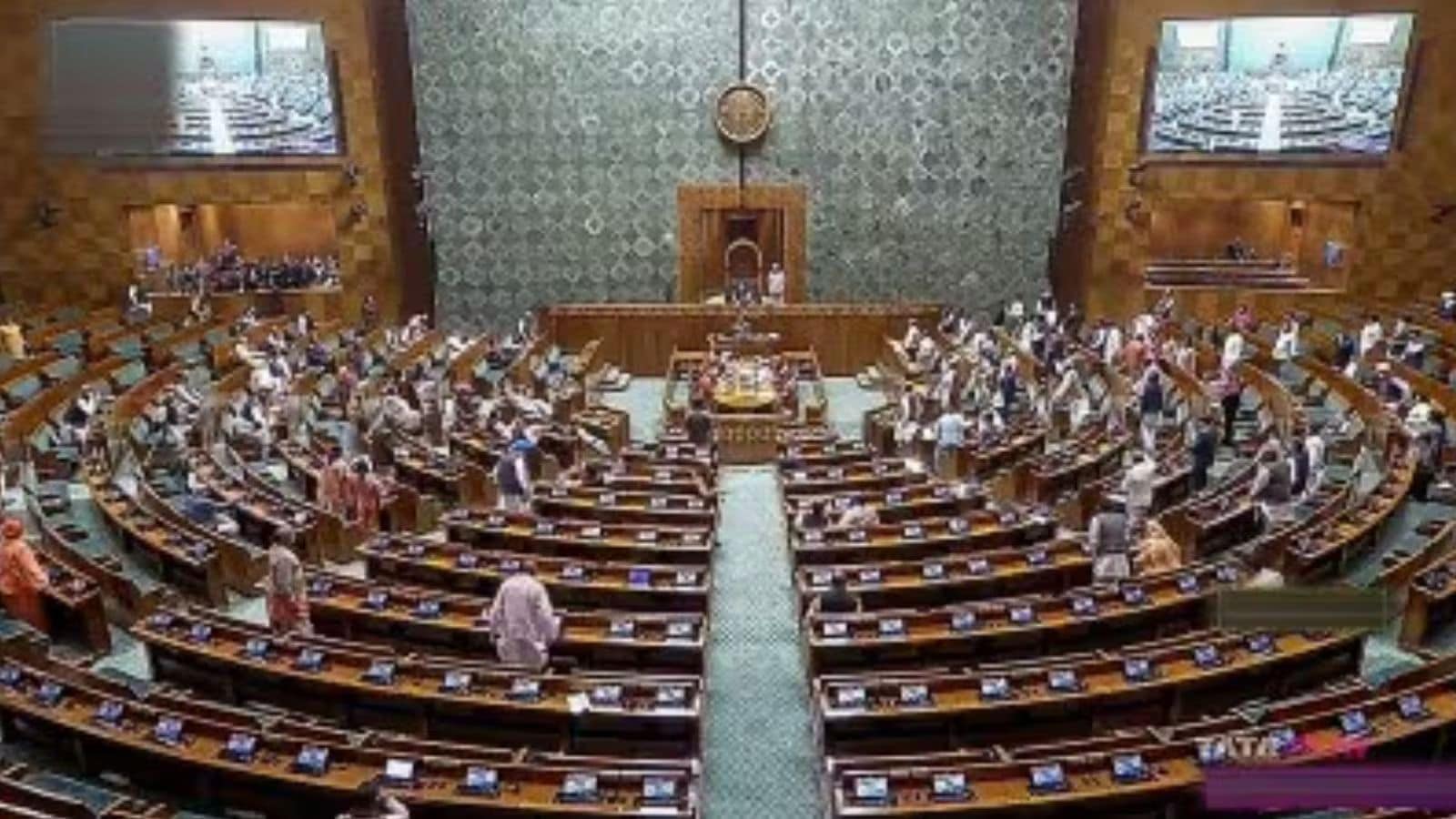
Imagine, just for a moment, that India’s political conversation isn’t as adversarial, polarised or mired by mistrust as it is now. Even in such a distant utopia, the question of delimitation would have no easy answers. At the heart of the debate, shorn of politics, are two principles foundational to Indian democracy at loggerheads. The first is the right of every Indian above 18 years of age to be counted and have an equal share in their government. Competing with it are the rights (and the fears) of states — each a discrete constitutional entity — around their political and legislative voice in Parliament.
The questions that the dialectic between federalism and franchise raises are fundamental to the future of the republic: Should states that have reached a higher level of economic development and social security — the cause of declining fertility rates — be punished for their success? Why should a vote in Begusarai count for less than one cast in Bellary, which is practically the case now in the Hindi heartland, where the elector-to-elected ratio is much higher?

For decades, governments delayed dealing with the issue, hoping perhaps that the differences between states would be resolved over time. But that’s not the only reason the issue remained largely dormant.
The politics-as-usual before 2014 had, in the way that functioning democracies do, found an equilibrium — in practice if not in principle — that all but addressed the concerns of states. Take the three decades before the Narendra Modi-led BJP came to power. The Centre was an “unstable stabilisation”: Coalitions may be less secure, but they are also more representative.
The DMK and AIADMK, for instance, were part of governments at the Centre and could make or break them. The Left may have been competing with Congress in Kerala, but would both support and question the government in Delhi. That diversity of voices ensured that Delhi did not and could not tower above Chennai, Bengaluru, Hyderabad, Calcutta and Thiruvananthapuram. National politics was made up of regional aspirations, though the sum was often greater than its parts.
The national poles of Indian politics lacked the means to bulldoze their agenda through. Both Manmohan Singh’s UPA and Atal Bihari Vajpayee’s NDA were softened, forced to compromise and take so-called “regional” leaders along. In the latter’s case, this is even more stark. A figure like Vajpayee — L K Advani, architect of the Rath Yatra and mentor to PM Modi, was the “firebrand”, “loh purush” leader — became PM precisely because he was able to take people along while keeping what were once contentious “core” ideological issues for the Sangh Parivar like the Babri Masjid and Article 370 on the back burner.
To understand what’s changed, we need to return to the political reality of India today.
Do the Constitution (131st Amendment) Bill, 2026, the Delimitation Bill, 2026 and the Union Territories Laws (Amendment) Bill, 2026 seek to address the fundamental questions discussed above? To be fair, even if the answer was in the affirmative, the Opposition would do what it does best, and what it is meant to. After all, the BJP once opposed both the GST and the India-US civilian nuclear deal. There are other factors, however, that — whatever the government’s true intentions — make the move ill-advised.
First, it is difficult to swallow the argument that the government is committed to ensuring universal and equal franchise in the wake of the SIR exercise in Bihar and, more egregiously, in West Bengal. Of the over 9 million erstwhile voters excluded, it is all but certain that a non-trivial proportion have had their constitutional right denied.
Second, while the composition of the Delimitation Commission remains broadly unchanged, the erosion of what are meant to be apolitical offices reduces its credibility. The chairperson, a sitting or former judge of the Supreme Court, will be a central appointee. The ex officio member is the Chief Election Commissioner. The incumbent has often echoed the government and ruling party’s line in recent months. The associate members, too, are to be appointed by the Speaker, an office which suffers the same issues as the CEC.
Third, the lack of “coalition dharma”. In the 2024 general election, the BJP did not achieve its stated aim of “400 paar”. The current central government is not BJP 3.0 but rather, NDA 2.0. Yet, the TDP — which stands to lose as much political capital as any other south-based party from the increase in the Lok Sabha’s sanctioned strength from 550 to 850 — is toeing the BJP line. Back in the day — as the DMK, AIADMK, SP, TMC, etc, were — the party would have been a kingmaker, keeping the government on tenterhooks. Now, it’s content to be just another courtier.
India is often called a quasi-federal polity, where the Centre is far more powerful than in, say, the US or Canada. Part of why this arrangement has worked for so long is that Delhi has, more often than not, chosen to take state capitals along; to negotiate and compromise. There is hope that the current government will do so despite its record to the contrary. A fool’s hope, perhaps.
The writer is deputy associate editor, The Indian Express. aakash.joshi@expressindia.com
